
Spotify wants fans to remix copyrighted songs legally, and Kobalt just joined the experiment
Spotify is trying to turn a behaviour already happening across the internet into a licensed creation product where songwriters remain credited and compensated.
Spotify and Kobalt have signed a licensing agreement for an upcoming creation tool that will let fans make covers and remixes from participating songs.
The feature is planned as a paid add-on for Spotify Premium.
The important idea is not that Spotify has discovered AI music generation.
Thousands of tools can already manipulate music.
Spotify is trying to build the legal and commercial machinery around that behaviour so the songwriter is not erased when the fan becomes a creator.
Kobalt, one of the world's largest independent music publishers, is now part of that effort.
From unofficial remix to licensed product
Copyright makes fan creation complicated.
A remix can involve several separate rights:
- The underlying composition
- The sound recording
- Performer rights
- Publisher rights
- Label rights
Traditional licensing systems were not designed for millions of listeners creating variations on demand.
Generative tools make the scale problem much larger.
A person can produce a cover or altered version quickly.
If every creation requires a manual licensing negotiation, the product cannot function as a consumer tool.
Spotify's approach is to negotiate participation before the user creates.
That moves rights management into the product architecture.
What the Kobalt agreement adds
Spotify says participating songwriters will be able to share in the value generated by licensed covers and remixes created through the future tool.
The company frames the model around:
- Consent
- Credit
- Compensation
- Links back to the original work
Kobalt matters because publishers represent songwriters and compositions.
A remix product that negotiates only with record labels would leave part of the rights puzzle unsolved.
Spotify has also announced direct cover-and-remix agreements with partners including Universal Music Group and Merlin.
Its broader work on artist-first AI music products includes major music companies such as Sony Music Group and Warner Music Group.
Those arrangements should not be presented as identical contracts.
The distinction between "working with Spotify on AI music products" and "signing this exact fan-remix licence" matters.
The tool will cost extra
Spotify plans to sell the feature as an add-on for Premium users.
That pricing model makes commercial sense.
Generative creation consumes compute.
Licensing creates royalty obligations.
A paid tier also gives Spotify a new revenue stream beyond conventional listening subscriptions.
The larger strategy is more interesting.
Streaming platforms have spent years competing over access to largely overlapping catalogues.
Creation tools add a new layer on top of that catalogue.
The song becomes something to listen to and something licensed to transform.
Songwriters will care about the formula, not the slogan
"Additional source of income" sounds positive.
The actual economics will depend on the royalty model.
Questions include:
- Is compensation tied to creation, listening, or both?
- Does a successful fan remix earn more?
- How are multiple songwriters treated?
- Can a songwriter withdraw participation?
- How are international publishing rights handled?
- How does Spotify identify derivative output?
- What happens when a fan combines more than one work?
The technology is easier to demonstrate than the accounting.
A fair system requires transparent rules creators can understand and audit.
Attribution becomes more important in the AI era
Generative systems can make the source material feel invisible.
A listener may encounter a derivative work without understanding who wrote the original song.
Spotify says creations should connect listeners back to the original.
That matters for cultural credit as well as royalties.
A useful interface should make it easy to understand:
- Which original song was used
- Who wrote it
- Who performed the source recording
- Who created the derivative
- What creation tools were involved where appropriate
The future of licensed remixing should not turn songwriting into hidden infrastructure.
What happens to the unofficial remix ecosystem?
TikTok, YouTube and other platforms are already full of sped-up versions, slowed versions, mashups and AI covers.
Many exist under unclear licensing conditions.
Spotify is trying to turn an existing behaviour into a controlled product.
That can benefit rights holders.
It can also move part of remix culture behind a paid platform gate.
Independent creators may ask whether Spotify's tool provides enough creative freedom and whether the catalogue is too restricted.
The best legal tool does not automatically become the most culturally important one.
The African opportunity
African music travels rapidly through reinterpretation.
Afrobeats, Amapiano, Gengetone and other scenes grow through dance culture, DJs, remixes and social video.
A licensed creation platform could give fans new ways to participate while preserving songwriter compensation.
But music-rights administration across African markets can be uneven.
Some artists control their recordings independently. Publishing rights may be fragmented. Metadata may be incomplete.
Spotify's model will be most useful when it does not privilege catalogues whose paperwork happens to be cleaner.
Technology cannot pay a songwriter it cannot identify correctly.
The tecMAMBO take
Spotify's fan-remix plan is one of the more constructive responses to generative AI in music.
Instead of pretending listeners will stop manipulating songs, it asks whether the behaviour can be licensed.
That is a better starting point than endless takedowns.
The difficult part is not generating a cover.
It is designing an economic system where the fan can create, Spotify can earn and the people who made the original work remain visible and paid.
Until the royalty formula is public, "ethical AI music" remains a promise.
Kobalt's involvement makes that promise more credible.
Sources
Share this story
Enjoyed this? Share it with someone who'd appreciate it.
Ask MAMBO
Have a plain-English question about this topic? Send it in and we may answer it in a future guide.
Ask a questionRelated reading
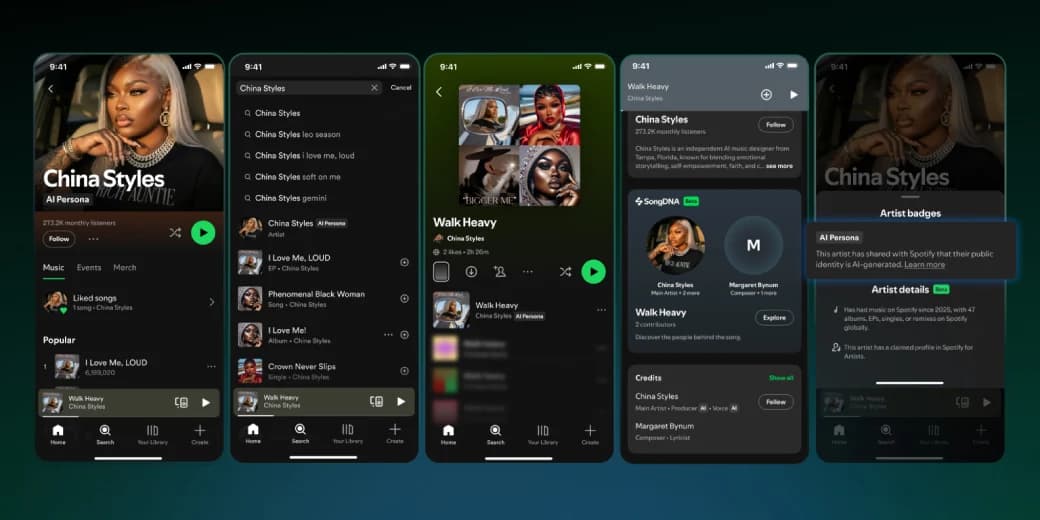
Spotify will label AI Personas and keep them out of recommendations by default
Spotify is separating artist identity from production method, letting synthetic performers exist while removing them from default recommendation surfaces unless listeners actively opt in.
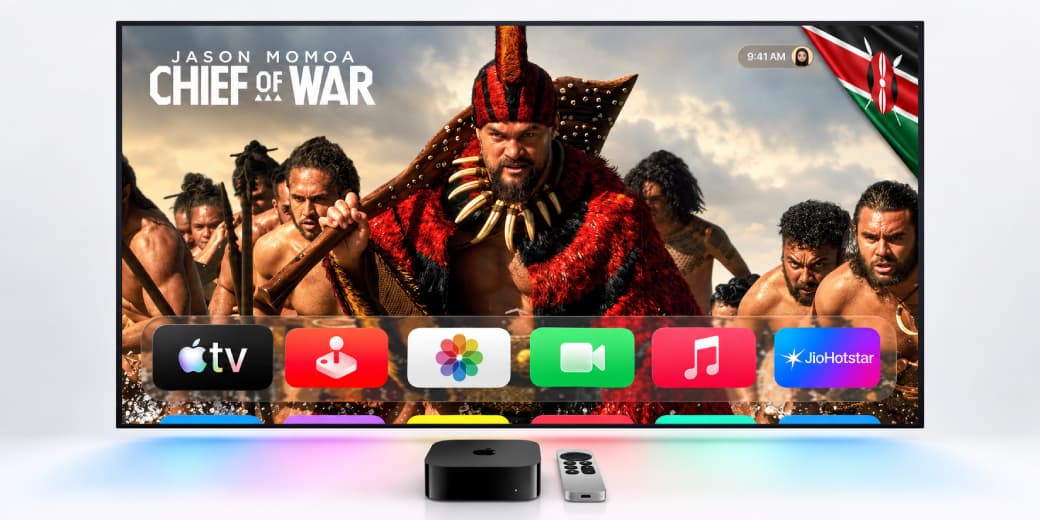
Apple TV just came to Kenya for the first time, bundled into a $0.99 cloud storage plan
Apple TV is available for the first time ever in Kenya as of this month, bundled at no extra cost into every paid iCloud+ subscription, including the entry-level 50GB plan, which stays at $0.99 a month, roughly KES 128.

Jumia raised $50 million from IFC, Axian and others. Now it has to prove the profitability story
Fresh IFC and Axian backing gives Jumia more room to strengthen logistics and supply, but the next milestone investors care about is sustainable profitability.