

Africa Go Green Fund Doubles Spiro Financing to $36 Million as Electric Motorcycles Scale
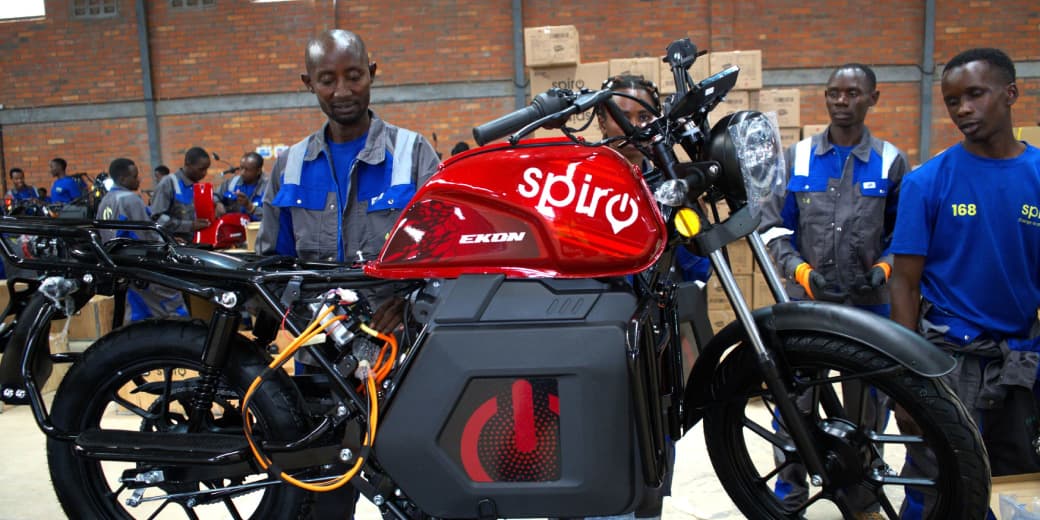
Africa Go Green Fund has committed another $18 million to Spiro, bringing total financing to $36 million to support electric motorcycles and battery-swapping infrastructure in Africa.
Quick answer
Africa's electric mobility sector has received another significant financing commitment.
Africa's electric mobility sector has received another significant financing commitment. The Africa Go Green Fund, managed by Cygnum Capital, has committed an additional $18 million to African electric mobility company Spiro, bringing its total financing commitment to $36 million.
The money will support continued deployment of electric motorcycles and expansion of Spiro's battery-swapping infrastructure, particularly in Uganda and Rwanda. The announcement is significant because Africa's electric mobility transition is increasingly moving beyond pilot projects.
What the new financing supports
The additional $18 million follows an earlier $18 million AGG commitment under a debt facility closed in December 2025. Nithio also committed $7 million under that earlier facility.
According to Cygnum Capital, Spiro had deployed more than 135,000 electric motorcycles and completed more than 50 million battery swaps across its markets by September 2026.
The additional financing will support more vehicle deployments and expansion of battery-swapping infrastructure in Uganda and Rwanda.
Why battery swapping is important
Electric motorcycles create a different energy problem from petrol motorcycles. A petrol motorcycle can be refueled in minutes. For a commercial rider, waiting for a battery to recharge can become a direct financial cost.
Battery swapping addresses that problem. A rider arrives at a station, removes a depleted battery and replaces it with a charged battery. The depleted battery can then be recharged for another user.
The model treats batteries as part of an energy network rather than equipment permanently attached to one motorcycle.
Spiro is building an integrated mobility network
Spiro's model combines electric motorcycles and battery infrastructure. That is important because selling electric motorcycles without solving the energy problem can limit adoption. A rider needs confidence that a charged battery will be available when required.
This means the location and density of swap stations matter. One station may be useful. A network of stations across a city is much more useful.
Why Uganda and Rwanda matter
The new financing specifically supports expansion in Uganda and Rwanda. Both markets provide opportunities for electric motorcycle adoption, and motorcycles are widely used for urban mobility, delivery and commercial transport across East Africa.
But adoption still depends on economics. The motorcycle has to be affordable. Battery access has to be reliable. Charging infrastructure has to work. Maintenance has to be available. Riders need a financial model that works with daily income.
The financing is also a vote for infrastructure
The important part of the AGG announcement is that the money is not only supporting vehicles. It is also supporting infrastructure. Electric mobility requires an ecosystem. Vehicle financing without energy infrastructure can create stranded demand, while infrastructure without enough vehicles can create underused assets.
The two need to scale together.
Spiro's reported scale is significant
More than 135,000 deployed electric motorcycles represents a large operating footprint. More than 50 million battery swaps indicate repeated use of the network. These numbers do not automatically prove profitability.
A mobility company still has to manage battery depreciation, electricity, station costs, maintenance, spare parts, financing and rider economics. But scale can create efficiencies and provide data about battery performance and vehicle utilization.
The economics are the real test
Climate technology receives attention because of environmental potential, but riders make decisions based on economics. If an electric motorcycle costs less to operate, requires less routine maintenance and provides reliable access to energy, the proposition becomes stronger.
If financing costs are too high or battery access is unreliable, environmental benefits alone may not convince commercial riders. That is why battery swapping is such an important part of the business model.
There are still challenges
Scaling battery networks across Africa requires substantial capital. Stations need reliable electricity. Batteries need safe and charging. Vehicles need service centres. Spare parts need to be available. Software systems need to coordinate users, batteries and stations.
There is also a question of standardization. If manufacturers develop proprietary battery formats, riders can become locked into one network. That can make interoperability harder.
What the $36 million commitment signals
AGG's decision to increase its commitment less than a year after the initial investment is notable. It indicates that the fund sees enough progress in Spiro's operations to justify additional financing.
The financing will help the company expand in Uganda and Rwanda while strengthening the battery infrastructure supporting riders.
The wider African opportunity
Electric motorcycles may become one of the most important forms of electric transport in Africa because they align with existing mobility patterns. Africa does not need to copy the vehicle transition of Europe or North America exactly. The region has different transport patterns, incomes and infrastructure.
Two-wheel mobility is already deeply embedded in many economies. Electrifying that category can create a more immediate impact than waiting for private car ownership to dominate every market.
Bottom line
The Africa Go Green Fund's additional $18 million brings its total Spiro financing commitment to $36 million. The money will support more electric motorcycle deployments and battery-swapping infrastructure in Uganda and Rwanda.
Spiro says it has already deployed more than 135,000 electric motorcycles and completed more than 50 million battery swaps across its markets. The next challenge is execution: building dense networks, maintaining reliable battery availability, managing costs and making electric mobility financially attractive to riders.
Reporting note: This article is based on the September 21, 2026 announcement from Africa Go Green Fund and Cygnum Capital, supplemented by regional reporting. The deployment and battery-swap figures are attributed to Spiro.
Sources
Share this story
Enjoyed this? Share it with someone who'd appreciate it.
Ask MAMBO
Have a plain-English question about this topic? Send it in and we may answer it in a future guide.
Ask a questionRelated reading

A R150 million solar bet on the grid South Africa cannot rely on
Nesa Power secured about 150 million rand, roughly 9 million dollars, in mezzanine debt from Maia Capital to expand commercial and industrial solar under long-term PPAs.
America invents it, China perfects it, Europe writes the rules for it
The old line says America innovates, China replicates, and Europe regulates. China's rocket catch shows why that line is useful, and why it is no longer enough.
EVs could soon beat petrol on cost across Africa
New research says EVs are close to cost parity across much of Africa, with expensive financing now doing more to slow adoption than the technology itself.