

Apple TV just came to Kenya for the first time, bundled into a $0.99 cloud storage plan
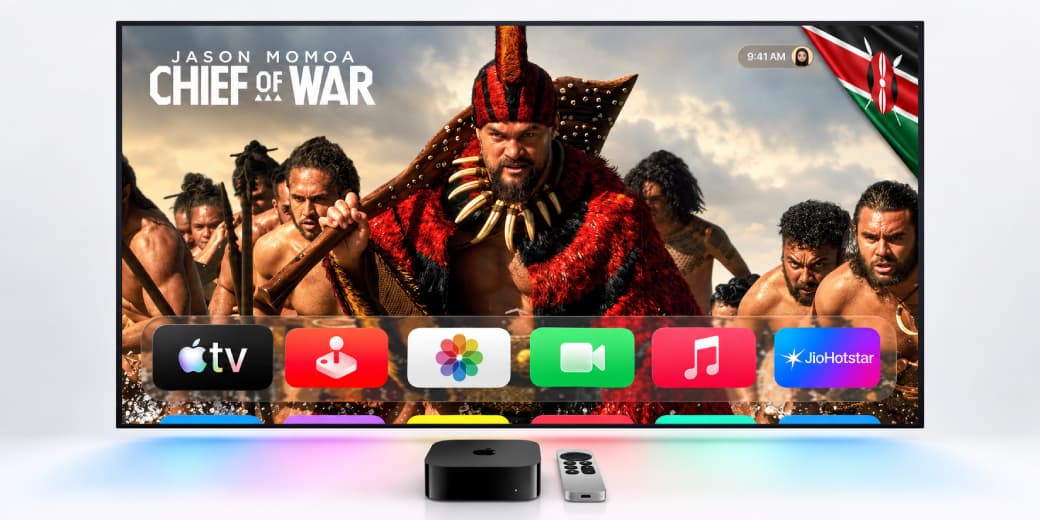
Apple TV is available in Kenya for the first time, bundled free into iCloud+ starting at $0.99 a month, part of a simultaneous rollout across 102 countries.
Quick answer
Apple TV is available for the first time ever in Kenya as of this month, bundled at no extra cost into every paid iCloud+ subscription, including the entry-level 50GB plan, which stays at $0.99 a month, roughly KES 128. Apple Arcade and a new curated, ad-free listening feature called Apple Music Select are included in the same bundle. This isn't a Kenya-specific strategy: Apple rolled the identical change out simultaneously across 102 countries, part of a broader restructuring of how it sells services outside a smaller group of established Western markets where Apple TV, Arcade, and Apple One remain sold separately.
Apple confirmed this week that Apple TV and Apple Arcade are being added to every paid iCloud+ subscription across more than 100 countries, at no additional cost, rolling out progressively through the end of September 2026. Kenya is among the newly included markets, and for Kenyan users specifically, the change carries an extra distinction: it's the first time Apple TV has ever been available for purchase in the country at all.
What actually changed, and what the price actually is
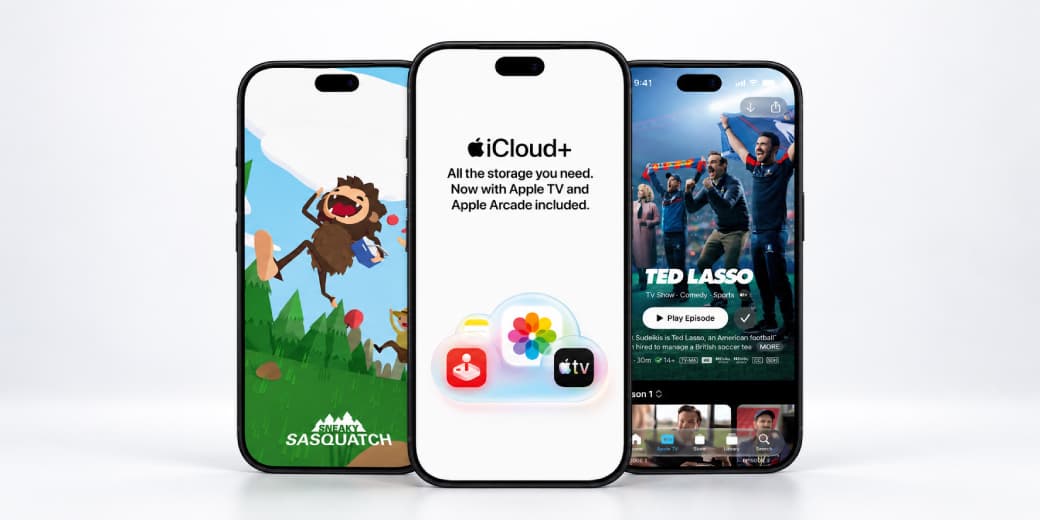
Every paid iCloud+ tier in participating markets, starting with the cheapest 50GB plan, now includes Apple TV and Apple Arcade automatically. In Kenya, that entry-level plan remains priced at $0.99 a month, approximately KES 128, unchanged from what iCloud+ storage cost before this announcement. Family Sharing extends the bundled access, storage, TV, and Arcade, to up to five people in a family group.
Apple is also adding a third component to the bundle that's easy to miss in coverage focused on TV and gaming: Apple Music Select, a set of ad-free, Apple-programmed listening stations, including regionally relevant mixes and genre categories like Top Songs and throwback decades. This is not the same as a full Apple Music subscription, which remains a separate product; Apple is offering a discounted upgrade path from iCloud+ to full Apple Music for anyone who wants the complete catalog rather than curated stations.
Eddy Cue, Apple's senior vice president of Services and Health, framed the change simply: "We're excited to bring Apple TV and Apple Arcade to iCloud+ users in over 100 countries in one convenient subscription."
This is not a Kenya-specific move, and that context changes the story
It's worth being precise about scope, since framing this as a targeted East African strategy overstates what's actually happening. Apple confirmed participating markets span Africa, Asia, the Middle East, Eastern Europe, the Caribbean, and island nations, including major markets like India, Saudi Arabia, Singapore, Türkiye, Nigeria, and dozens more, alongside Kenya. The United States, United Kingdom, Canada, Australia, New Zealand, most of Western and Northern Europe, and Russia are explicitly excluded, along with, notably, South Africa, which has had standalone access to Apple TV for years already.
Read that way, this isn't Apple discovering East Africa as an underserved market and building a bespoke entry strategy around it. It's a single global restructuring decision, using iCloud+'s existing storage subscriber base as the distribution vehicle for services in markets where credit-card-based standalone subscriptions and Apple One, Apple's pricier all-in-one bundle, have struggled to gain traction. Apple One itself is still not sold as a standalone product in Kenya at all, so it isn't the relevant comparison point some coverage has made it out to be; the actual before-and-after for Kenyan users is simply "no Apple TV access" versus "Apple TV bundled into a subscription you may already have."
Existing standalone Apple TV and Apple Arcade subscribers in participating markets have their subscriptions automatically converted into the iCloud+ bundle, with Apple Arcade game saves preserved through the transition.
How this actually compares to Kenya's existing streaming options
The pricing landscape in Kenya has shifted enough in the past year that any comparison needs current, not historical, figures. Netflix's mobile-only plan in Kenya currently runs KES 200 a month, with its Basic plan at KES 300, Standard at KES 700, and Premium at KES 1,100. Showmax's mobile-only plan has moved between roughly KES 200 and KES 300 depending on promotional pricing over the past year, with its General Entertainment plan around KES 550 to 650 and its Pro tier, which adds Premier League and La Liga football, at KES 2,100, or KES 1,050 for a mobile-only version of Pro.
Against that landscape, a $0.99 iCloud+ plan that now includes Apple TV's catalog, an Apple Arcade library, and Apple Music Select stations is a genuinely disruptive price point on paper, though it's worth noting Apple TV's catalog, while critically acclaimed, is considerably smaller than Netflix's or Showmax's combined libraries, and doesn't include live sports rights the way Showmax's Pro tier does. This is a value proposition built on quality and low cost rather than breadth or live sports, which is a different competitive angle than a direct one-for-one replacement.
Apple TV had a strong 2026 awards showing, taking home 28 Emmy Awards total, more than any other studio, including HBO Max and Netflix, a genuine credibility signal for a catalog that remains far smaller than its rivals' by volume.
The tecMAMBO take
The most interesting part of this story isn't the price, it's the sequencing. Following its September product announcements, Apple is using a utility product millions of Kenyans already pay for, , as the delivery mechanism for premium entertainment products it previously couldn't get meaningful traction with as standalone subscriptions in price-sensitive, largely non-credit-card markets. That's a genuinely clever distribution strategy, and it's reasonable to expect it puts real pressure on Showmax and Netflix's cheapest tiers specifically, since those are the price points Apple's new bundle now directly undercuts on a value basis.
What it isn't is evidence of Apple suddenly prioritizing East Africa as a strategic market in its own right. The same change landed in more than 100 countries on the same schedule. Kenya benefits from this rollout. It didn't inspire it.
FAQ
How much does iCloud+ cost in Kenya now that it includes Apple TV?
The entry-level 50GB plan remains $0.99 a month, approximately KES 128, unchanged from its price before Apple TV and Arcade were added.
Is this only happening in Kenya?
No. Apple rolled out the identical change simultaneously across more than 100 countries and territories. The US, UK, Canada, Australia, most of Western and Northern Europe, Russia, and South Africa are not included.
Does the bundle include full Apple Music?
No. It includes Apple Music Select, a curated set of ad-free listening stations, not the full Apple Music catalog. A discounted upgrade path to full Apple Music is available separately.
Was Apple TV available in Kenya before this?
No. This is the first time Apple TV has been available for purchase in Kenya in any form.
Sources
Ask MAMBO
Have a plain-English question about this topic? Send it in and we may answer it in a future guide.
Ask a questionRelated reading
Kenya's High Court just unwound a $1.58 billion Safaricom sale that closed three months ago
Kenya's High Court declared the government's sale of a 15% stake in Safaricom PLC to Vodacom Group unconstitutional, null and void, and ordered the shares restored to the state.
Absa Bank Kenya just made its interim CEO permanent, and the backstory explains why
Absa Bank Kenya confirmed Yusuf Omari as Managing Director and Chief Executive Officer with immediate effect on September 10, 2026, following board approval and completion of regulatory clearances.

Apple raised iPhone prices $100, and absorbed a bigger hike itself to keep it that low
Apple raised the starting price of the iPhone 18 Pro to $1,199 and the iPhone 18 Pro Max to $1,299, both $100 more than their iPhone 17 predecessors, and simultaneously discontinued the iPhone 17 Pro and Pro Max.