

Jumia raised $50 million from IFC, Axian and others. Now it has to prove the profitability story
Fresh IFC and Axian backing gives Jumia more room to strengthen logistics and supply, but the next milestone investors care about is sustainable profitability.
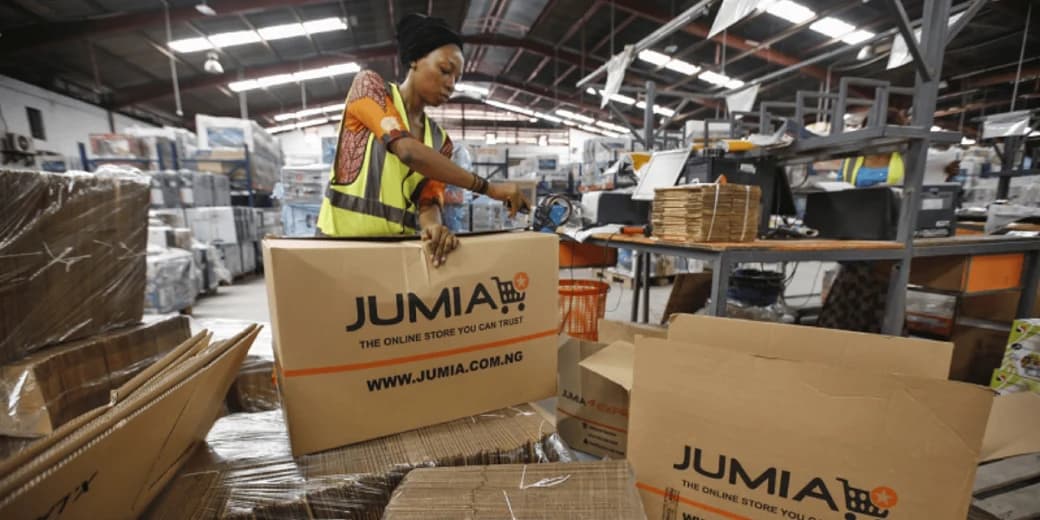
Jumia has secured $50 million in fresh equity funding as Africa's most recognisable listed e-commerce company pushes toward a milestone it has chased for years: profitability.
The International Finance Corporation is investing $25 million.
Axian, already a significant Jumia shareholder, and other investors are participating in the remainder of the raise.
The capital gives Jumia more room to strengthen its marketplace, supply and logistics while management says the company is approaching adjusted EBITDA break-even.
That matters because Jumia no longer needs another story about Africa's future e-commerce opportunity.
It needs a period in which the economics work.
IFC is investing in digital commerce infrastructure
The World Bank Group frames its investment around digital-commerce infrastructure and small-business participation.
Jumia operates more than a shopping website.
Its model includes:
- Marketplace technology
- Seller tools
- Warehouses
- Pickup stations
- Last-mile logistics
- Payments
- Cross-border supply
In markets where addressing, card penetration and delivery infrastructure can be uneven, an e-commerce company often has to build parts of the physical system that a retailer in Europe can take for granted.
IFC says the investment is expected to support tens of thousands of active sellers, direct jobs and income opportunities for independent sales agents.
Those are expected development outcomes, not guaranteed results.
That distinction should remain clear.
Why Jumia needs cash now
Jumia has spent years reducing losses.
Under CEO Francis Dufay, the company has pulled back from growth-at-any-cost behaviour and focused on a smaller set of markets.
Management has cut costs, consolidated logistics and become more selective about investment.
That strategy improves survival.
It can also slow growth if cost discipline becomes underinvestment.
Fresh equity gives Jumia room to invest without abandoning the operating discipline investors now expect.
The company says funding can strengthen its balance sheet and support tactical spending on supply and logistics.
The word "tactical" matters.
Investors do not want a return to the spending model where growth looked impressive while losses remained structural.
Profitability is now the milestone that matters
Jumia went public in New York in 2019 with enormous expectations.
It was frequently described as an African version of Amazon.
That comparison was always imperfect.
Amazon built in markets with larger pools of online customers, denser logistics networks and stronger payments infrastructure.
Jumia had to solve many of those constraints while also trying to create demand.
That was expensive.
Years later, capital markets have much less patience for future opportunity without operating proof.
Jumia has targeted adjusted EBITDA profitability around the fourth quarter of 2026.
A profitable quarter is not the same as a sustainably profitable company.
The following quarters will matter even more.
Why Axian keeps leaning in
Axian is a pan-African group with interests in telecoms, fintech and infrastructure.
Its exposure to Jumia creates obvious strategic possibilities.
E-commerce works better when it connects with:
- Connectivity
- Digital payments
- Credit
- Identity
- Logistics
A telecom group understands customer acquisition across African markets.
A fintech business understands payment friction.
Those overlaps create opportunity.
They do not execution.
The investment should still be judged as an investment, not assumed to be a synergy simply because the businesses look compatible on a slide.
Jumia's hardest competitor may be economics
International platforms such as Temu and Shein can attract African consumers with huge catalogues and aggressive prices.
Local commerce remains powerful too.
Many buyers purchase through:
- Informal traders
- Physical markets
- Specialist local stores
Jumia therefore competes on trust, fulfilment and convenience as much as product selection.
It has to answer two questions repeatedly.
For the customer: why should I place the order here?
For the seller: why should I pay the platform rather than sell directly?
The business becomes defensible when both sides receive enough value to keep returning.
Kenya remains a useful test market
Kenya combines:
- High mobile-money adoption
- Strong smartphone use
- Significant urban density
- Growing online shopping habits
- Difficult logistics outside major centres
That makes it a useful environment for Jumia's model.
Pickup stations and mobile payments can compensate for infrastructure gaps.
The company can also help smaller sellers reach customers beyond their immediate neighbourhoods.
The challenge is doing that without letting delivery cost consume the margin.
The funding does not remove structural pressure
Fifty million dollars is meaningful.
It does not eliminate:
- Currency volatility
- Fuel costs
- Inflation
- Low purchasing power
- Logistics complexity
- Returns
- Fraud
- Price competition
Capital provides time and optionality.
A durable e-commerce model still needs to earn its way through those constraints.
The tecMAMBO take
The most encouraging part of Jumia's $50 million raise is not the headline size.
It is who is willing to provide it after years of difficult execution.
IFC sees infrastructure and development potential.
Axian sees strategic value.
Management sees enough progress to talk publicly about near-term profitability.
Now the story has to leave the presentation deck.
If Jumia can reach sustainable profitability while continuing to build useful commerce infrastructure, it will prove something larger than whether one listed company survived.
It will show that pan-African e-commerce can eventually make economic sense without pretending Africa is Europe with warmer weather.
Sources
Share this story
Enjoyed this? Share it with someone who'd appreciate it.
Ask MAMBO
Have a plain-English question about this topic? Send it in and we may answer it in a future guide.
Ask a questionRelated reading

Standard Bank and UnionPay just widened Africa's online payment rails across nine markets
Standard Bank and UnionPay have expanded online payment acceptance across nine African markets, connecting nearly 900 merchants to UnionPay cardholders.

Africa's biggest fintech IPO candidates are looking offshore, and local exchanges should ask why
OPay is preparing for a US IPO, Airtel Money is targeting London and PalmPay is exploring Hong Kong. Africa's fintech exit problem is becoming visible.

Transsion is pushing ahead with a Hong Kong listing, putting Africa's smartphone demand in front of global investors
Transsion, owner of TECNO, Infinix and itel, is progressing toward a Hong Kong H-share listing while its African smartphone business remains central to growth.