

Direct Drive Tech Lists in Hong Kong After Pricing a 50 Million-Share Robotics IPO
Direct Drive Tech priced 50 million shares at HKD21.60 and is scheduled to begin Hong Kong trading as 06731, raising capital for robotics research, production and sales.
Quick answer
Direct Drive Tech, also known through its Benmo Power business, is scheduled to begin trading on the Hong Kong Stock Exchange under code 06731 on September 29.
Direct Drive Tech, also known through its Benmo Power business, is scheduled to begin trading on the Hong Kong Stock Exchange under code 06731 on September 29. The company offered 50 million shares at HKD21.60 each. At that price, the gross offer size is HKD1.08 billion, roughly $138 million at recent exchange rates, while expected net proceeds are lower after fees and expenses.
The distinction between gross and net proceeds explains why different summaries attach different dollar figures to the deal. The company says net proceeds are expected to be about HKD982.5 million, before any effect from the over-allotment option. Calling the offering a completed $130.5 million cash raise without stating which measure is being used can therefore be misleading.
What Direct Drive Tech sells
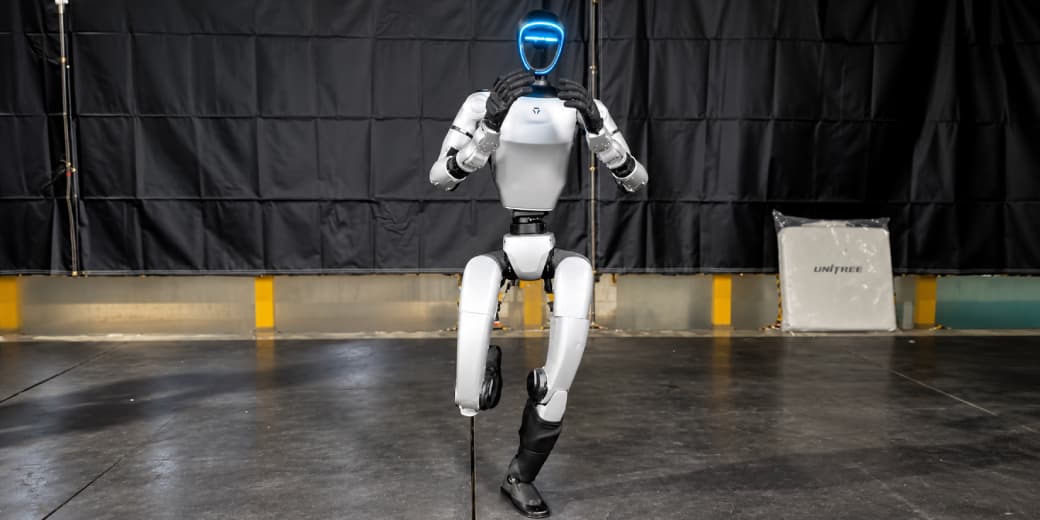
The company describes itself as a robotics technology business built around direct-drive capability. Its largest activity is selling robotic actuator modules, with a smaller contribution from complete robots. Actuators turn electrical energy and control commands into movement. They sit inside joints, wheels and other mechanisms that must position a robot accurately and repeatedly.
A direct-drive system connects a motor more directly to the moving load and can reduce reliance on conventional gear trains. Fewer transmission components can reduce backlash, noise and maintenance in some designs. The trade-offs depend on torque requirements, motor size, thermal management, control electronics and cost. Direct drive is a design choice, not a universal replacement for every geared actuator.
Direct Drive Tech says its technology has been used in more than 7.5 million robots across consumer, industrial, commercial and embodied-intelligence applications from inception through June 30, 2026. That figure covers products enabled by its technology and should not be read as 7.5 million humanoid robots sold by the company.
Where the IPO money is meant to go
The company's announced allocation puts about half of net proceeds toward research and development in key robotics technologies. Around 20% is intended for partnerships and sales expansion, another 20% for production capability and efficiency, and the remaining 10% for working capital and general corporate purposes.
That split reflects the two challenges facing a component supplier. It must improve performance quickly enough to serve emerging robot designs, and it must manufacture with consistent quality at scale. A sophisticated prototype actuator is not enough if units vary across a production run or if customers cannot obtain service and replacements.
Why robotics suppliers are reaching public markets
Interest in humanoid and embodied AI has increased demand for motors, sensors, bearings, reducers, controllers and joint modules. Many of the companies building complete robots will change designs or fail. Component suppliers can potentially sell across several platforms, but they also face price pressure and the risk that large customers bring critical parts in-house.
A Hong Kong listing gives Direct Drive Tech capital and a public valuation, but it also brings reporting obligations and quarterly market scrutiny. Investors will need to distinguish growth in established consumer and industrial applications from expectations attached to humanoid robots, a market where shipment forecasts remain uncertain.
Customers will make a similarly practical distinction. A robot maker evaluates torque, response time, efficiency, weight, heat, , control software and unit cost before choosing an actuator. It also needs confidence that the supplier can deliver thousands of consistent modules on schedule. Public excitement around embodied AI may open the door, but production data and repeat orders will determine whether the component business earns durable margins.
The opening share price will attract attention, yet the longer test is operational. Direct Drive Tech must convert research spending into products, win repeat orders and expand production without weakening quality. The IPO makes it a public-market participant in the robotics boom. It does not remove the technical and commercial risks that come with that position.
Sources
Share this story
Enjoyed this? Share it with someone who'd appreciate it.
Ask MAMBO
Have a plain-English question about this topic? Send it in and we may answer it in a future guide.
Ask a questionRelated reading
Factories Now Operate 5 Million Robots, and China Installed 59% of Last Year's New Units
The number of industrial robots operating in factories worldwide reached 5 million in 2025, according to the International Federation of Robotics.
Geely Is Buying 30% of NIO Power, but the Battery-Swap Networks Are Not Simply Merging
NIO and Geely Holding have signed a pair of linked transactions that could reshape battery swapping in China.

Transsion is pushing ahead with a Hong Kong listing, putting Africa's smartphone demand in front of global investors
Transsion, owner of TECNO, Infinix and itel, is progressing toward a Hong Kong H-share listing while its African smartphone business remains central to growth.