
Geely Is Buying 30% of NIO Power, but the Battery-Swap Networks Are Not Simply Merging
Geely will contribute Yiyi Power and RMB640 million for 30% of NIO Power, while NIO takes 10% of Haohan Energy. Here is what the deal does and does not combine.
Quick answer
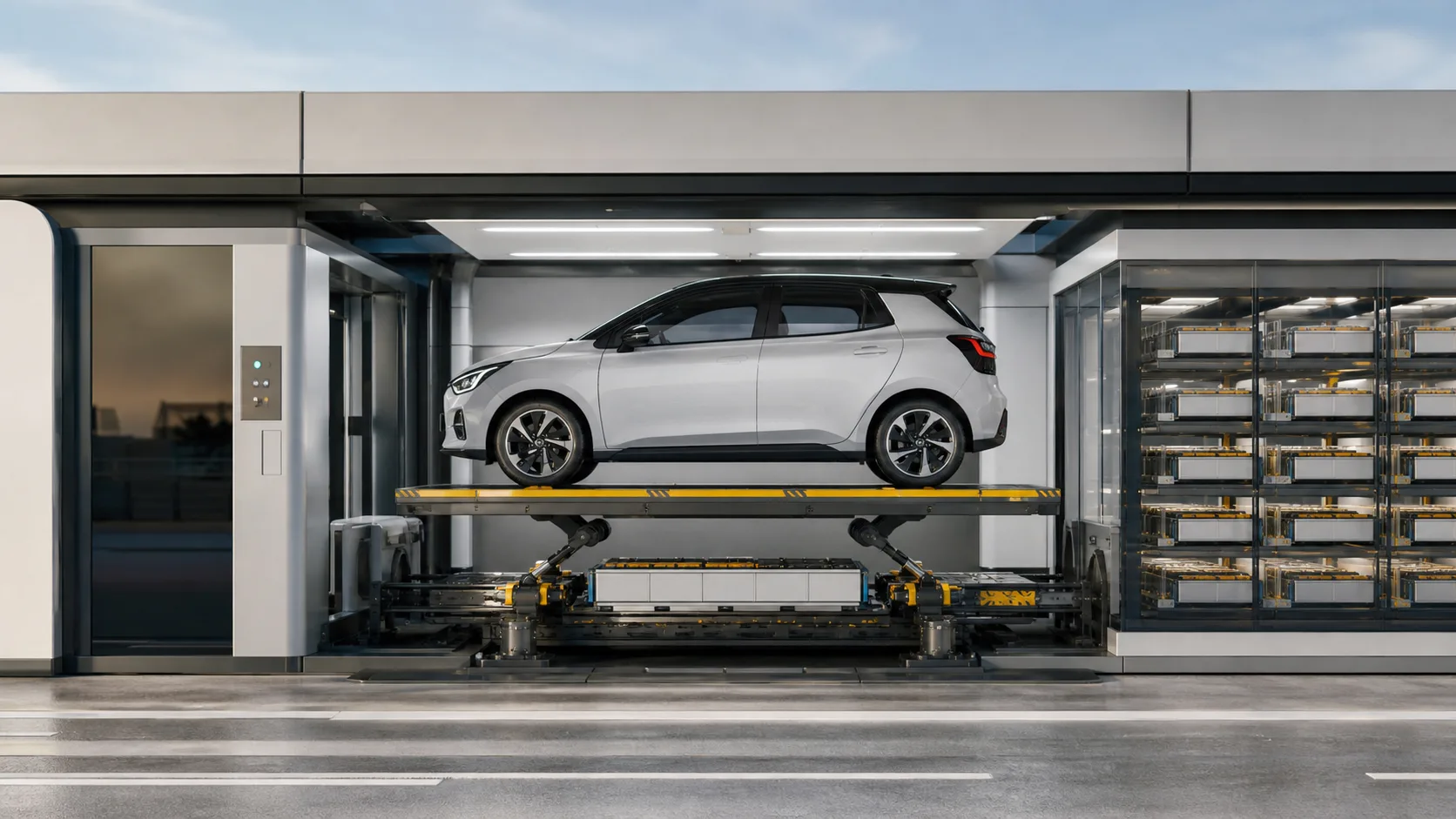
NIO and Geely Holding have signed a pair of linked transactions that could reshape battery swapping in China.
NIO and Geely Holding have signed a pair of linked transactions that could reshape battery swapping in China. Geely will contribute all of Yiyi Internet Technology, its commercial battery-swap operator, plus RMB640 million in cash for newly issued shares in NIO Power. If the deal clears its regulatory and closing conditions, Geely will own 30% of NIO Power. NIO China will remain in control with 63.6%, while an existing Wuhan investor will hold the remaining 6.4%.
The headline is easy to compress into a network merger, but that description goes further than the companies have announced. This is an equity investment and asset contribution, backed by preliminary plans for wider technology adoption and service cooperation. It is not a promise that every Geely vehicle will immediately work at every NIO swap station, or that every station will move onto a single operating platform on day one.
What Geely is putting into NIO Power
Yiyi Internet Technology serves commercial mobility customers, a market that includes vehicles that travel far more frequently than a typical private car. That operating experience matters because commercial fleets judge a swap network by uptime, location, battery availability and cost per kilometre. Geely is transferring the entire business and adding cash, while receiving a stake in a much larger NIO Power platform valued at about RMB16 billion after the transaction.
The 30% figure is not necessarily permanent. NIO's announcement says Geely's holding can be adjusted downward if specified operational milestones are missed, although it cannot fall below 20%. Geely also receives an option to invest another RMB640 million within a defined period. Without a post-closing adjustment, that second investment would raise its holding to 34% and leave NIO China with 60%.
Why the Haohan Energy investment is separate
At the same time, NIO China plans to subscribe for a 10% stake in Geely's Haohan Energy charging business. The cash from that subscription is intended to help Haohan buy certain charging assets from NIO. The structure therefore creates cross-ownership around both swapping and charging, but it does not place Haohan inside NIO Power or establish a single combined company for every energy asset.
That distinction matters to drivers. Charging can be opened across brands with familiar connectors and software integration. Battery swapping demands agreement on pack dimensions, mounting points, high-voltage architecture, thermal systems, communications and safety validation. The companies say they have preliminary plans to extend swap technology and related services to Geely-linked consumer and commercial vehicles. The final vehicle programmes still require more discussion.
What changes for the battery-swap business
NIO gains cash, a commercial-fleet swapping operator and a large strategic shareholder. Geely gains exposure to an established network without having to duplicate every site, operations team and software layer. Both sides also gain a reason to develop shared technical standards. That could improve station utilisation, which is central to the economics of any capital-intensive energy network.
The transaction also places a market value on NIO Power. A post-money valuation of roughly RMB16 billion gives investors a clearer reference point for an operation that has often been discussed as strategic infrastructure rather than as a standalone business. It does not, by itself, prove profitability. Station construction, land access, battery inventory and maintenance remain expensive, and utilisation varies by location.
For consumers, the practical test will come later: which Geely models support the system, how many stations accept them, whether booking and payment work across brands, and whether swap availability remains reliable at busy times. Until those details are published, the most accurate description is a deep strategic transaction with plans for interoperability, not a completed universal merger of China's swapping networks.
Sources
Share this story
Enjoyed this? Share it with someone who'd appreciate it.
Ask MAMBO
Have a plain-English question about this topic? Send it in and we may answer it in a future guide.
Ask a questionRelated reading
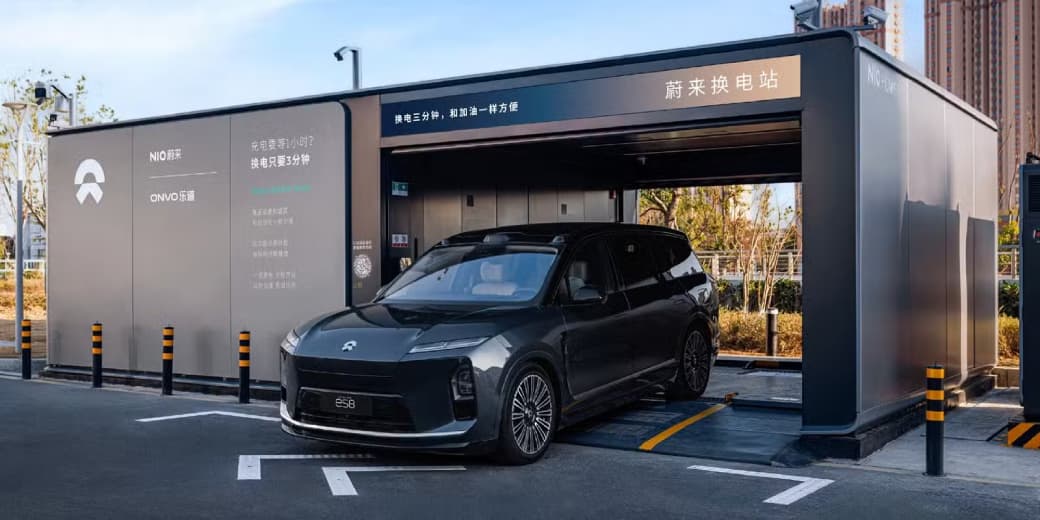
NIO's 4,000th battery swap station shows what charging networks still cannot do
NIO's new station can hold more batteries and complete a swap in under two minutes, but the model remains expensive and difficult to standardise.
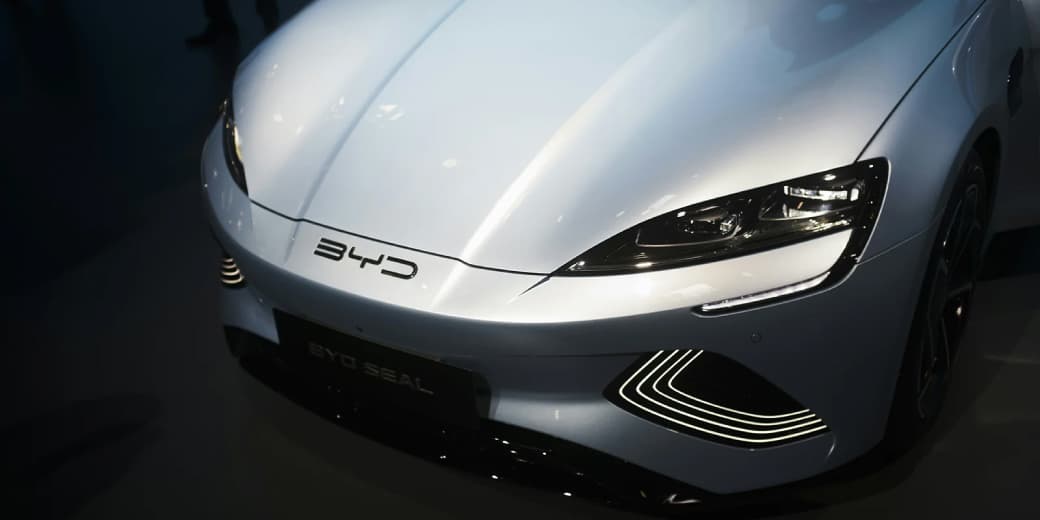
BYD retakes the EV crown as June numbers land
BYD delivered 557,090 fully electric vehicles in Q2 2026, ahead of Tesla's 480,126, while NIO posted its best month of the year.
Beyond Range: How Roam Engineered Its Gen-3 Battery Around the Working Boda-Boda Rider
Roam’s new Gen-3 battery is faster to charge, more connected and built to withstand the realities of commercial electric motorcycle use. But its most important upgrade may be something less obvious: reliability.