

Beyond Range: How Roam Engineered Its Gen-3 Battery Around the Working Boda-Boda Rider
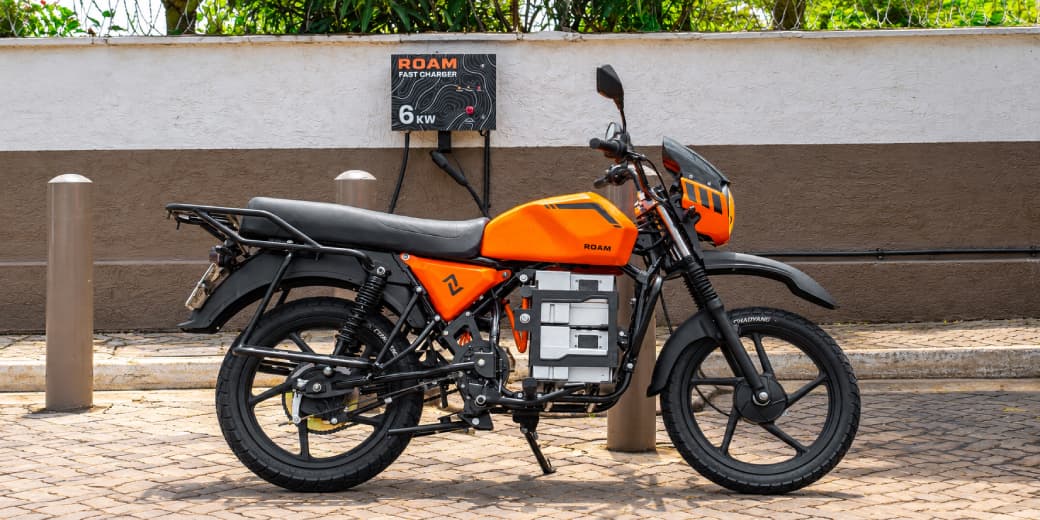
Roam’s new Gen-3 battery is faster to charge, more connected and built to withstand the realities of commercial electric motorcycle use. But its most important upgrade may be something less obvious: reliability.
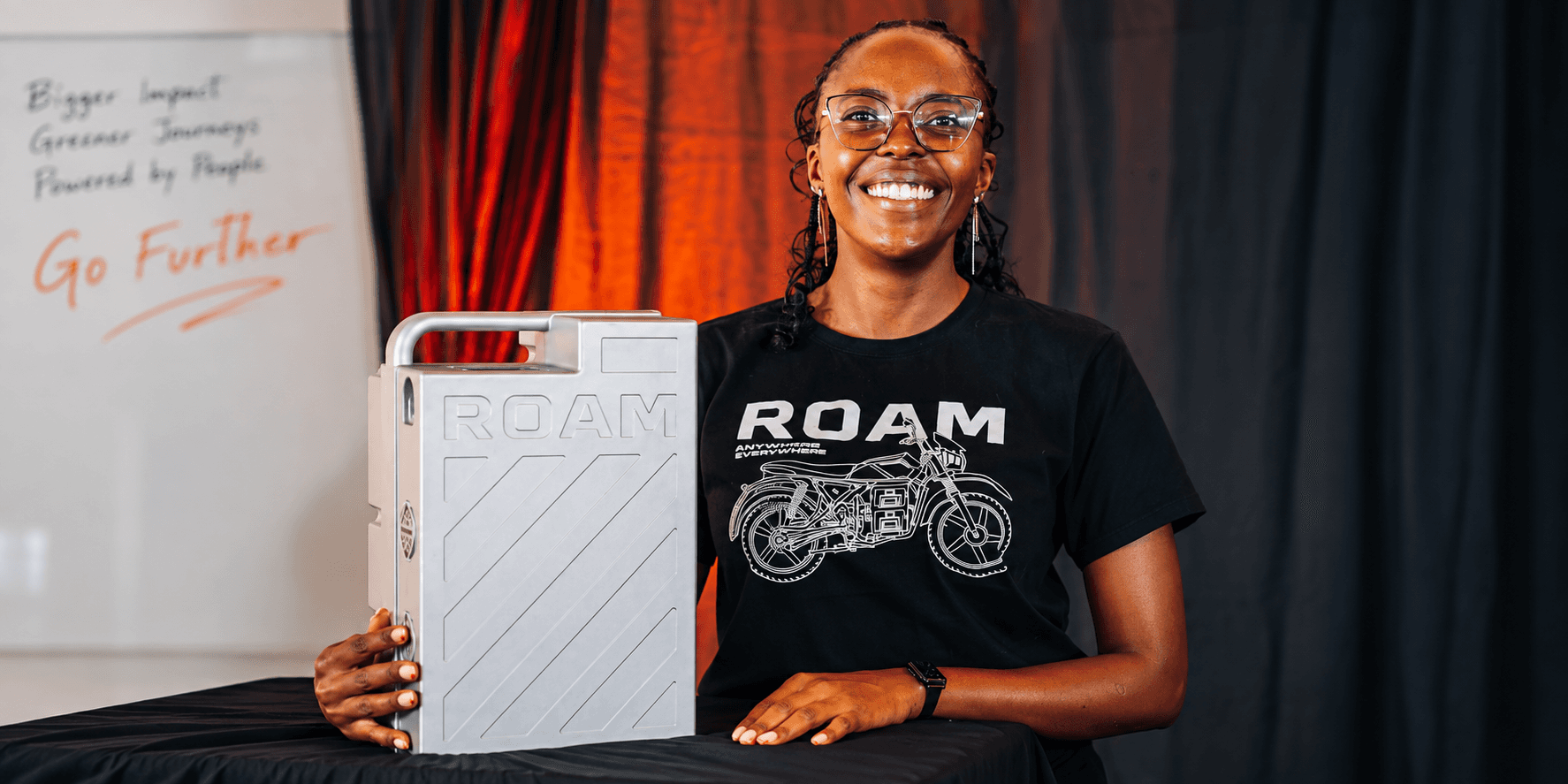
tecMAMBO spoke with Ivy Magara, the battery engineer who led the development of Roam's Gen-3 battery from conception through deployment.
For an electric motorcycle rider, a battery that is sitting at a charging station is not earning money.
That sounds obvious, but it changes the way a battery should be designed.
A private electric vehicle owner might tolerate a long charging session. A commercial boda-boda rider has a different calculation. Every hour spent waiting for a battery is an hour that cannot be spent carrying passengers, completing deliveries or working through an app. If the motorcycle was financed, the financial clock does not necessarily stop simply because the motorcycle does.
That reality sits at the centre of Roam’s Gen-3 battery.
The Nairobi-based electric mobility company has positioned the new battery around faster charging, , connectivity and a 100,000-kilometre . But speaking to Ivy Magara, the battery engineer who led Gen-3 from conception through deployment, reveals a more interesting story behind those specifications.
The battery was not designed simply to go farther.
It was designed around what happens when an electric motorcycle becomes a working asset.
And that meant confronting problems that only became obvious after earlier batteries reached the road.
The problem was bigger than charging
Gen-3 began with a problem that sounds deceptively simple.
Charging took too long.
According to Magara, Roam's previous-generation battery was already safe and capable of supporting riders' livelihoods. But once those batteries were deployed, the company began receiving feedback about charging times and long queues at charging hubs.
The deeper problem was temperature.
The older battery could heat up during use and then hold onto that heat for a considerable amount of time. A rider arriving at a charging hub with a hot battery could therefore face an additional before charging could even begin.
In some cases, the battery might then remain too hot after reaching full charge to be immediately useful.
The result was a problem that a specification sheet could easily miss.
The advertised charging time was not necessarily the same as the rider's actual downtime.
A rider could arrive at a charging hub at noon and still be waiting hours later, not because the battery was spending all that time receiving energy, but because the battery had to cool before the charging process could proceed.
For a commercial rider, that distinction matters.
Roam's requirement was that a rider should ideally be able to operate the day using two batteries. One battery could be in use while the other was charging, allowing the rider to switch between them and keep working.
That model breaks down when the battery spends too much time waiting to become usable.
Gen-3 therefore started with a question that went beyond charging speed:
How do you make sure a battery is ready when the rider needs it?
The riders changed the design
One of the most revealing parts of the Gen-3 story is that some of its changes were not driven by theoretical engineering problems.
They came from watching what customers actually did.
Magara says engineers can make assumptions about how a product will be used, but customers do not always behave according to those assumptions.
That sounds like a basic product-design lesson, but the consequences can be significant when the product is a battery carrying a large amount of energy.
Consider the small screen on Roam's previous battery.
The earlier pack used an screen and a physical push button. If a customer pressed the button and the screen did not light up, some customers would use a key or another object to investigate.
That seemingly harmless behaviour could damage the screen.
Once damaged, water could potentially enter the battery. A small component could therefore create a much larger reliability problem.
Roam responded by replacing the LCD with an LED panel and changing the physical push button to a touch button.
It is a small example, but it captures something important about engineering products for real-world environments.
The engineer designs the product.
The customer designs the edge cases.
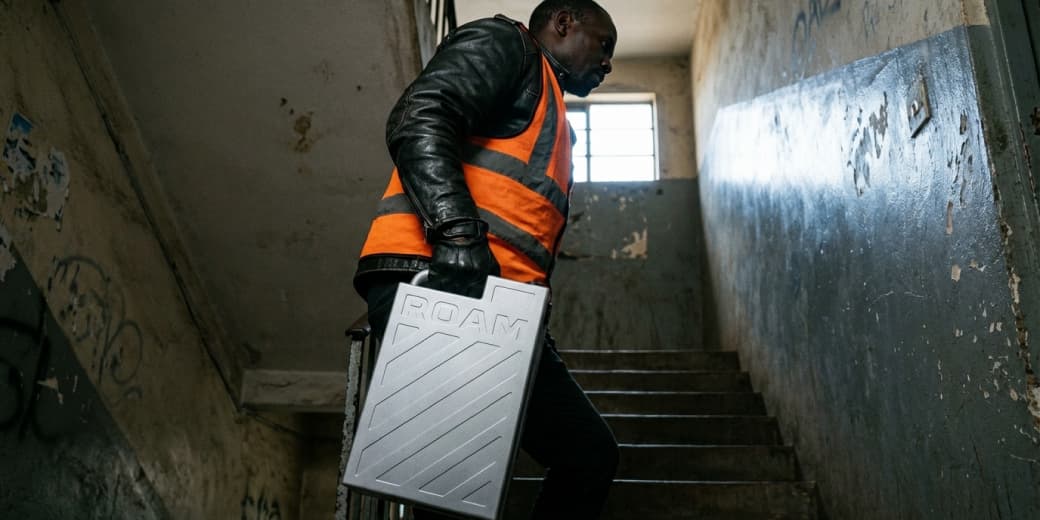
The same learning process influenced other changes to Gen-3, including improvements to the casing and protection against water ingress.
Roam knew that its motorcycles would encounter Nairobi's roads, rain and flooding. The battery is also positioned low on the motorcycle, which creates another vulnerability when a rider encounters deep water.
The solution was not simply to tell riders to avoid difficult conditions.
The battery itself had to be designed for them.
Safety beat capacity
Perhaps the most interesting engineering decision in Gen-3 is one that sounds counterintuitive in an industry obsessed with range.
Roam's battery team actually reduced some of the battery's capacity.
The reason was space.
A motorcycle does not offer engineers the luxury of unlimited room. Inside a relatively compact package, the battery has to accommodate cells, safety systems, mechanical protection and other components while remaining comfortable for the rider.
There is also the motorcycle itself to consider.
Make the battery too large and you can affect how the rider sits. Move components around and you may compromise other parts of the motorcycle. Add more hardware and weight increases.
The engineering problem becomes a balancing act between performance, safety, aesthetics and ergonomics.
For Magara, safety wins that argument.
She says there were situations during Gen-3 development where some capacity had to be sacrificed to accommodate safety features.
That is an important detail because the conventional EV conversation often treats as the goal and everything else as an optimisation around it.
For a commercial electric motorcycle, that is not necessarily the right hierarchy.
More capacity is useful only if the battery remains safe, reliable, practical and affordable.
And Gen-3 produced an unexpected result.
Despite having slightly less capacity, the new battery was more efficient. That efficiency allowed Roam to achieve the same range despite the reduction in capacity.
In other words, the engineering team did not simply chase a bigger number.
It found a way to get more useful performance from the energy available.
That is a more complicated story than simply saying the battery has an 80-kilometre range.
Why temperature may matter more than rough roads
If you asked what environmental factor poses the biggest challenge to an electric motorcycle battery in Africa, rough roads might be an obvious answer.
Magara's answer is different.
Temperature.
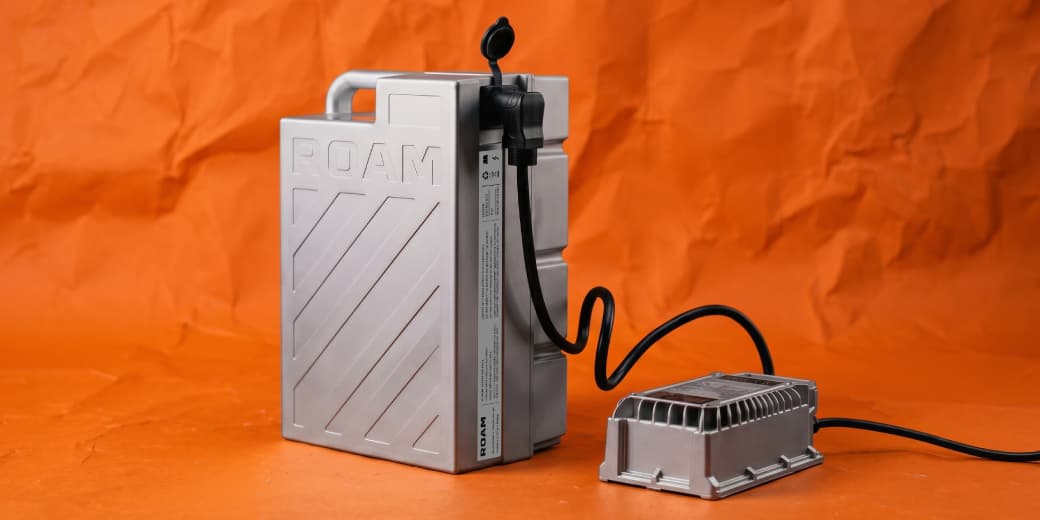
Lithium-ion batteries operate within particular temperature conditions, and keeping cells within an appropriate range is important for both performance and longevity.
Vibration and water ingress can be attacked through mechanical engineering. Roam can design the battery casing, mounts and protection around the vibration patterns it expects to encounter.
Temperature is more difficult.
A battery designer could add sophisticated thermal-management systems, but a commercial two-wheeler is highly constrained by cost, weight and space.
That creates another African engineering problem.
The solution cannot simply be the most technologically advanced system available.
It has to be advanced enough to work while still being affordable to the person who depends on the motorcycle for income.
This is one of the recurring tensions in Gen-3.
The battery is being engineered for demanding conditions, but it is also being engineered for a highly price-sensitive market.
Those two requirements do not always point in the same direction.
Why Roam isn't chasing every new battery chemistry
Battery chemistry is another area where the EV industry can become fascinated by the newest technology.
Higher energy density sounds attractive. Newer chemistries promise different combinations of energy, safety, cost and performance.
Roam is watching those developments, but Magara says the company is not rushing to deploy every emerging technology.
The reason is straightforward.
Roam's customers are buying motorcycles for business.
They are not primarily buying luxury products where a premium can easily be justified by a more advanced specification.
The question for many riders is much closer to:
How much less can I pay while making a little more?
That changes the engineering equation.
A battery technology can be technically impressive and still make little commercial sense if it cannot be produced at a cost that works for the customer.
Magara says Roam continues to experiment with newer technologies through smaller demonstration projects before committing the time, cost and engineering resources required for full deployment.
For now, the company's roadmap remains focused on NMC chemistry.
That choice also carries its own engineering burden.
Magara says NMC offers higher energy density but requires greater attention to safety than LFP, which has stronger thermal-stability characteristics.
That means the question is not simply which chemistry can store more energy.
It is which chemistry can deliver the required performance while meeting the safety, cost and durability requirements of a commercial motorcycle.
The battery is becoming a software product
The most interesting Gen-3 story may not be inside the battery at all.
It may be inside its software.
Magara estimates the battery's development as roughly half hardware and half software.
The hardware establishes fundamental characteristics such as thermal management and safety limits. Software then monitors conditions and determines how the battery should respond.
That means the battery is not simply a box of cells.
It is a system capable of making decisions about its own operating conditions.
If the battery detects a fault while the motorcycle is being ridden, it can communicate with the bike. The motorcycle can then slow down and come to a controlled stop rather than simply allowing the fault to develop into a more serious situation.
The battery can also raise an alert and communicate information to the Roam App.
This is where the battery begins to look less like a component and more like a connected computer.
Gen-3 also collects information directly from the battery.
With the previous generation, Magara says battery data was available primarily through the motorcycle's IT system when the battery was connected to the bike. Gen-3 gives Roam direct access to battery information.
That opens the door to predictive maintenance.
The company can analyse battery behaviour, understand how riders are using the motorcycle and use that information to improve the software.
The rider does not necessarily need to see all of that complexity.
Through the Roam App, they can access information such as battery state of health and cycle count. The deeper voltage, current and diagnostic information remains useful to the engineering team.
This division is deliberate.
The rider needs information that helps them operate the motorcycle.
The engineer needs information that helps make the next version better.
The next battery upgrade might not be a new battery
That software layer could become increasingly important over the life of Gen-3.
Magara says the hardware has reached a point where she is comfortable with the decisions made for the current battery.
The next two years, she says, are more about software.
That means improvements do not necessarily require a new physical battery pack.
As more batteries operate in the real world, Roam can collect more data, identify patterns and introduce software changes.
The battery management system can also perform certain functions in the background when the battery is not being used.
The rider does not have to schedule those processes manually.
Gen-4 will take this further.
Magara says the next generation will involve greater communication between the battery and other components of the motorcycle.
In Gen-3, the battery is largely protecting itself.
In Gen-4, the battery and the wider vehicle system will communicate more closely to determine how to protect it.
Her description of the relationship is revealing:
The battery is the truth.
If the battery says it needs to operate within a particular limit, the rest of the system has to respond.
That is a glimpse of where electric motorcycles are heading.
The future battery may not simply be a better energy- device.
It may be an active participant in how the entire vehicle behaves.
is really about availability
Return to the original charging problem and another insight emerges.
The biggest benefit of fast charging may not be that a battery itself charges faster.
It may be that more batteries become available.
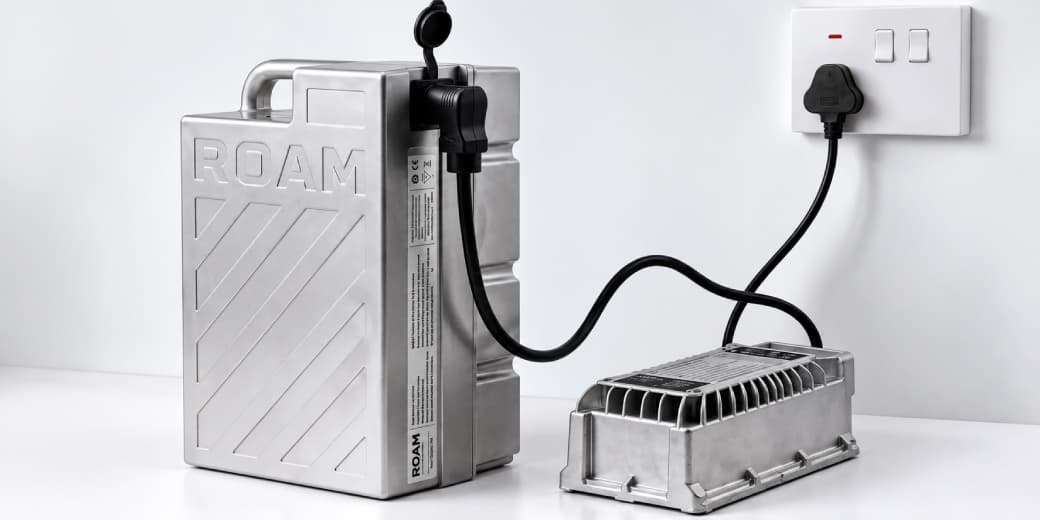
Under Roam's model, a rider can operate with two batteries, leaving one at a Roam Hub while using the other.
There is also an option to purchase a motorcycle with one battery and use rental batteries at Roam Hubs.
That model only works efficiently if batteries are available when riders need them.
Magara says faster charging can reduce charging time from roughly four hours to around one and a half hours.
That changes the throughput of the charging infrastructure.
A charging slot that previously handled one battery over a particular period can now process significantly more batteries.
More charged batteries become available to riders.
That distinction matters.
Imagine an Uber or delivery rider arriving at a charging station but finding that no ready battery is available.
The rider is not earning while waiting.
They may even have to go offline on the platform.
The technology therefore has a second-order effect.
Fast charging improves the availability of batteries, which improves the availability of motorcycles, which can improve the amount of time riders spend working.
That is why Magara's description of fast charging is particularly important.
The benefit is not simply speed.
It is reduced uncertainty.
A rider wants to know that when they go to a charging point, there will be a battery ready for them.
That assurance can be more valuable than another few kilometres of theoretical range.
For a boda-boda rider, downtime has a price
This is where the entire Gen-3 story comes together.
Roam is not designing batteries for people who occasionally take an electric motorcycle to the shops.
It is designing for people whose motorcycles can function as income-generating assets.
That makes reliability an economic feature.
Magara describes the battery's performance requirements in three parts:
Performance.
Reliability.
Longevity.
Performance means the battery should deliver the expected power and range.
Reliability means the motorcycle should be available to work day after day.
Longevity means the battery should remain useful long enough for the owner to recover the investment and ideally make a profit.
That last point is especially important in a market where motorcycles may be financed.
If a rider is making daily repayments, downtime does not necessarily eliminate the financial obligation.
The motorcycle may not be earning, but the repayment schedule can continue.
That makes a battery failure more than a technical inconvenience.
It can become a business problem.
This is why the most revealing answer in the entire interview comes when Magara is asked to strip away the specifications and marketing language and identify the one problem Gen-3 is actually trying to solve.
Her answer is one word:
Reliability.
It applies to the battery's construction.
It applies to its performance.
It applies to its charging behaviour.
It applies to its longevity.
And, increasingly, it applies to the software monitoring the battery.
The industry may be asking the wrong range question
Electric vehicles have spent years fighting range anxiety.
For good reason.
Nobody wants to run out of energy far from a charging point.
But range can also become an oversimplified way of judging an electric motorcycle.
Magara argues that there will probably never be a point where riders simply decide that they have enough range.
The comparison with petrol motorcycles makes that difficult.
A rider accustomed to being able to refuel quickly and continue riding naturally asks why an electric motorcycle cannot offer the same convenience.
If you solve range, the next question becomes charging time.
Solve charging time and degradation becomes the concern.
That creates an endless race.
At some point, an engineer has to decide what level of range is appropriate for the actual customer.
For Gen-3, Roam settled around 80 kilometres as a practical balance.
A point-to-point rider may cover significantly less distance than an Uber driver moving across Nairobi throughout the day.
Design exclusively for the highest-mileage rider and you may make the motorcycle unnecessarily expensive or compromise other characteristics.
Design only for the lowest-mileage rider and you risk leaving a large portion of the market behind.
The goal, therefore, is not maximum range.
It is the right range for the job.
That distinction is easy to miss when battery specifications become the centre of the conversation.
The battery is starting to watch back
The connected nature of Gen-3 introduces another change.
The battery can now provide Roam with information about what happens after the motorcycle leaves the factory.
That matters because battery degradation is not theoretical.
Every cycle, every charge and every operating condition contributes data about how the battery behaves in the real world.
Roam can use that information to monitor battery health and develop predictive-maintenance systems.
For the rider, that could eventually mean fewer unexpected failures and better maintenance decisions.
For Roam, it means something even more fundamental.
The product continues teaching the company after it has been sold.
That creates a feedback loop:
Build the battery.
Deploy it.
Observe how it behaves.
Learn from the data.
Improve the software.
Feed those lessons into future products.
This is one reason the distinction between Gen-3 and Gen-4 matters.
The future of the platform is not simply about putting a newer battery into a newer motorcycle.
It is about making the motorcycle increasingly aware of what is happening inside it.
When the battery says stop
There is another consequence of making the battery smarter.
It has to know when to say no.
If Gen-3 detects a fault while the motorcycle is moving, the battery can communicate with the motorcycle and trigger a controlled response.
The bike slows down and comes to a stop.
The battery raises a fault and cannot be used until the issue is resolved.
This is an important part of battery engineering because safety is not only about preventing every possible fault.
Some faults will happen.
The system therefore needs to recognise them and respond in a controlled way.
The goal is to turn an abnormal condition into a managed event rather than allowing it to become a dangerous failure.
That philosophy runs throughout Gen-3.
Safety takes priority over performance.
The battery is designed to monitor itself.
The motorcycle has to respond when the battery imposes a limit.
And the rider does not necessarily need to understand every technical detail happening underneath.
The 18-tonne truck wasn't the real engineering test
Roam has already attracted attention with public demonstrations involving an 18-tonne truck driving over a battery and demonstrations involving water exposure.
Those images are memorable.
But they are not the entire engineering story.
In fact, Magara makes an important distinction.
Those demonstrations are primarily marketing exercises.
The formal engineering validation happens in laboratories.
For Gen-3, Roam worked with a Chinese partner whose facilities cover hardware, mechanical, electrical and software testing.
The battery went through mechanical tests including vibration, drop, temperature and humidity testing.
Those laboratory tests establish whether the design can withstand defined conditions.
Then comes the second test.
The road.
Roam took the batteries into its actual operating environment to determine whether the laboratory-validated design worked under Kenyan road conditions.
That two-stage approach is important.
Laboratory testing provides controlled validation.
Real-world deployment provides context.
A battery can pass a carefully designed test and still encounter unexpected behaviour when hundreds or thousands of riders use it in ways engineers did not anticipate.
That is why the lessons from customers remain so important.
The road is another testing laboratory.
It just has fewer controlled variables.
The battery may be built for Kenya before it is built in Kenya
There is one final question hanging over the Gen-3 story.
Where will these batteries eventually be made?
Roam intends to assemble batteries locally, following the broader model it has used for motorcycle assembly.
At present, components are imported and assembled locally.
The company is also looking at bringing some component manufacturing into Kenya.
But full local battery manufacturing is considerably harder.
Magara points to three constraints:
Skills.
Infrastructure.
Economies of scale.
The economics are particularly striking.
She estimates that building the battery entirely in Kenya today could cost around three times as much as producing it in China.
That is not necessarily an argument against local manufacturing.
It is an indication of how much infrastructure and supply-chain development has already accumulated in China's battery industry.
Kenya can assemble a battery before it can economically manufacture every component inside it.
That distinction matters for the country's broader electric-mobility ambitions.
Building electric motorcycles locally is one challenge.
Building the cells, electronics, materials, thermal systems and other components that make up their most valuable energy-storage systems is another.
If Kenya wants a genuinely local battery industry, it will need more than an assembly line.
It will need skills, suppliers, capital, manufacturing infrastructure and enough demand to create economies of scale.
Roam's roadmap suggests the company wants to move in that direction.
But the Gen-3 story also shows why that transition will not happen overnight.
Beyond range
The easiest way to describe an electric motorcycle battery is with numbers.
How many kilometres can it travel?
How quickly can it charge?
How much energy can it store?
How long will it last?
Those numbers matter.
But they do not tell the whole story.
For the working boda-boda rider, the more important questions can be much less glamorous.
Will the battery be ready when I need it?
Will it work tomorrow?
Will it survive the roads?
Will it charge without forcing me to lose hours?
Will it remain healthy long enough for me to recover my investment?
Will I know when something is going wrong?
And perhaps most importantly:
Can I depend on this motorcycle to keep earning?
That is the lens through which Roam's Gen-3 battery becomes more interesting.
Its faster charging is not simply about shaving minutes off a specification.
Its thermal management is not simply about protecting cells.
Its software is not simply about adding another layer of technology.
Its durability is not simply about surviving a dramatic demonstration.
All of those things are pieces of a larger engineering objective.
Reliability.
Roam's Gen-3 battery is ultimately an attempt to make the electric motorcycle behave less like an experimental technology and more like the dependable working machine its rider needs it to be.
The battery does not have to win the range race.
It has to be there when the rider is ready to work.
Sources
Ask MAMBO
Have a plain-English question about this topic? Send it in and we may answer it in a future guide.
Ask a questionRelated reading
 MAMBO Explains
NIO's 4,000th battery swap station shows what charging networks still cannot do
NIO's new station can hold more batteries and complete a swap in under two minutes, but the model remains expensive and difficult to standardise.
 MAMBO Explains
7,000mAh phone batteries are becoming normal, but capacity is not the whole story
The OnePlus N6x confirms that huge batteries are reaching affordable phones. Higher-density chemistry helps the trend, but efficiency and health still decide the experience.
 MAMBO vs Real Life
Why electric motorbikes matter more than flashy EV launches
Electric motorbikes are a practical mobility story: battery swaps, charging access, repair networks, and daily earnings all matter more than hype.