

NIO's 4,000th battery swap station shows what charging networks still cannot do
NIO's new station can hold more batteries and complete a swap in under two minutes, but the model remains expensive and difficult to standardise.
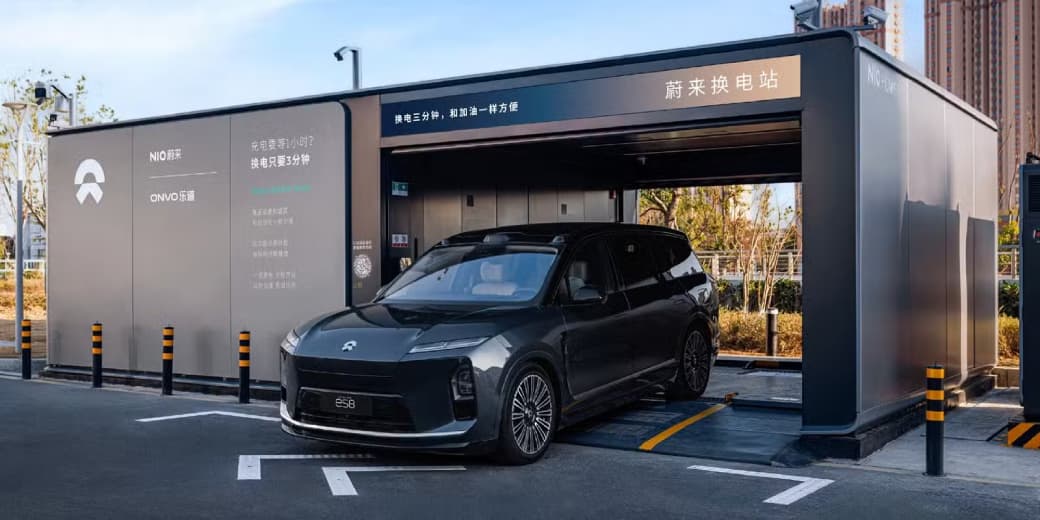
NIO plans to open its 4,000th battery swap station on 7 August 2026 in Quanzhou, Fujian.
The site will also be the first public fifth-generation station and the first to support NIO's smaller Firefly brand alongside NIO and Onvo vehicles.
The new station is expected to complete a swap in about one minute and 48 seconds, store 28 battery packs and handle up to 500 swaps a day.
Those numbers turn battery swapping into a serious infrastructure proposition rather than a showroom trick.
They also expose why few car companies have copied NIO at the same scale.
What you need to know
- The 4,000th station is scheduled for 7 August 2026.
- It had not opened when this article was prepared on 4 August.
- Fifth-generation stations add Firefly compatibility.
- The new design can store 28 battery packs.
- NIO claims a swap time of one minute and 48 seconds.
- The station can reportedly handle up to 500 swaps per day.
- NIO's Battery as a Service model separates vehicle ownership from battery access.
- Battery swapping needs tightly standardised cars, packs, software and infrastructure.
Battery swapping solves a different problem from the luxury cabin race in Xpeng's G9L interior, while African operators still face the practical constraints described in our electric motorbike field analysis.
How battery swapping works
A NIO driver enters the station and positions the vehicle with automated guidance.
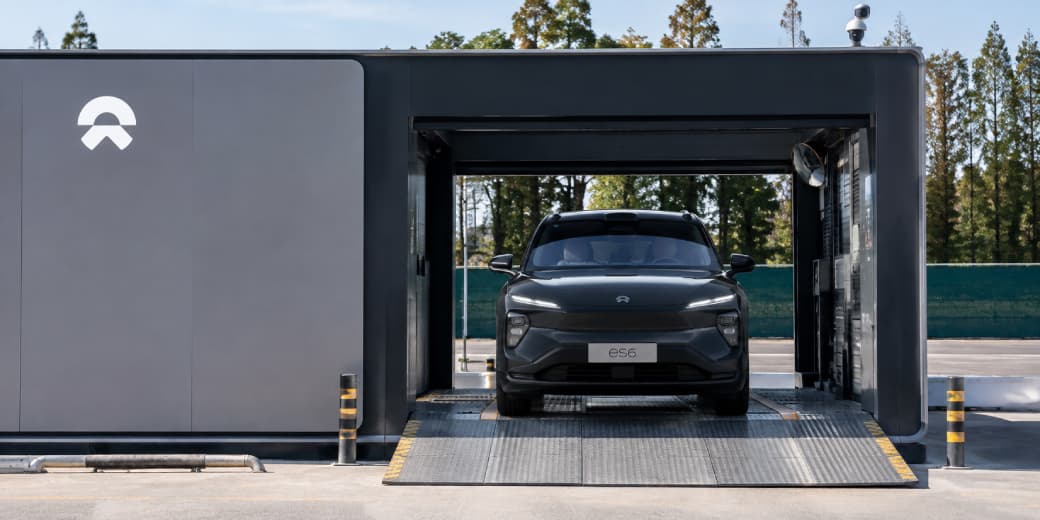
Machines remove the depleted pack from underneath the car and install a charged pack.
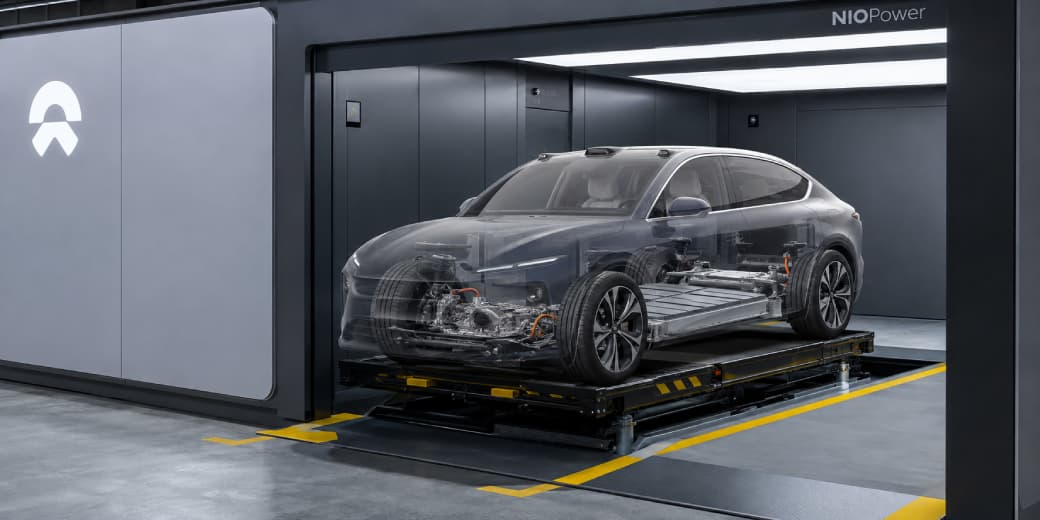
The driver and passengers can remain inside during the process.
The station then charges, monitors and manages the removed battery for later use.
The experience resembles a mechanical pit stop more than conventional charging.
The major advantage is time. A battery swap can take less time than refuelling and paying at a busy petrol station.
The network also moves battery charging away from the vehicle. NIO can charge packs when electricity is cheaper, control temperature and inspect battery health centrally.
Why Firefly support matters
Firefly is NIO's smaller and more affordable electric-vehicle brand.
The cars were designed with battery swapping in mind, but older NIO stations mainly supported larger NIO and Onvo products.
Fifth-generation compatibility expands the value of the infrastructure across more price points.
That matters because swap networks improve as more vehicles use them.
A station serving only expensive cars has a smaller customer base. Supporting Firefly can increase utilisation and spread operating costs across more drivers.
It also makes NIO's ecosystem more coherent.
A customer can enter at a lower price while still receiving access to the company's signature infrastructure.
Why swapping can beat
Swapping provides predictable time, central battery-health inspection, lower vehicle purchase prices under Battery as a Service, and grid flexibility.
Fast charging remains simpler to deploy because many vehicle brands can share a connector.
Swapping provides a better experience only when the network is dense enough.
A motorway full of compatible stations feels effortless. A driver far from the network owns a car with a very specialised talent and nowhere to perform it.
Why swapping is difficult to copy
Battery packs are structural parts of modern EVs.
Manufacturers use different shapes, voltages, cooling systems, mounting points, software, safety systems, cell chemistries and vehicle platforms.
A swap station needs precise compatibility.
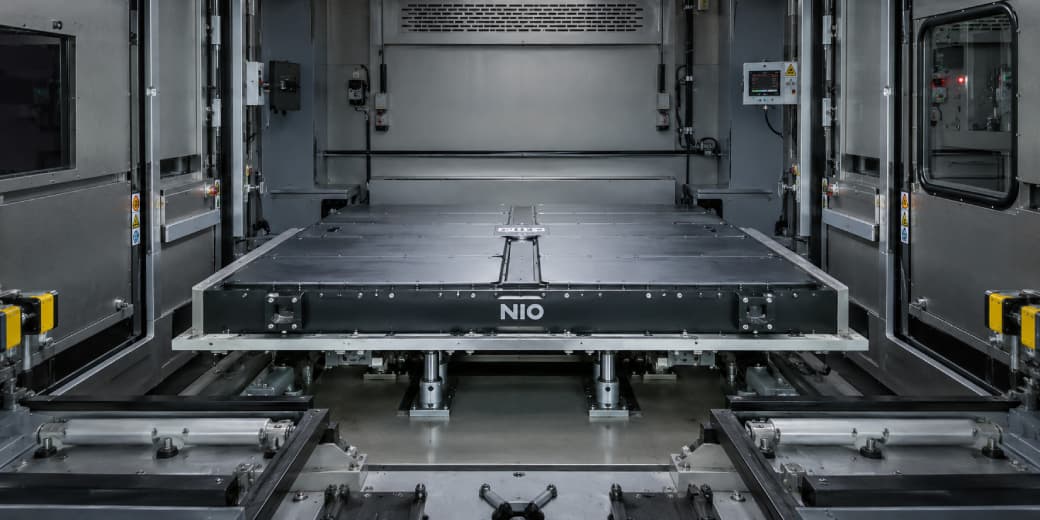
Standardising batteries can limit vehicle design freedom and require competitors to agree on architecture.
NIO has an advantage because it designed vehicles and infrastructure together.
A public fast charger can serve many brands.
A NIO station mainly serves NIO's ecosystem.
The model resembles a proprietary fuel network where the nozzle includes an entire floor-mounted battery.
The economics remain difficult
Battery swap stations are expensive to build and operate.
Costs include land, machinery, grid connection, spare battery inventory, maintenance, insurance, software, electricity and battery degradation.
The station needs enough daily swaps to justify those costs.
A sparse network creates range anxiety. A dense network requires heavy upfront investment.
NIO has accepted that burden because swapping differentiates its cars and supports subscriptions.
The company has also faced sustained financial losses, making the long-term return on the network an important question.
Infrastructure can create a competitive moat.
It can also become a very expensive moat that needs electricity and technicians.
What fifth generation improves
The fifth-generation design reportedly reduces swap time by 36 seconds, increases stored packs from 21 to 28, supports up to 500 daily swaps and adds Firefly compatibility.
These changes increase throughput.
A station completing more swaps can serve more customers without requiring more sites.
capacity also matters during peak periods. More packs reduce the risk that drivers arrive and wait for batteries to charge.
The real test will be reliability under heavy use.
A fast station that frequently needs maintenance creates a different kind of waiting.
Is battery swapping better for battery health?
Central management gives NIO visibility into every pack that passes through the network.
The company can monitor temperature, charging history, capacity and faults. A weak pack can be removed from circulation rather than remaining hidden inside one owner's vehicle.
This model can reduce anxiety about degradation for subscribers because the customer is buying access to an energy service rather than becoming permanently attached to one ageing battery.
It also creates trust questions.
Drivers need assurance that they will not receive a materially weaker pack, and the service needs transparent health standards.
The customer should know what minimum capacity and safety condition the subscription guarantees.
Is battery swapping better for the grid?
It can be.
A conventional fast charger responds when the driver arrives. That may coincide with peak electricity demand.
A swap station maintains an inventory of batteries and can schedule charging.
It can slow charging during grid stress, charge when renewable energy is abundant and potentially support demand response.
This flexibility requires software, market rules and a strong grid connection.
The station is effectively a managed battery warehouse.
That can make it valuable to energy systems as well as drivers.
Could swapping work in Africa?
Battery swapping already has relevance in African electric motorcycle markets.
Motorcycles use smaller packs that can be handled manually or with simple equipment. Companies can standardise fleets and place swap cabinets near riders.
Passenger cars are harder.
A NIO-style car network would require high vehicle volume, large capital investment, standard packs, reliable electricity, land, technical support and clear safety rules.
The model may work first for taxis, buses and commercial fleets with predictable routes.
For private passenger cars, conventional charging is likely to remain easier in most African markets.
Still, NIO's progress proves that charging is not the only possible electric refuelling model.
The tecMAMBO take
NIO's 4,000th station is a genuine infrastructure achievement, although the milestone was still scheduled rather than completed when this article was prepared.
Battery swapping solves the waiting problem elegantly.
It replaces charging uncertainty with mechanical standardisation and enormous capital cost.
NIO's fifth-generation station makes the experience faster and opens it to Firefly drivers.
The next question is not whether swapping works.
It is whether the economics can work as impressively as the machine.
FAQ
When will NIO open its 4,000th swap station?
NIO plans to open the station on 7 August 2026 in Quanzhou, China.
How long does a fifth-generation NIO battery swap take?
NIO says the new station can complete a swap in about one minute and 48 seconds.
Does the station support Firefly cars?
Yes. Firefly compatibility is one of the main additions in the fifth-generation station.
How many batteries can the station store?
Reports say the new design holds 28 battery packs.
Is battery swapping cheaper than charging?
It depends on the subscription, energy price, vehicle purchase model and network economics. The main consumer benefit is speed and predictable access.
Sources
Share this story
Enjoyed this? Share it with someone who'd appreciate it.
Ask MAMBO
Have a plain-English question about this topic? Send it in and we may answer it in a future guide.
Ask a questionRelated reading

Beyond Range: How Roam Engineered Its Gen-3 Battery Around the Working Boda-Boda Rider
Roam’s new Gen-3 battery is faster to charge, more connected and built to withstand the realities of commercial electric motorcycle use. But its most important upgrade may be something less obvious: reliability.
Xpeng's G9L turns the electric SUV into a private lounge on wheels
The G9L is not competing only on range and acceleration. It is selling the cabin as a mobile living room, office and rest space.
BYD retakes the EV crown as June numbers land
BYD delivered 557,090 fully electric vehicles in Q2 2026, ahead of Tesla's 480,126, while NIO posted its best month of the year.