
NIO and Geely join forces on battery swapping and charging in China
NIO and Geely are combining battery-swapping and charging assets in China in a strategic partnership designed to align networks and standards.
Quick answer
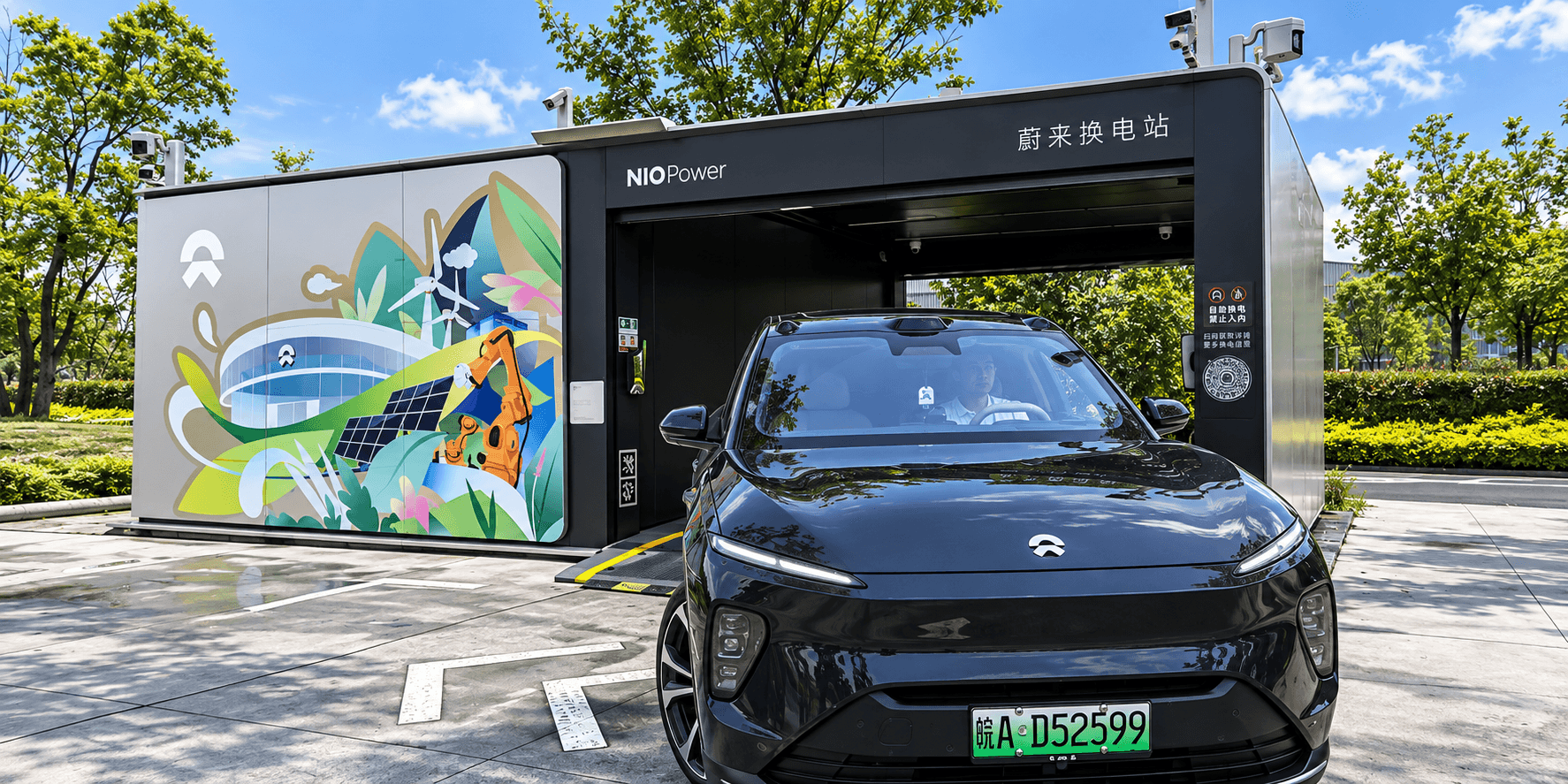
NIO and Geely are moving battery swapping closer to becoming shared infrastructure in China. The companies have entered a strategic partnership covering battery swapping, charging networks, technology and operating standards.
NIO and Geely are moving battery swapping closer to becoming shared infrastructure in China. The companies have entered a strategic partnership covering battery swapping, charging networks, technology and operating standards.
Under the transaction, Geely will contribute 100% of Yiyi Power and RMB 640 million in cash to NIO Power. After completion, Geely will hold 30% of NIO Power, while NIO China retains a controlling interest. NIO will also take a 10% stake in Geely's Haohan Energy charging business.
Why battery swapping matters
has improved dramatically, but charging still requires the vehicle to remain connected for a period of time. Battery swapping approaches the problem differently. A compatible vehicle can enter a station, remove its depleted battery and receive a charged pack.
That is particularly attractive for commercial fleets, where downtime directly affects revenue. A taxi, delivery vehicle or fleet car can spend less time waiting for energy.
The problem is compatibility
Battery swapping works best when vehicles share physical, electrical and software standards. If every manufacturer uses a different battery format, stations become isolated assets.
The NIO and Geely agreement directly addresses that problem by planning unified swapping technologies and standards for consumer vehicles. Geely also intends to develop compatible consumer models, while NIO Power will provide swapping services.
The commercial fleet angle
Yiyi Power focuses on commercial mobility. Its integration into NIO Power gives the combined business a stronger position in a segment where charging speed has direct economic value.
Commercial fleets operate for long hours and can accumulate high mileage. A charging solution that reduces downtime can therefore be worth more to a fleet operator than the same solution is to a private driver.
NIO and Geely are linking conventional charging too
The partnership is not limited to battery swapping. NIO will acquire a 10% stake in Haohan Energy, while the companies plan to connect their charging infrastructure.
That matters because EV drivers need multiple energy options. A private owner may charge overnight. A highway driver may need fast charging. A commercial fleet may prefer swapping. A broader network can support all three.
What this could mean for consumers
If more vehicle models become compatible with the same swap network, consumers gain flexibility. The station becomes more valuable because it can serve more vehicles, while manufacturers can avoid duplicating every infrastructure investment.
The agreement is not yet an industry-wide standard. Regulatory approvals, technical work and compatible vehicle launches still have to follow.
The economics remain difficult
Battery swapping requires stations, land, machinery and inventories of charged batteries. Operators must predict demand carefully. An underused station ties up capital, while an overloaded station can run short of available batteries.
China is an unusually strong testing ground because of its large EV market and dense urban corridors. Whether the model translates easily to other markets remains an open question.
The tecMAMBO take
The most important part of the NIO and Geely deal is not the ownership percentages. It is the attempt to reduce fragmentation. Battery swapping becomes much more useful when several vehicle manufacturers can share infrastructure and standards.
If the companies deliver compatible vehicles and a shared network, the partnership could become a template for infrastructure cooperation in a market where automakers usually compete aggressively.
FAQ
How much of NIO Power will Geely own?
Geely is set to hold 30% of NIO Power after the transaction closes, subject to the deal conditions.
How much cash is Geely contributing?
RMB 640 million, alongside the transfer of Yiyi Power.
Will Geely vehicles use NIO swap stations?
The companies plan to develop compatible consumer-facing Geely models and unified standards.
What does NIO get from the charging deal?
NIO will hold 10% of Haohan Energy and the companies plan to connect their charging networks.
Sources
Share this story
Enjoyed this? Share it with someone who'd appreciate it.
Ask MAMBO
Have a plain-English question about this topic? Send it in and we may answer it in a future guide.
Ask a questionRelated reading
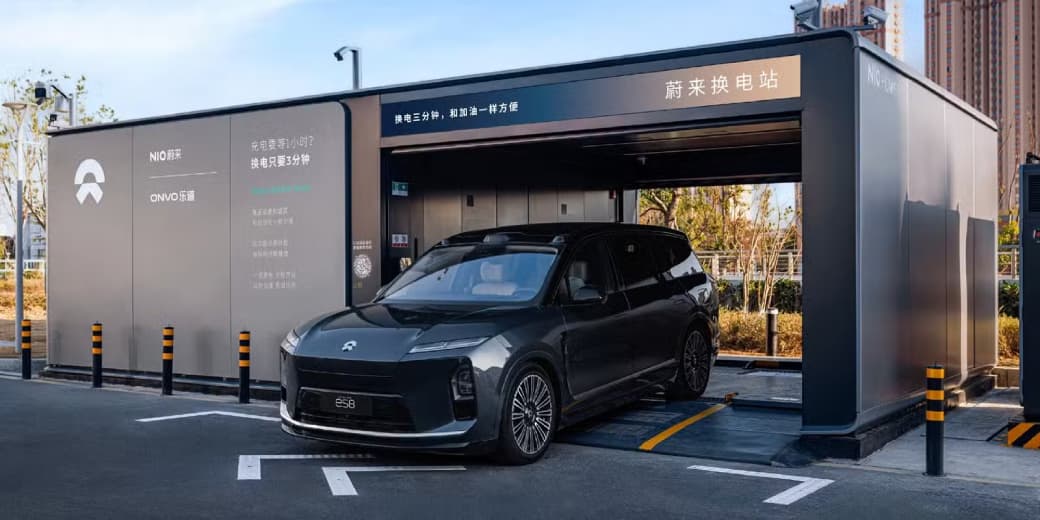
NIO's 4,000th battery swap station shows what charging networks still cannot do
NIO's new station can hold more batteries and complete a swap in under two minutes, but the model remains expensive and difficult to standardise.
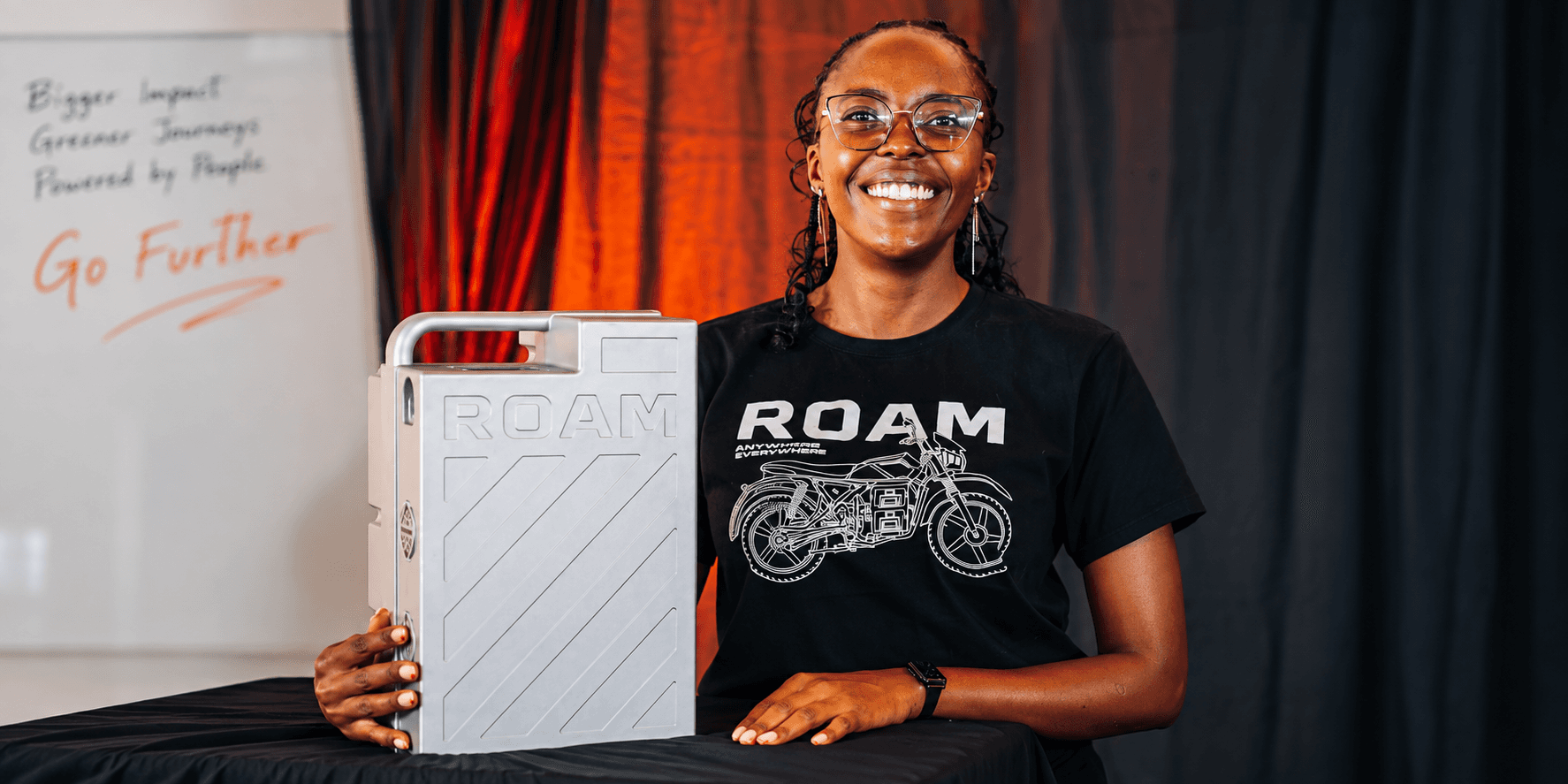
Beyond Range: How Roam Engineered Its Gen-3 Battery Around the Working Boda-Boda Rider
Roam’s new Gen-3 battery is faster to charge, more connected and built to withstand the realities of commercial electric motorcycle use. But its most important upgrade may be something less obvious: reliability.
Xpeng's G9L turns the electric SUV into a private lounge on wheels
The G9L is not competing only on range and acceleration. It is selling the cabin as a mobile living room, office and rest space.