
Apple owns 65 percent of the premium phone market, but the number hides a changing battlefield
Apple captured 65 percent of the global premium smartphone market in the first half of 2026, according to Counterpoint Research. The research firm defines the segment using a wholesale average selling price of at least $600.
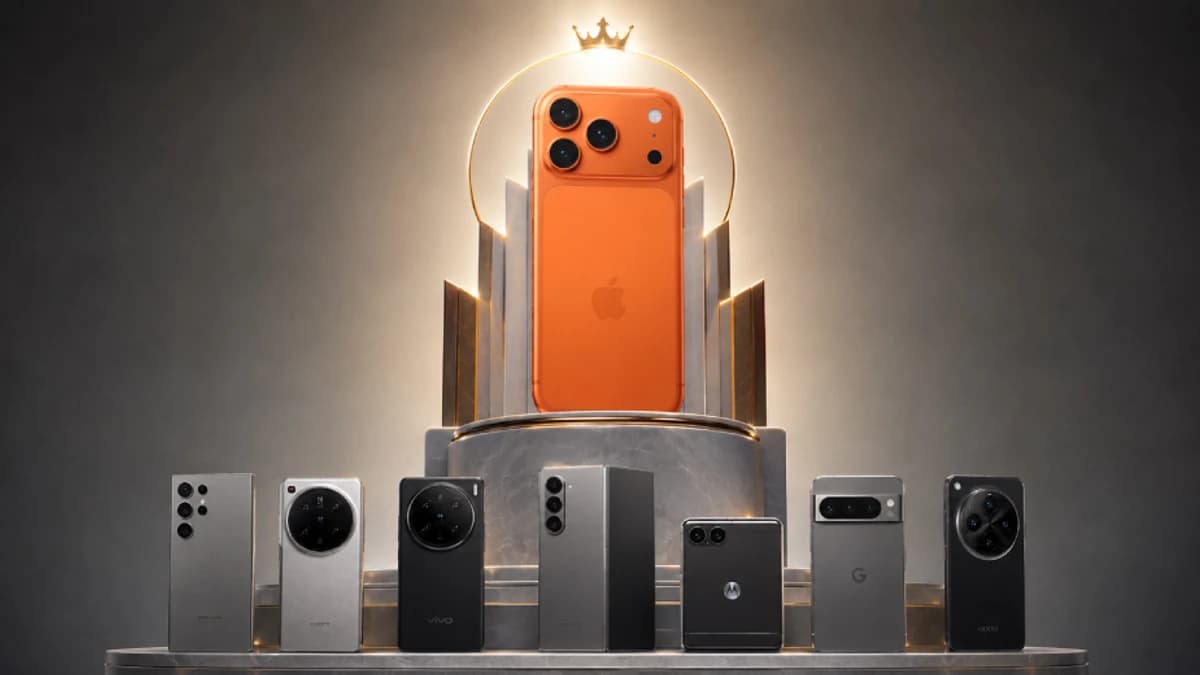
Apple captured 65 percent of the global premium smartphone market in the first half of 2026, according to Counterpoint Research.
The research firm defines the segment using a wholesale average selling price of at least $600.
Premium phones also reached a record 29 percent share of overall smartphone sales.
That sounds like complete Apple domination. It is also a reminder that the market Apple dominates is becoming more important while its own share has fallen from the levels it held several years ago.
What you need to know
- Apple held 65 percent of the premium segment in H1 2026.
- Premium phones represented a record 29 percent of global smartphone sales.
- Apple's premium-segment revenue grew year on year.
- The base iPhone 17 reportedly contributed strongly.
- Chinese premium brands continue gaining ground, especially in China.
- A global premium share does not describe every national market.
Why premium phones keep growing
The smartphone replacement cycle has become longer.
People keep devices for four, five or more years. When they finally replace them, many decide to buy something better rather than repeat the same tier.
Financing also makes expensive phones feel more manageable. The buyer thinks in monthly payments rather than full retail price.
Premium devices additionally offer longer software support, better cameras, stronger resale value, more , better materials and tighter ecosystem integration.
Manufacturers prefer this shift because premium phones generate more revenue and often better margins.
Consumers may be buying fewer phones. The industry is learning to make each purchase more expensive.
Why Apple remains unusually strong
Apple has several advantages that reinforce one another.
The iPhone connects to Apple Watch, AirPods, Mac, iPad, iCloud, Messages, FaceTime, Apple Pay and App Store purchases.
Leaving the iPhone can therefore mean reconsidering several other products and services.
Apple also supports devices for many years, which strengthens resale value. A used iPhone often remains commercially desirable long after launch.
The brand is not merely selling hardware. It is selling a durable position inside an ecosystem.
The 65 percent number is not invulnerability
Counterpoint's longer trend shows Apple's premium share has declined from higher levels earlier in the decade.
Chinese manufacturers have improved rapidly.
Huawei remains powerful in China. Honor, Xiaomi, OPPO and vivo compete with high-end cameras, foldables, batteries and charging systems. Samsung remains the major global premium Android competitor.
The premium market is expanding faster than Apple's ability to own all of it.
That is healthy. A company with 65 percent share still needs competition more than applause.
Why China matters
China is one of the world's largest premium phone markets.
Apple faces local brands that understand domestic services, retail, AI features and consumer tastes. Geopolitics also affects purchase decisions.
A decline in China can reduce Apple's global share even when iPhone demand remains strong elsewhere.
The company therefore needs new reasons to upgrade. Camera improvements and faster processors are increasingly incremental.
Foldables, AI, health integration and ecosystem services may become the next premium battleground.
What this means for African markets
Premium-market statistics can look distant from African buying behaviour.
They still matter.
Global premium demand affects which features appear first, used-device supply, prices, repair markets, accessory ecosystems, importer inventory and financing offers.
A strong iPhone resale market in Europe, the US and the Gulf eventually supplies many second-hand devices to African buyers.
Premium dominance upstream becomes used-device availability downstream.
That is one reason the iPhone can remain culturally visible even where new flagship prices are unaffordable to most buyers.
Is a premium phone better value?
Sometimes.
A phone that costs twice as much but lasts twice as long can be rational.
The buyer should consider support years, battery replacement, repair cost, storage, resale value, , insurance and financing interest.
Premium is not automatically value.
A $1,200 phone with a fragile screen and expensive repairs can be a poor financial decision.
The best device is the one whose total ownership cost matches how long you realistically keep it.
Apple's market power also shapes its launch strategy, including why its 2026 iPhone plan could leave budget buyers waiting until 2027.
The tecMAMBO take
Apple's 65 percent share confirms something larger than iPhone popularity.
The smartphone industry increasingly makes its money at the top.
That gives Apple enormous power. It also gives competitors a clear target.
The next premium winner may not be the brand with the fastest processor. It may be the brand that gives buyers a reason to believe a very expensive phone deserves five years of their life.
FAQ
What counts as a premium smartphone?
Counterpoint's analysis uses a wholesale average selling price of at least $600.
What share does Apple hold?
Apple held 65 percent of the global premium smartphone segment in H1 2026.
Is Apple's share growing?
The premium segment is growing, while Apple's share is lower than its peak levels from earlier years.
Why is the premium segment expanding?
Longer replacement cycles, financing, ecosystem lock-in and demand for long-lasting devices all contribute.
Does the figure include used iPhones?
The market-share analysis concerns new smartphone sales, not the secondary market.
Sources
Share this story
Enjoyed this? Share it with someone who'd appreciate it.
Ask MAMBO
Have a plain-English question about this topic? Send it in and we may answer it in a future guide.
Ask a questionRelated reading

iPhone Duo vs Samsung Galaxy Z Fold8: What Apple Actually Got Right, and What It Didn't
This is analysis, not neutral reporting.
No, iPhone-to-Windows clipboard sync has not launched yet. Here is what actually changed
Apple is developing native iPhone-to-Windows clipboard sharing after a Microsoft EU interoperability request, but release may not arrive until 2027 or 2028.
Apple's PlasmaSolve acquisition is about the invisible engineering that makes hardware last
The deal strengthens Apple's ability to simulate coatings and manufacturing processes before committing to expensive production runs.