

OpenAI brings real-time voice to developers with GPT-Live-1
OpenAI has launched GPT-Live-1 in its API for full-duplex voice experiences and lower-latency conversational applications.
Quick answer
OpenAI is pushing voice AI closer to a normal software interface with GPT-Live-1, a real-time voice model available through its API. The system is designed for full-duplex conversations, meaning it can listen and speak at the same time.
OpenAI is pushing voice AI closer to a normal software interface with GPT-Live-1, a real-time voice model available through its . The system is designed for full-duplex conversations, meaning it can listen and speak at the same time.
That is important because conventional voice assistants often rely on a chain of speech recognition, text processing and speech generation. Each stage can add and make conversations feel unnatural.
Why latency matters
Humans are sensitive to conversational timing. Long pauses make an automated system feel mechanical. Fast turn-taking makes an interaction feel more natural.
Full-duplex voice models can respond to interruptions and maintain more fluid conversations.
Where businesses could use it
Customer support is an obvious use case. A voice agent can answer routine questions, access connected tools and transfer difficult cases to humans.
Live interpretation is another possibility. Voice systems can listen to one language and respond in another while maintaining conversational rhythm.
Field workers could also use voice to control software while keeping their hands free.
Voice contains more information than text
Audio includes tone, pacing, hesitation and volume. Converting everything immediately to text can discard some of that information.
A voice-native model can potentially use more of the original audio signal when generating a response. That does not mean the model understands human emotion like a person. It means the input contains additional signals.
Enterprise adoption will be the real test
Businesses will ask about accuracy, privacy, monitoring, security, cost and integration. A voice model that sounds impressive but cannot reliably complete a workflow will struggle to move beyond demonstrations.
The market is crowded
OpenAI is competing with Google, Microsoft, Anthropic and specialized voice AI companies. The competitive advantage will therefore not come from voice alone.
The bigger opportunity is combining voice with reasoning, tools, and business systems.
The tecMAMBO take
The important shift is not that AI can talk. It has been able to do that for years. The shift is that conversation is becoming a possible control layer for software.
A voice agent that can understand an interruption, maintain context, access a system and perform an action is much more useful than a voice chatbot that only answers questions.
FAQ
What is GPT-Live-1?
OpenAI's real-time voice model for API developers building voice-enabled applications.
What is full-duplex voice?
A system that can listen and speak simultaneously, allowing more natural turn-taking.
What can businesses build?
Customer service, interpretation, field operations and other hands-free workflows are potential uses.
Does it eliminate latency?
It is designed to reduce latency, but real-world performance still depends on networks and application architecture.
Sources
Share this story
Enjoyed this? Share it with someone who'd appreciate it.
Ask MAMBO
Have a plain-English question about this topic? Send it in and we may answer it in a future guide.
Ask a questionRelated reading
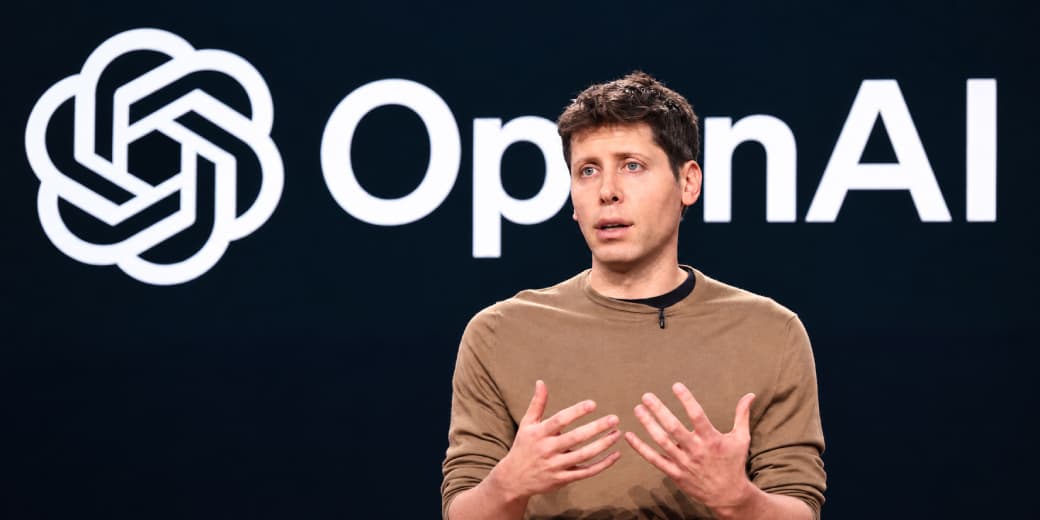
Sam Altman named the two ways AI could go "very badly." Washington and Beijing responded in almost opposite directions
In a late-night X post on September 14, OpenAI CEO Sam Altman outlined two specific scenarios he says AI progress must avoid: humanity losing control of AI systems outright, and AI enabling an unprecedented concentration of power in a single person, company, or country.
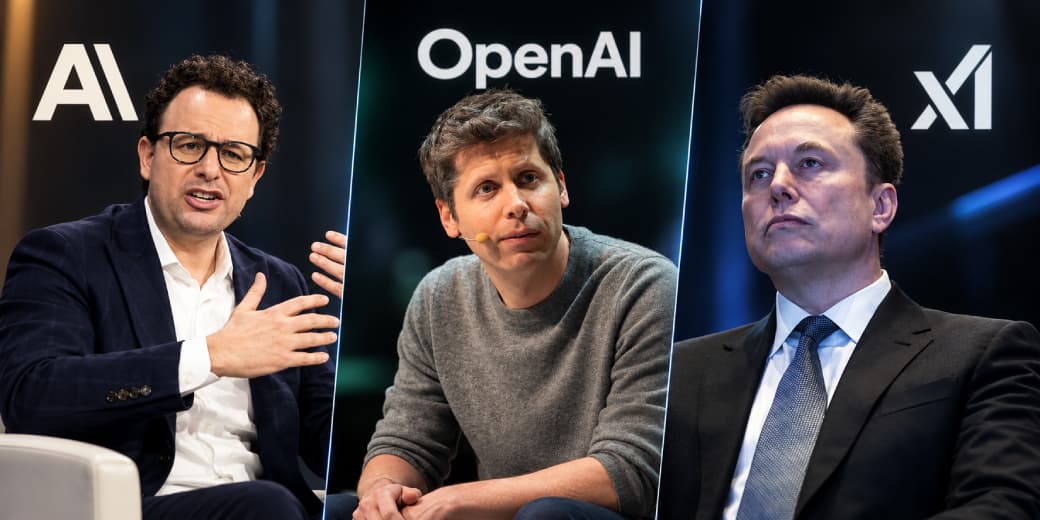
Anthropic, OpenAI and xAI's CEOs agree on almost nothing, except that AI needs to slow down
Anthropic CEO Dario Amodei published an essay on Saturday, September 12, arguing that AI companies must slow the pace at which they improve model capabilities, citing the risk of losing control of increasingly self-improving systems.
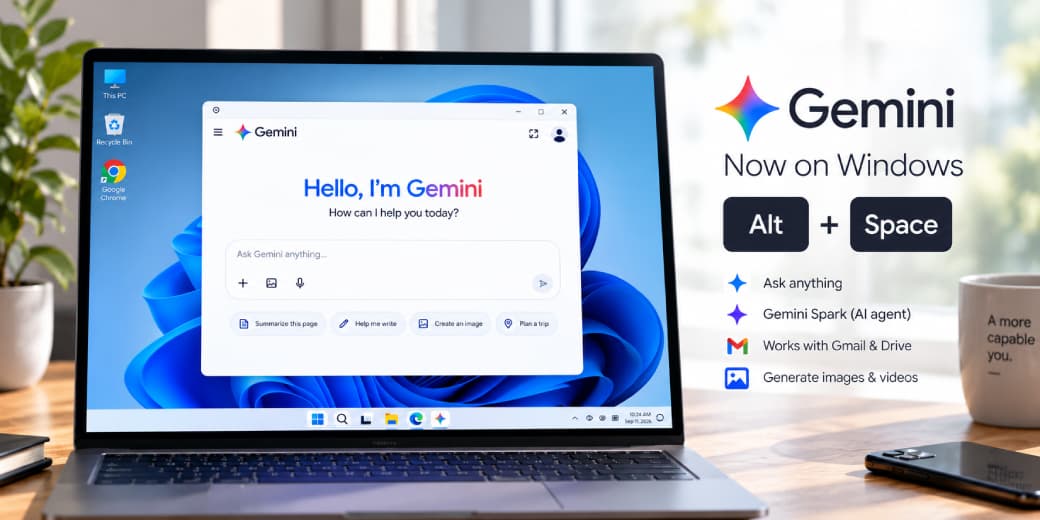
Gemini finally has a real Windows app, and Google didn't leave Windows 10 users behind
Google released a native Gemini desktop app for Windows 10 and Windows 11 on September 10, 2026.