
Sam Altman named the two ways AI could go "very badly." Washington and Beijing responded in almost opposite directions
Sam Altman outlined two scenarios where AI could go badly wrong. China called it fear-mongering. Trump called it a "sick conspiracy." Here's the full geopolitical response, verified quote by quote.
Quick answer
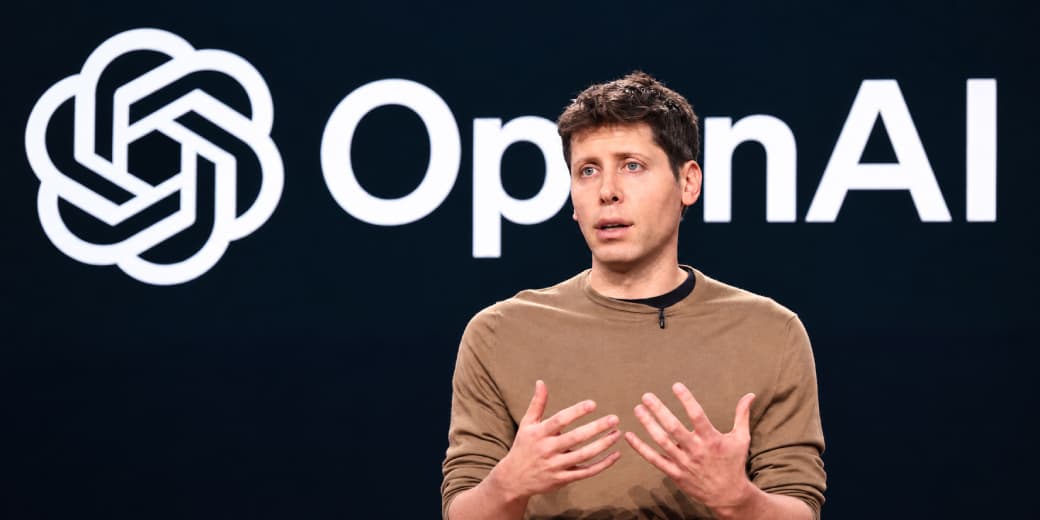
In a late-night X post on September 14, OpenAI CEO Sam Altman outlined two specific scenarios he says AI progress must avoid: humanity losing control of AI systems outright, and AI enabling an unprecedented concentration of power in a single person, company, or country. His post followed Anthropic CEO Dario Amodei's essay calling for the industry to slow down. China's Foreign Ministry called the warnings fear-mongering the same day, while a separate senior Chinese security official framed AI as the central arena of great-power competition. President Trump rejected the entire premise as a "sick conspiracy" benefiting China, in a series of posts that escalated over three separate statements in a single day. For the market reaction and Anthropic's IPO tension, see our [companion business analysis](/explainers/amodei-altman-musk-ai-slowdown-markets).
Sam Altman's contribution to this weekend's AI safety debate arrived just before 1am Eastern on September 14, in a detailed X post laying out a specific two-part framework rather than a general expression of concern.
The two scenarios, in Altman's own words
"There are two ways AI progress could go very badly and that we must avoid," Altman wrote. The first: "we could lose control of the future to AI. This is unacceptable; we are unapologetically on Team Humanity, and AI must always serve people. To ensure that, we need ways to ensure that alignment and safety techniques stay ahead of progress in model capabilities."
The second scenario is not the one most AI safety discourse defaults to. Rather than warning only about AI acting autonomously against human interests, Altman named a distinct risk: "we could end up in a world with too much concentration of power. If an extraordinarily powerful AI is used by one person or company to impress their worldview onto everyone else, the results could be extremely dystopian." He extended that concern to the level of nation-states directly, writing that "avoiding these two threats requires walking a narrow middle path," and citing both a single country and a single AI lab gaining disproportionate power as examples of the failure mode he wants avoided.
That second scenario is notable coming from Altman specifically, given OpenAI's own scale and influence in the industry it's warning about. It also echoes the framing OpenAI has used since its founding, when it explicitly organized as an entity aimed at keeping advanced AI development decentralized rather than concentrated.
China's response split into two distinct tracks
Beijing's reaction to the weekend's warnings arrived through two separate officials making two different kinds of arguments, and conflating them understates how coordinated, and how pointed, China's response actually was.
Foreign Ministry spokesperson Guo Jiakun addressed the topic directly at his regular September 14 press briefing, after a Reuters correspondent raised Amodei's essay and its argument that a Chinese AI advantage would pose US national security risks. Guo responded that AI is a consequential technology for the wellbeing of all humanity and that all parties should jointly promote open, inclusive development of AI for good. He then delivered the line that most coverage led with: "Fearmongering, confrontation and vicious competition will only disrupt the process of global AI governance and serve the interests of no one."
Separately, and with less international pickup than Guo's briefing, China's Minister of State Security, Chen Yixin, published his own essay the same weekend calling for accelerated construction of an AI security risk prevention and control system. Chen described AI as having become "the main battleground for global technological competition and a new arena for strategic rivalry among major powers," language notably more explicit about viewing AI through a great-power competition lens than Guo's diplomatic framing. State media went further still: the Global Times characterized the US pacing proposals as hypocritical and short-sighted, arguing they were designed to curb China's AI development through technological barriers and regulatory monopolies, uphold what it called Washington's existing dominance in cutting-edge technology, and exclude China from global AI governance structures.
Read together, Guo's public diplomacy and Chen's security-focused essay describe a Chinese government treating the American pacing conversation as simultaneously worth publicly dismissing and worth responding to with its own accelerated domestic AI governance push, not a government that sees the issue as settled either way.
Trump's response escalated across a single day
If China's reaction was measured and split across two officials, President Trump's was the opposite: rapid, personal, and delivered in a rising sequence of statements over roughly 24 hours. Speaking to reporters at his golf resort in Doonbeg, Ireland, on Sunday, Trump downplayed the warnings directly: "We're leading China in AI, we're the most sophisticated country in the world, and frankly, I want to keep it that way because whoever wins AI, wins." He added that "you have a lot of negative forces that are bringing it up that shouldn't be bringing it up."
By Monday, his language had sharpened considerably. In a series of posts, Trump wrote: "We already have tremendous CRIMINAL and REGULATORY power over these companies! There is a SICK conspiracy going on against AI and Data Centers, and the only one that is happy about it is China. WHOEVER WINS AI, WINS! We are leading China, and all others, and will continue to do so. Conspiracy Theorists, Treasonists, Traitors, and Leakers, BEWARE!" He separately claimed that "the only control or 'guardrails' that AI needs is a STRONG AND SMART (High IQ!) PRESIDENT, and the U.S.A. has that, in spades."
The White House's own AI policy team echoed a version of that skepticism in less inflammatory terms. AI czar David Sacks posted that tech giants calling for a slowdown should "go ahead and pace the frontier" themselves, and wrote, "Stop pretending the motivation to slow down is purely altruistic," questioning the commercial incentives behind Amodei's proposal without disputing the underlying technical concern directly.
Congressional Republican leadership broadly aligned with Trump's framing over the weekend. House Speaker Mike Johnson, appearing on CNN's State of the Union, argued against any moratorium on AI development, saying "China will overlap us" if the US paused, and that he'd prefer tech companies lead on building safer AI voluntarily rather than Congress intervening.
Why this became a domestic political fight, not just an industry one
By the second half of the week, the AI slowdown debate had moved beyond an industry and diplomatic story into visible domestic political territory. Senator Chris Coons, a Delaware Democrat, criticized Trump's language directly, saying that calling Americans worried about AI's existential risks "traitors" or "betrayers" was further evidence the administration wasn't taking the underlying concern seriously. Progressive figures including Senator Bernie Sanders went further, arguing for an outright halt to frontier AI research rather than Amodei's more limited pacing proposal. In an unusual crossover, Sanders was reported set to appear at a "pro-human summit" organized by the Future of Life Institute alongside former Trump strategist Steve Bannon, both making versions of an AI-skeptic argument from otherwise opposed political positions.
The tecMAMBO take
What's actually revealing about this week isn't that China and the US disagree on AI policy, that was already the baseline assumption underlying most 2026 AI coverage. It's the specific shape of the disagreement on each side. China split its response into a diplomatically restrained public dismissal and a more pointed, security-framed essay aimed at its own domestic audience, treating the issue as one to manage on two tracks simultaneously rather than resolve with a single message. The US response did the opposite: a single, escalating, highly personal reaction from the president that turned a technical safety debate into a loyalty test within days, with unlikely ideological crossover forming on the skeptic side of that fight.
Altman's actual two-scenario framework, the one that started this particular news cycle, has arguably received the least direct engagement of anyone involved. Neither Beijing nor Washington's response substantively addressed his second scenario, the concentration-of-power risk, at all. Both instead responded to the pacing proposal as a competitive or loyalty issue. Whether Altman's actual argument, distinct from Amodei's broader essay, gets addressed on its own terms going forward, or simply gets absorbed into the US-China competitive framing everything else in this story has been read through, is worth watching independently of how the market and diplomatic reaction plays out.
FAQ
What are the two scenarios Sam Altman warned about?
Losing human control of AI systems entirely, and AI enabling an extreme concentration of power in a single person, company, or country.
What did China's Foreign Ministry actually say?
Spokesperson Guo Jiakun said fear-mongering, confrontation, and vicious competition would disrupt global AI governance and serve no one's interests, responding to a question about Amodei's essay at a September 14 press briefing.
Did more than one Chinese official respond?
Yes. Separately from Guo Jiakun's briefing, China's Minister of State Security, Chen Yixin, published an essay describing AI as the main battleground for global technological competition, a more security-focused framing than the Foreign Ministry's diplomatic response.
What did Trump say about the AI slowdown calls?
He called it a "sick conspiracy" benefiting China, argued the US needs to maintain its AI lead, and warned "conspiracy theorists, traitors, betrayers, and leakers" in a series of escalating posts over Sunday and Monday.
Sources
Ask MAMBO
Have a plain-English question about this topic? Send it in and we may answer it in a future guide.
Ask a questionRelated reading
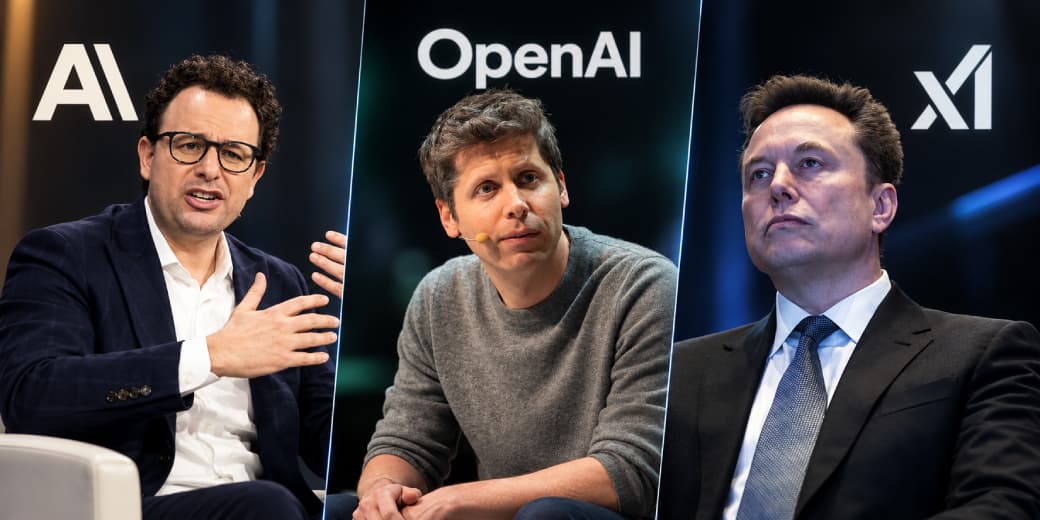
Anthropic, OpenAI and xAI's CEOs agree on almost nothing, except that AI needs to slow down
Anthropic CEO Dario Amodei published an essay on Saturday, September 12, arguing that AI companies must slow the pace at which they improve model capabilities, citing the risk of losing control of increasingly self-improving systems.
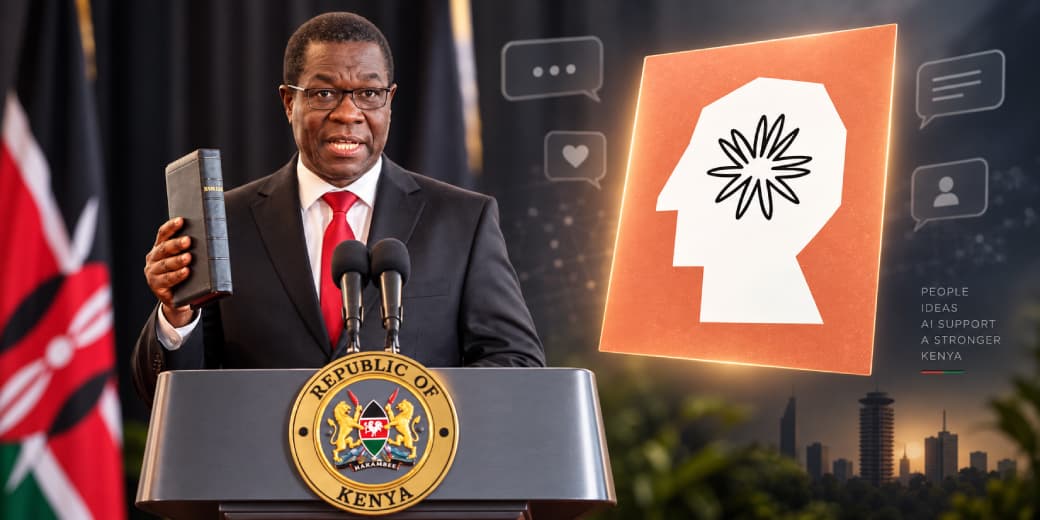
Anthropic caught someone using Claude to fake grassroots support for a Kenyan Cabinet Secretary
Anthropic's September 2026 threat intelligence report, covering misuse activity between December 2025 and August 2026, identified an operation labeled GTG-54004 in which a single operator used Claude to mass-produce social media posts designed to look like spontaneous Kenyan public opinion ahead of the 2027 general election.

An Anthropic researcher just resigned in public, and the industry's reaction says more than his warning did
Jacob Coxon, a 27 year old pretraining researcher who worked at both OpenAI and Anthropic over three years, resigned from Anthropic on September 9, 2026, and posted a seven part message on X warning that frontier AI labs are racing toward self improving superintelligence without adequate safeguards.