

OpenAI Debuts "Dots" Personal AI Agents and the Cost-Optimized GPT-6.1 Sol Model
OpenAI has announced Dots, autonomous personal AI agents for background tasks, plus the cost-optimized GPT-6.1 Sol. Here is what they do and why it matters.
Quick answer
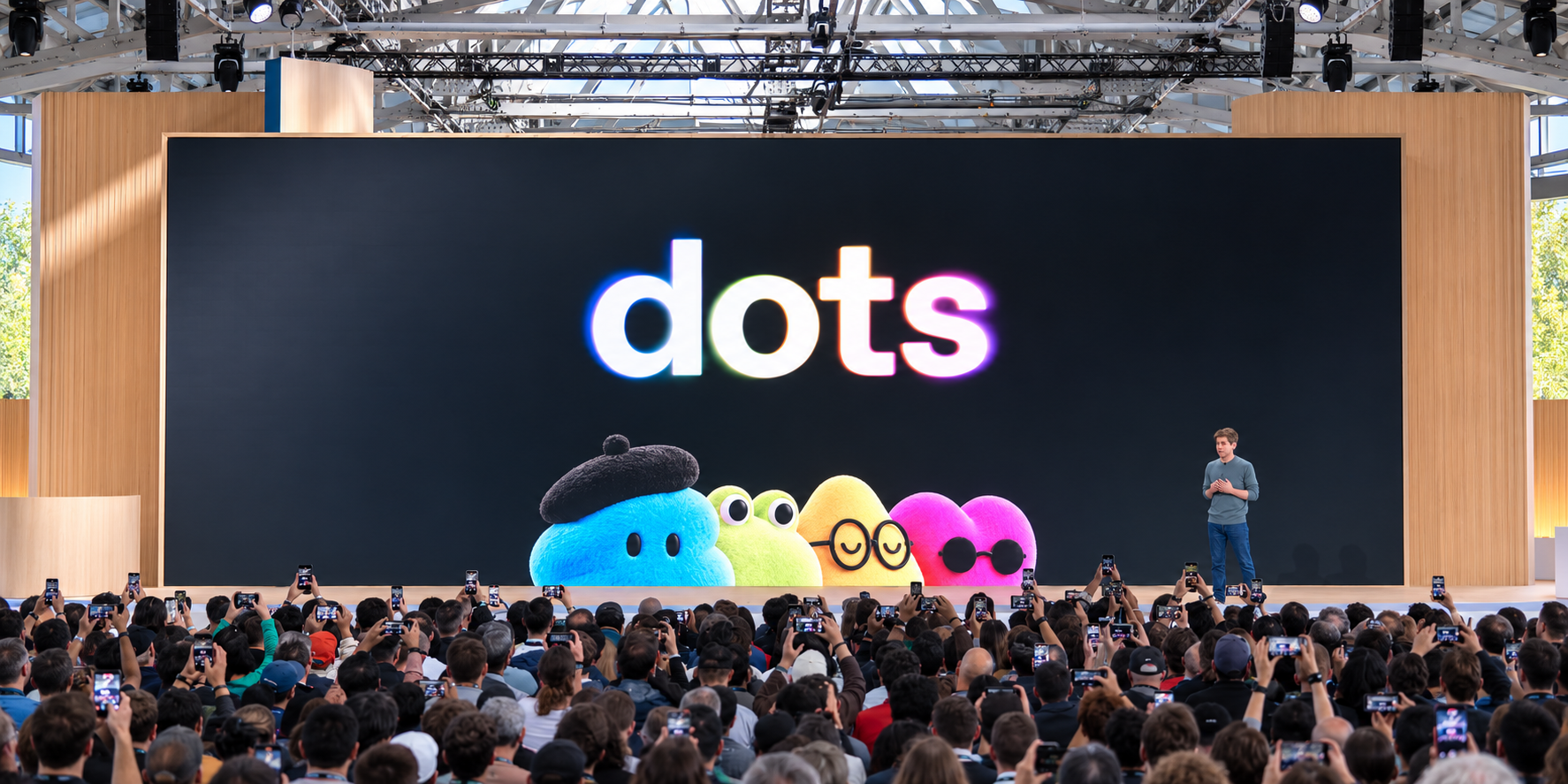
OpenAI has announced "Dots," autonomous personal AI agents designed to manage background workflows, together with GPT-6.1 Sol, a cost-optimized model. Dots are built to run continuously and carry out multi-step instructions without timing out. Separately, the US government has launched America.gov, a centralized public service portal connected to AI search backends.
What OpenAI announced
OpenAI has introduced "Dots," a line of autonomous personal AI agents built to handle background workflows for users. It has also released GPT-6.1 Sol, a model positioned around lower running costs.
The two launches point in the same direction. Agents that work continuously use a lot of computing power, and a cheaper model is one way to make always-on software practical for more people and more businesses. Announcing them together suggests OpenAI sees the agent and the model as parts of one product strategy.
How Dots are meant to work
Most chat assistants respond to a single prompt and then wait. Dots are designed differently. According to the announcement, they operate continuously and execute multi-step instructions without timing out. A user could hand over a task with several stages and let the agent work through it while doing something else.
Typical background work might include sorting information, following up on routine tasks or moving data between tools. OpenAI frames Dots around this kind of delegated, ongoing work rather than quick question-and-answer exchanges. The details of which apps and services Dots can connect to were not part of the reported summary, so readers should check OpenAI's own documentation for specifics.
The timeout problem
The phrase "without timing out" is easy to skip over, but it describes a practical weakness of earlier AI tools. Many assistants lose their place if a task takes too long, if a connection drops or if a session ends. A task with many steps, such as collecting information from several sources, comparing it and then acting on the result, is exactly the kind of job that runs into those limits.
An agent that can hold a task for as long as it takes changes how people can use AI. Instead of watching a chat window and nudging the assistant along, a user could set a goal and return later to find it done, or to find a clear note about where it got stuck.
Why GPT-6.1 Sol matters
Cost is often the limit on agent products. A model that plans and acts over long periods uses far more compute than a single chatbot reply, and that cost reaches the customer eventually. By releasing a cost-optimized model at the same time, OpenAI is addressing the economics of running agents at scale.
For developers and businesses, a cheaper model can decide whether an AI feature is worth building at all. A tool that costs a few cents per task is viable for a consumer app. A tool that costs several dollars per task is not. It will be worth seeing how GPT-6.1 Sol is priced, how it performs compared with earlier OpenAI models and which subscription plans include Dots.
America.gov and AI in public services
In a related development, the US government officially launched America.gov, a centralized public service portal connected to underlying AI search backends. The portal is meant to help people find government services from one place.
Its launch shows AI search moving out of consumer apps and into official public information channels. The benefits are easy to see: people often struggle to find the right agency or form, and a single search entry point could save time. The risks deserve attention as well. When an AI system answers questions about public services, accuracy and accountability matter more than in a casual chat. A wrong answer about eligibility, deadlines or documents could cost someone money or a benefit.
Risks and questions
- Permissions. An always-on agent may need access to email, files and accounts. Users should understand exactly what they are granting and be able to revoke it. - Errors. An agent that acts on its own can make mistakes without anyone noticing right away, so reviewing its work matters. - Cost control. Continuous operation could produce unexpected bills on usage-based plans. - Security. Agents that read emails, web pages and documents can be tricked by malicious instructions hidden in that content, a known risk with AI systems. - Availability. It is not yet clear which regions and plans will get Dots first.
How this fits the wider AI race
Personal agents are becoming a common goal among AI companies. The idea is that the next phase of AI is less about chatting and more about getting things done. Each major lab has its own version of this idea, and competition is pushing both capability and price. A cost-optimized model from OpenAI puts pressure on rivals to keep their own prices in check, which tends to benefit developers and users.
It also raises the stakes on trust. An assistant that only talks can be wrong without much consequence. An assistant that acts on your behalf has to be right, or at least has to ask before doing something risky.
What to watch next
- The rollout schedule, including which countries and plans get Dots first. - The pricing of GPT-6.1 Sol compared with earlier OpenAI models. - Independent testing of how well Dots handle long, multi-step tasks. - How OpenAI handles permissions, logs and the ability to stop an agent mid-task.
Anyone planning to rely on autonomous agents should begin with low-risk jobs and check the results regularly before handing over anything sensitive.
The tecMAMBO take
Dots is the more important half of this announcement, but GPT-6.1 Sol is what makes it believable. Agents that run all day are only useful if they are cheap enough to leave switched on. The hard question is trust. People will hand over real work only after an agent proves it will tell them when it is unsure instead of pressing ahead. We would start with low-stakes chores, keep an eye on the bill, and treat the first months as a trial rather than a hand-off.
FAQ
What are OpenAI Dots?
Dots are autonomous personal AI agents that manage background workflows and execute multi-step instructions without timing out.
What is GPT-6.1 Sol?
It is OpenAI's cost-optimized model, released alongside Dots.
What is America.gov?
It is a centralized US government public service portal launched with AI search backends.
Who is this relevant for?
Developers, businesses and everyday users who want AI that works in the background rather than only answering single prompts.
Sources
Share this story
Enjoyed this? Share it with someone who'd appreciate it.
Ask MAMBO
Have a plain-English question about this topic? Send it in and we may answer it in a future guide.
Ask a questionRelated reading

OpenAI brings real-time voice to developers with GPT-Live-1
OpenAI is pushing voice AI closer to a normal software interface with GPT-Live-1, a real-time voice model available through its API. The system is designed for full-duplex conversations, meaning it can listen and speak at the same time.

Apple sues OpenAI, and the age of polite AI partnerships is over
Apple's lawsuit against OpenAI turns a friendly AI partnership into a fight over hardware, trade secrets, talent, and who gets to define the next computing device.
Sam Altman named the two ways AI could go "very badly." Washington and Beijing responded in almost opposite directions
In a late-night X post on September 14, OpenAI CEO Sam Altman outlined two specific scenarios he says AI progress must avoid: humanity losing control of AI systems outright, and AI enabling an unprecedented concentration of power in a single person, company, or country.