

GSMA: 5G Rollout Speeds Up Across Ghana, Nigeria and South Africa as Operators Add Satellite Connectivity
GSMA's regional update shows fast 5G expansion in Ghana, Nigeria and South Africa. Sub-Saharan 5G subscriptions could nearly quadruple, and operators are adding satellite links.
Quick answer
The GSMA's regional update highlights rapid 5G expansion in Ghana, Nigeria and South Africa. Supported by spectrum allocations in Ghana and infrastructure-sharing deals among major telcos, 5G subscriptions in Sub-Saharan Africa are projected to nearly quadruple over the next four years. Operators are also deploying Non-Terrestrial Network (NTN) satellite connectivity to remove rural coverage blackspots.
What the GSMA reported
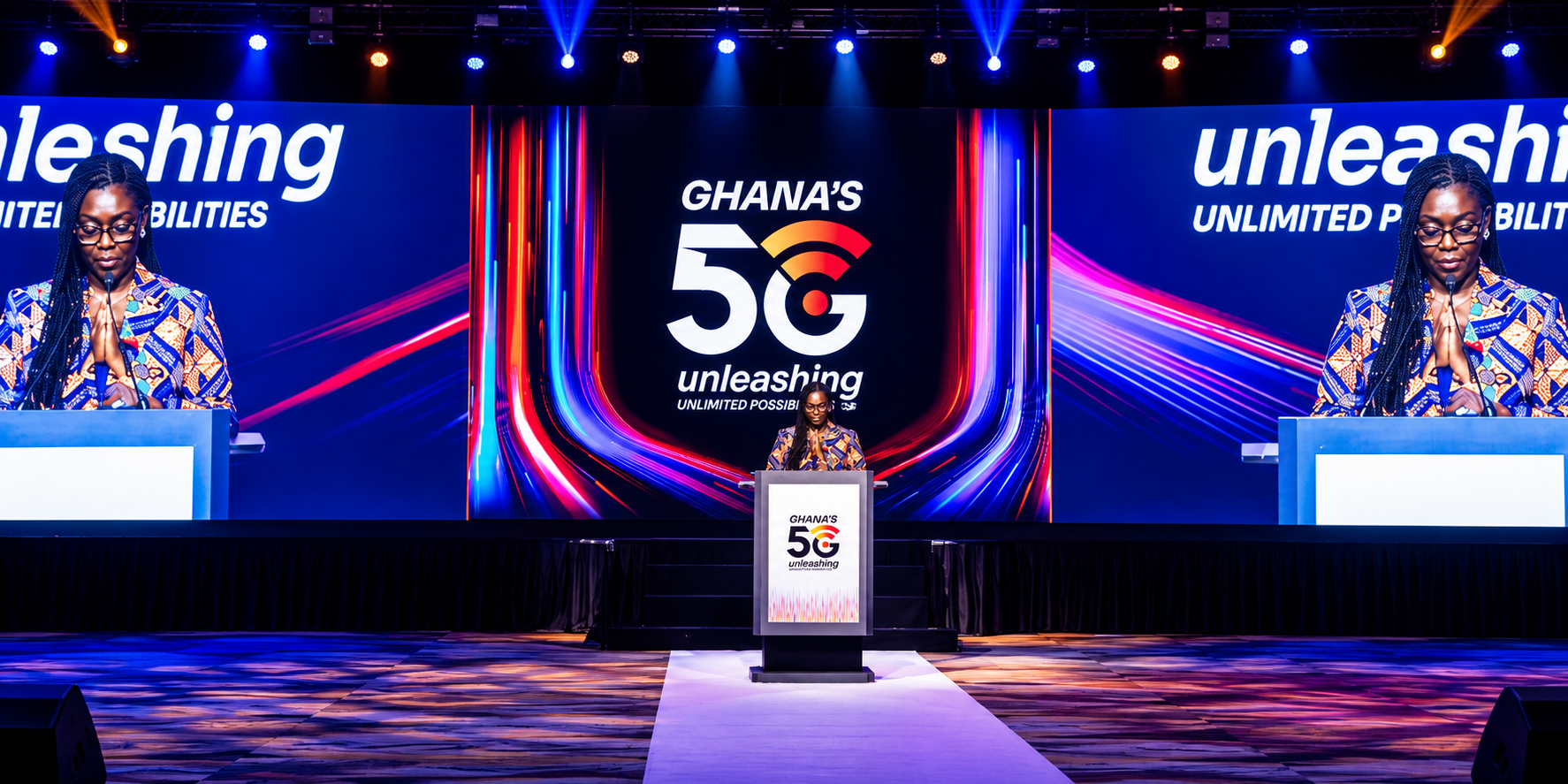
The GSMA, the industry association for mobile operators, has released a regional update pointing to fast 5G growth in Ghana, Nigeria and South Africa. The report says these markets are moving beyond early launches and into wider rollout, with more cities, more subscribers and more compatible devices entering the picture.
The headline projection is that 5G subscriptions in Sub-Saharan Africa will nearly quadruple over the next four years. That is a forecast, not a , and it depends on network coverage, device prices and what consumers are willing to pay. Even so, growth on that scale would make 5G a mainstream technology across the region within a few years.
What is driving the growth
Two developments are named as supports for the rollout.
1. Spectrum allocations in Ghana. Spectrum is the radio frequency that mobile networks need to operate. Releasing more of it to operators gives them the capacity to launch and expand 5G services. Without enough spectrum, even a well-funded operator cannot deliver good speeds to a large number of users. 2. Infrastructure-sharing agreements. When major telcos share towers and other equipment, each one spends less to cover the same area. That lowers the cost of reaching more places and speeds up deployment.
Cost is the central issue for 5G across the region. Networks are expensive to build, and average revenue per user is lower than in wealthier regions. Sharing infrastructure is one practical way to make the numbers work, because it avoids building the same tower twice.
Three markets, three starting points
The three countries named in the report are at different stages and face different conditions.
- South Africa has one of the most developed mobile markets on the continent, and its operators have been investing in network upgrades for some time. - Nigeria has a very large population and a fast-growing base of mobile users, which makes scale a major opportunity and a major challenge. - Ghana is benefiting from recent spectrum allocations, which give its operators room to expand 5G services.
The common thread is that all three are moving from pilots and early deployments toward broader commercial service. The next stage is about coverage depth, device affordability and making sure customers feel a real difference from 4G.
The role of NTN satellite connectivity
Operators are also increasingly using Non-Terrestrial Network technology. NTN means connecting phones and networks through satellites or other airborne platforms rather than only ground-based towers.
The reason is coverage. Even with rapid 5G growth in cities, many rural areas still have no signal or a weak one, because building towers for small, scattered populations rarely pays. Satellite links can fill those gaps. Pan-African operators are combining dense urban 5G with direct satellite-to-cell integrations to build a network that stays reliable across very different terrain, from crowded city centers to remote villages.
A related example is the NuRAN, Infratel and Starlink pilot in Nigeria, which uses satellites to connect rural towers to the internet.
What it means for users
For city residents, more 5G means faster downloads and better performance in crowded places such as stadiums, markets and transport hubs. For businesses, it opens the door to services that depend on fast, responsive connections, like cloud-based tools, video and connected devices. For people in remote areas, satellite-assisted coverage could mean a first reliable connection.
A few cautions apply.
- A 5G subscription needs a compatible phone, and affordable 5G handsets are still spreading. - Prices for data matter as much as speed. A fast network that customers cannot afford does little good. - Actual experience varies between operators and locations, and coverage maps do not always match reality on the street.
Challenges ahead
The forecast of nearly fourfold growth will not happen on its own. Operators must keep investing in network capacity while managing currency pressures, power costs and competition. Regulators must continue to release spectrum in a timely and affordable way. Device makers must bring down the price of 5G handsets so they reach mass-market buyers. And NTN services need to prove they can deliver dependable, affordable coverage at scale.
What to watch next
- New spectrum auctions and allocations in other African countries. - The price of 5G-capable smartphones in the region. - Commercial launches of satellite-to-phone services by major operators. - Further infrastructure-sharing deals among West and Southern African telcos.
The tecMAMBO take
The growth forecast is easy to quote, but the harder numbers are price and coverage. A fourfold rise in 5G subscriptions means little if most of them sit in a few city districts on handsets that only some people can afford. What stands out to us is the pairing of dense urban 5G with satellite for the gaps. It is a more honest model for West and Southern Africa than pretending towers alone will do the job. Operators who make data affordable, not just fast, will own the next four years.
FAQ
Which countries does the GSMA highlight?
Ghana, Nigeria and South Africa.
What is the 5G forecast?
Subscriptions in Sub-Saharan Africa are projected to nearly quadruple over the next four years.
What is NTN?
Non-Terrestrial Network connectivity, which uses satellites or similar platforms to extend coverage.
Why is infrastructure sharing important?
It lowers the cost of building networks, so operators can cover more areas.
Sources
Share this story
Enjoyed this? Share it with someone who'd appreciate it.
Ask MAMBO
Have a plain-English question about this topic? Send it in and we may answer it in a future guide.
Ask a questionRelated reading
NuRAN Partners With Infratel and Starlink to Pilot Satellite Backhaul for Rural Nigeria
Canadian telecom company NuRAN Wireless has launched an operational pilot in Nigeria with Infratel Africa, using SpaceX's Starlink Low Earth Orbit (LEO) satellites for backhaul. The setup connects solar-powered rural 4G towers to Starlink to bring mobile broadband and edge AI capacity to remote, off-grid communities. The initiative targets an estimated 122 million offline people across rural African markets.

A 2,000km fibre route now connects Mombasa to the DRC, and Paratus wants East Africa to notice
Paratus Group is highlighting its live 2,000km G2M fibre route linking Mombasa to Goma, DRC, alongside new satellite services, at ITW Africa 2026.

Amazon Leo is coming for Starlink in Africa. Cheaper internet is not guaranteed
Amazon now has enough low-Earth-orbit satellites to begin service, but Africa needs gateways, licences and affordable hardware before competition reaches consumers.