

Five million industrial robots now operate in factories worldwide
The International Federation of Robotics says the global operational stock of industrial robots reached 5.079 million units in 2025.
Quick answer
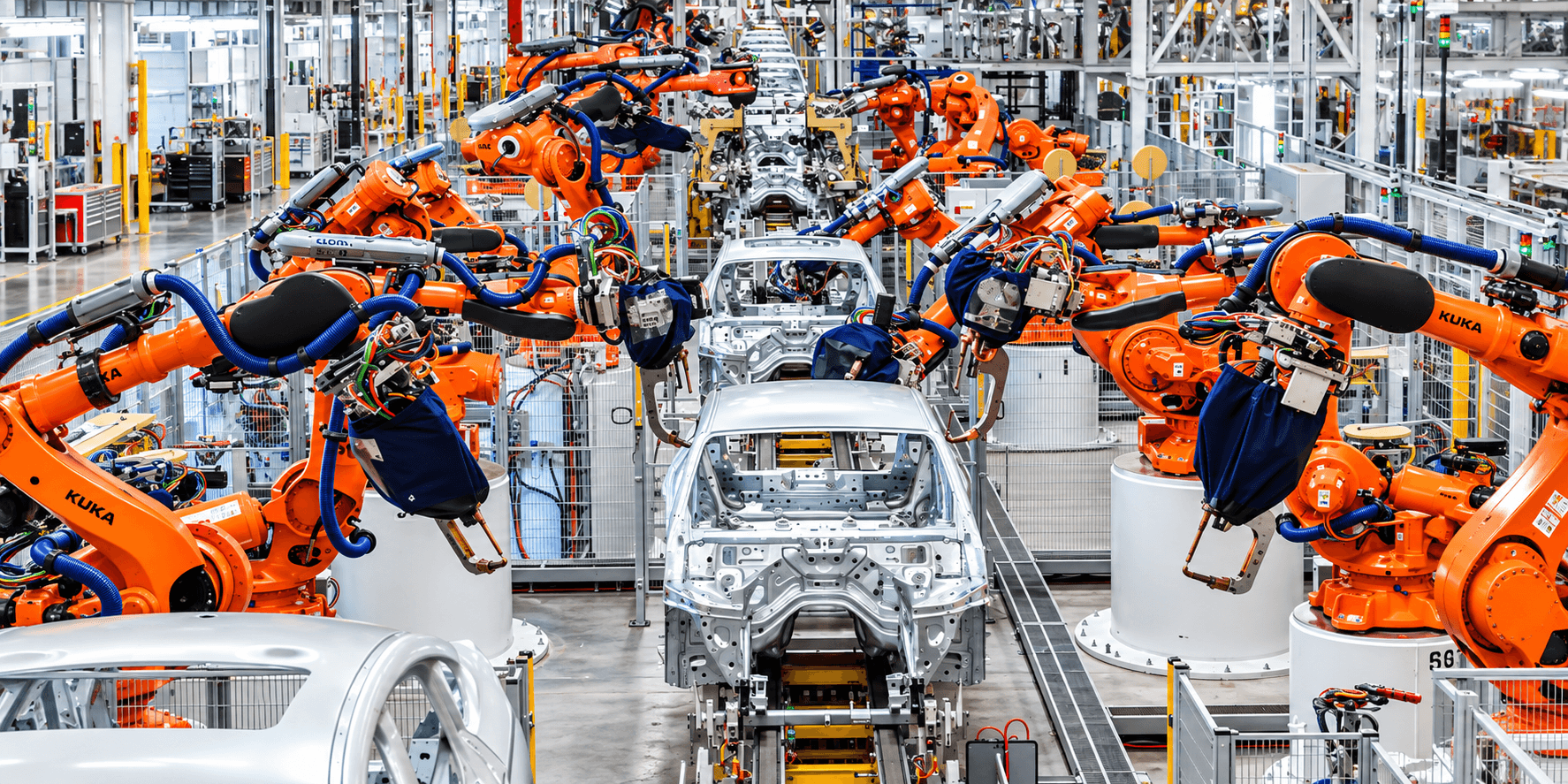
The world's factories have crossed a major automation milestone. The International Federation of Robotics says 5.079 million industrial robots were operating in factories worldwide in 2025, up 9% from the previous year.
The world's factories have crossed a major automation milestone. The International Federation of Robotics says 5.079 million industrial robots were operating in factories worldwide in 2025, up 9% from the previous year.
Factories installed 603,000 new industrial robots during the year, the first time annual installations crossed 600,000 units.
China is the biggest driver
China remains the world's largest industrial robotics market. The IFR says Chinese factories installed 354,000 robots in 2025, up 20% year over year. China accounted for 59% of global industrial robot deployments.
Domestic Chinese robot suppliers also strengthened their position. The IFR says they reached a 55% share of China's domestic market in 2025.
These are not mostly humanoid robots
The five-million figure refers primarily to industrial machines such as robotic arms, welding systems, assembly equipment and material-handling robots. It should not be confused with the much newer humanoid robotics industry.
That distinction matters because industrial robotics is already a mature commercial technology. Humanoid robots remain a developing category.
Why factories keep buying robots
Manufacturers use robots for repeatability, quality, safety and productivity. Robots can perform repetitive operations for long periods without fatigue and can work in environments that may be difficult for people.
Modern systems are also becoming more flexible. Machine vision can help a robot identify objects, inspect components and adapt movements.
AI is changing automation
The important shift is not that industrial robots suddenly became intelligent. It is that AI and computer vision are reducing some of the programming and perception work that previously made automation expensive.
Low-code interfaces can also reduce the expertise needed to deploy some systems. This makes automation more accessible to smaller manufacturers.
What five million robots means for jobs
Automation can remove some tasks while creating demand for engineers, technicians, maintenance specialists and software developers. It can also make factories more competitive and potentially preserve production that might otherwise move elsewhere.
The effect therefore depends on the industry and the tasks being automated.
The next phase
The next robotics competition is likely to be about deployment speed, flexibility and software. Manufacturers want machines that can be installed quickly, programmed easily and adapted when products change.
Digital twins, simulation, machine vision and AI-based control are likely to become more important.
The tecMAMBO take
Five million operational industrial robots is less a futuristic headline than evidence that automation has already become manufacturing infrastructure. China is driving a large share of the growth, but the wider trend is global.
The next advantage may not come from owning the most robots. It may come from making each machine easier to deploy and more useful.
FAQ
How many industrial robots are operating worldwide?
The IFR reports 5.079 million operational industrial robots in 2025.
How many were installed in 2025?
603,000 new industrial robots were installed globally.
Which country leads installations?
China, with 59% of global deployments in 2025.
Are these mostly humanoid robots?
No. The IFR statistic covers industrial robots used in manufacturing.
Sources
Share this story
Enjoyed this? Share it with someone who'd appreciate it.
Ask MAMBO
Have a plain-English question about this topic? Send it in and we may answer it in a future guide.
Ask a questionRelated reading
OpenAI brings real-time voice to developers with GPT-Live-1
OpenAI is pushing voice AI closer to a normal software interface with GPT-Live-1, a real-time voice model available through its API. The system is designed for full-duplex conversations, meaning it can listen and speak at the same time.

Ramp launches Accounts Receivable as fintech moves toward the entire corporate cash cycle
Ramp has spent years helping companies manage money going out. Its new Accounts Receivable product is an attempt to help businesses manage money coming in too.

iOS 27 is here, and the headline feature isn't the update, it's the AI assistant Apple rebuilt with Google's help
Apple released iOS 27 to all compatible iPhones on September 14, 2026, closing out a beta cycle that started at WWDC on June 8.