
South African Enterprises Shift AI Workloads From Public Cloud to Private Infrastructure
South African companies are shifting AI workloads from public cloud to private infrastructure because of API costs and data sovereignty. Here is why.

Quick answer
South African corporate enterprises have begun moving AI model workloads from public cloud platforms to private, on-premises infrastructure. Local IT leaders cite rising per-token API costs on public hyperscaler platforms, along with data sovereignty and governance requirements, as the main reasons for adopting hybrid setups. The shift reflects AI moving from pilots to production.
What is happening
Large South African companies are changing where they run their AI models. Instead of sending every request to a public cloud platform, some are moving workloads onto private infrastructure that they own or control, often in their own data centers.
This does not mean companies are abandoning the public cloud. The reported trend is toward hybrid setups, where some work stays with hyperscalers and other work moves in-house. The decision is being made workload by workload, based on cost, risk and performance.
The cost problem
Public AI services commonly charge by usage, often per , which is a small unit of text. During a pilot with a handful of users, the bill is small. Once a tool is used by thousands of employees or built into customer-facing products, the same pricing can grow quickly and become hard to forecast.
Local IT leaders cite escalating per-token costs as a primary reason for the move. Running a model on hardware the company owns turns a variable, usage-driven cost into something closer to a fixed one. For a finance team that needs to plan budgets a year ahead, predictability can be worth more than the lowest headline price.
There is a second angle to the cost question. A company that depends entirely on a single provider's API is exposed to that provider's pricing decisions. If rates rise, the company can either absorb the increase or scramble to migrate. Owning part of the stack reduces that exposure.
Data sovereignty and governance
The second reason is control over data. Banks, insurers, healthcare providers and government-linked organizations handle information that is sensitive and regulated. South Africa has data protection law, and many organizations have internal rules about where information may be stored and processed.
Keeping AI workloads on private infrastructure makes it easier to show where data sits, who can access it and how it is used. That matters when regulators, auditors or customers ask questions. A company that can point to its own servers and its own access logs has a simpler story to tell than one that has to explain the chain of services behind a third-party API.
From pilots to production
The shift is tied to the stage AI has reached inside companies. During the experimental phase, convenience matters most and public APIs are the quickest way to start. A team can test an idea in an afternoon without buying any hardware.
As tools become part of daily operations, the questions change. What will this cost next year? What happens if the provider changes its terms? Can we prove compliance? Who is responsible if something goes wrong? Enterprises moving to production scale are prioritizing long-term cost predictability and data control over sole reliance on public cloud APIs.
What a hybrid setup looks like
A hybrid approach usually splits work along sensible lines.
- Sensitive or high-volume workloads run on private infrastructure, where data stays under the company's control and costs are steady. - Experimental or occasional workloads stay on public cloud, where there is no need to buy hardware and the latest models are available immediately. - Specialized tasks may use smaller, task-specific models that run efficiently on private hardware instead of the largest general models.
The hybrid model is popular because it avoids an all-or-nothing choice. Companies keep access to public cloud innovation while protecting the data and workloads that matter most.
Trade-offs of going private
Running AI in-house has real costs of its own.
- Hardware. Specialized processors are expensive, and supply can be limited. - Skills. Teams need people who can deploy, secure and maintain models, and those skills are in high demand. - Power and cooling. South Africa's electricity supply problems make backup power a planning issue for any on-premises facility. - Model access. The newest frontier models may be available only through public APIs, which is one reason hybrid setups remain common. - Upgrades. Hardware ages quickly in a fast-moving field, and a company that buys now may find newer, cheaper options within a short time.
What it means for the local technology market
A move toward private AI creates demand for local data center capacity, hosting providers, systems integrators and security specialists. It gives South African technology firms an opening to offer private or sovereign AI services that global cloud providers may not match on data-location guarantees. It also puts pressure on hyperscalers to respond, whether through pricing, in-country options or new ways of guaranteeing data handling.
For enterprise buyers, the practical advice is to model the cost of AI at full production usage, not at pilot usage, and to decide early which data must remain under their own control. Choosing infrastructure after a tool has already spread across the business is more expensive than planning for it from the start.
What to watch next
- Whether more local data center and hosting providers launch AI-ready private offerings. - How hyperscalers respond on pricing or with in-country options. - How South African regulators update guidance on AI and personal data. - Whether open models that run well on private hardware continue to improve.
The tecMAMBO take
South African enterprises are doing what mature technology buyers eventually do: they stop treating a convenient service as a permanent answer. Public APIs are the right way to start. They become a risky way to run a core business when the bill is unpredictable and the data is sensitive. We expect hybrid to win, not private alone. The companies that get this right will be the ones that decide, workload by workload, what they must control and what they are happy to rent.
FAQ
Why are South African firms moving AI workloads off the public cloud?
Mainly because of rising per-token API costs and requirements around data sovereignty and governance.
Are they leaving the cloud completely?
No. The trend is toward hybrid setups that combine public cloud with private infrastructure.
What is a per-token cost?
It is a charge based on the amount of text an AI model reads and writes.
What are the downsides of private AI infrastructure?
High hardware cost, the need for skilled staff and power reliability.
Sources
Share this story
Enjoyed this? Share it with someone who'd appreciate it.
Ask MAMBO
Have a plain-English question about this topic? Send it in and we may answer it in a future guide.
Ask a questionRelated reading
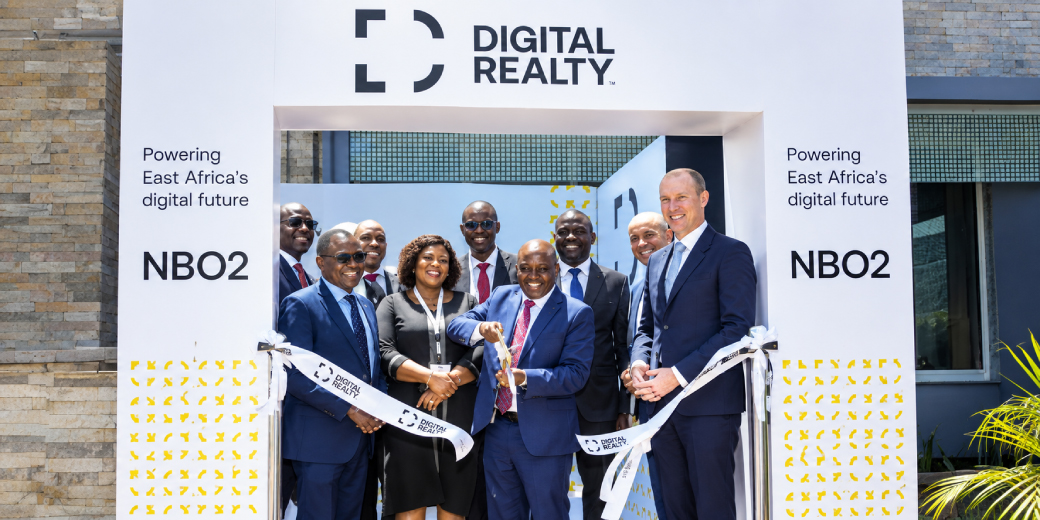
Nairobi just got 6.4 more megawatts of data centre capacity, and iColo's name is disappearing
Digital Realty opened its NBO2 facility in Nairobi and is rebranding iColo, adding 6.4MW of capacity as Kenya positions itself as an East African cloud hub.

MortgageMarket Launches AI Agent to Automate South African Home Loan Applications
Fintech platform MortgageMarket has deployed an AI Agent in South Africa that automates data entry and document validation across home loan applications. It processes tax records and bank statements directly into underwriting systems, which should shorten approval times. Separately, Momentum Corporate has acquired full ownership of financial services provider Verso Group for R26.25 million.
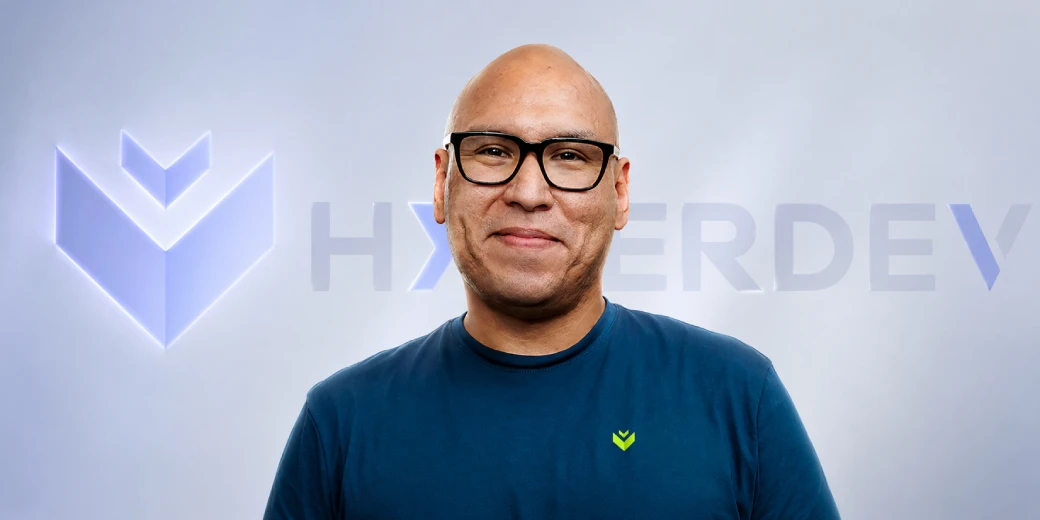
Ex-OpenAI and Google engineers just funded a South African AI startup
South Africa's HyperDev, an AI coding platform founded by former OpenAI and Google engineers, raised over 1 million dollars in pre-seed funding as it approaches 100,000 users.