

Ex-OpenAI and Google engineers just funded a South African AI startup
HyperDev, an AI software-development platform with an engineering base in South Africa, raised over a million dollars as ex-OpenAI and Google founders scale it.
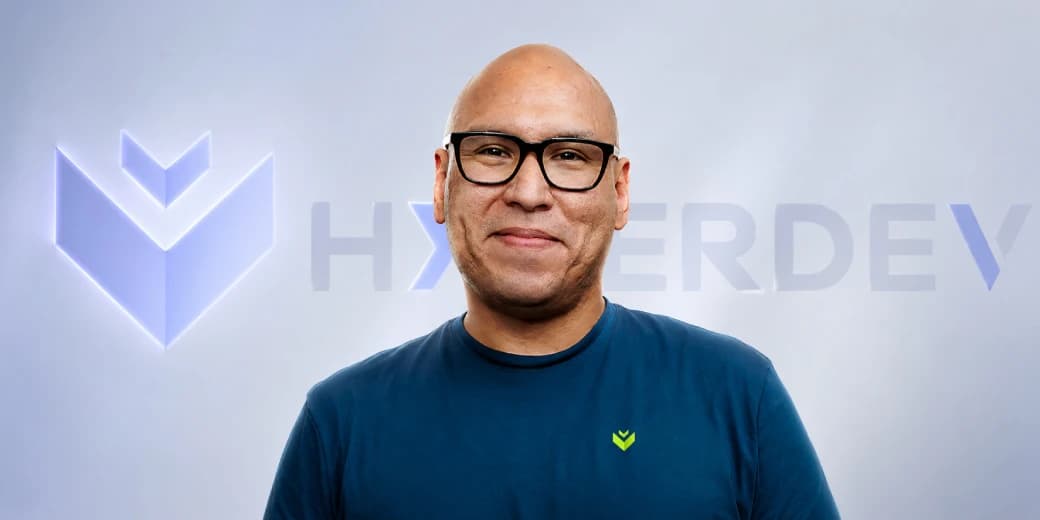
The most interesting African tech story of the week was not a payment or a policy. It was a small pre-seed round with an outsized signal attached. HyperDev, a generative-AI software-development platform with its engineering base in South Africa, raised more than 1 million dollars, roughly 15 to 16 million rand, as it approaches 100,000 users. What makes it notable is not the sum, which is modest, but the pedigree behind it: HyperDev was founded by engineers who worked at OpenAI and Google, the two companies that defined the current AI era. When talent like that chooses to build from South Africa, it says something about where deep-tech value can now be created on the continent.
What HyperDev does
HyperDev sits in the fast-moving category of AI coding tools, but with a specific bet. Rather than just generating snippets, it aims to take AI-written code all the way to a working, deployed application through a proprietary Guided Mode, and it targets both professional developers and non-technical users who want to turn an idea into software without a traditional engineering team. That positioning matters in an African context, where the shortage is not ambition but scarce, expensive developer time. A tool that lets a small business or a solo founder ship a working app is not a novelty here; it is a lever on a real constraint.
The founders and the funding
The people behind the company are the headline. Co-founder Riaz Moola previously worked at Google on AI methods used in Gemini, and chief technical officer Piotr Sobolewski is a former OpenAI employee who worked on ChatGPT, alongside co-founder Anton Moulder. The company keeps an engineering base in South Africa while running commercial operations across the United Kingdom and Europe, a hybrid shape that is becoming common for globally ambitious African-linked startups. The pre-seed round, backed by investors from Europe and the United Kingdom, is designed to scale the platform as user numbers climb toward six figures. It is early-stage money, but early-stage money attached to that kind of engineering experience tends to attract more.
Why the talent signal matters more than the cheque
For years the dominant story about African deep-tech talent has been departure: the best engineers leaving for San Francisco, London, or Berlin, and their value being created elsewhere. HyperDev partially inverts that. It keeps serious AI engineering rooted in South Africa, it builds a globally competitive product from there, and it puts people who have worked at the frontier of the field into the local ecosystem where they mentor, hire, and inspire. That is how deep-tech clusters actually form, not through a single funding announcement but through concentrations of experienced people choosing to build in one place. The cheque is small; the precedent is not.
The wider South African funding picture
HyperDev is not an isolated bright spot. South Africa's venture scene has been showing signs of maturity beyond the headline raise, with pan-African firm Launch Africa Ventures recently returning capital to investors as its first seed fund hit a distributions milestone, a sign that the ecosystem is starting to produce not just startups but returns. Momentum in AI, HR technology, and fintech has continued through the year, and public and corporate investment in and cloud capacity has added to the base, a trend we tracked in Microsoft's South African cloud and AI investment at Microsoft expands cloud and AI capacity in South Africa. A funding round lands differently when it sits on top of that kind of groundwork.
The honest caveats
Enthusiasm should come with a cold eye. A pre-seed round is the very start of a long and failure-prone journey, and AI coding tools are a crowded, fast-moving field where global giants ship competing features weekly. Founder pedigree improves the odds but guarantees nothing, and user growth toward 100,000 is promising rather than proven as a business. The right way to read this is not as a finished success but as a signal: that world-class AI talent will now build from South Africa, that investors will back it, and that the continent can be a place where frontier software is made and not only consumed. That signal, sustained, is worth far more than any single round.
FAQ
What is HyperDev?
HyperDev is a generative-AI software-development platform with an engineering base in South Africa. It uses a Guided Mode to take AI-generated code all the way to a deployed application, targeting both developers and non-technical users.
Who founded HyperDev?
It was founded by Riaz Moola, who worked at Google on AI methods used in Gemini, Piotr Sobolewski, a former OpenAI engineer who worked on ChatGPT, and Anton Moulder. The company keeps engineering in South Africa with commercial operations in the UK and Europe.
How much did HyperDev raise?
More than 1 million dollars, roughly 15 to 16 million rand, in pre-seed funding from investors in Europe and the United Kingdom, as the platform approaches 100,000 users.
Why does this matter for South Africa?
It keeps frontier AI engineering talent rooted locally rather than lost to overseas hubs, and it signals that globally competitive deep-tech products can be built from South Africa, which is how deep-tech clusters form.
Sources
The money here is small and the road is long, but the message is large: the people who built the tools everyone else is racing to use are now building from South Africa. That is the kind of story a tech ecosystem grows around.
Ask MAMBO
Have a plain-English question about this topic? Send it in and we may answer it in a future guide.
Ask a questionRelated reading

Apple sues OpenAI, and the age of polite AI partnerships is over
Apple's lawsuit against OpenAI turns a friendly AI partnership into a fight over hardware, trade secrets, talent, and who gets to define the next computing device.

Africa's Laptop LLM Challenge asks AI to fit the computers people already own
Instead of asking developers to find bigger GPUs, the competition asks them to compress, optimise and localise AI for common African hardware.
America invents it, China perfects it, Europe writes the rules for it
The old line says America innovates, China replicates, and Europe regulates. China's rocket catch shows why that line is useful, and why it is no longer enough.