

East Africa's electric-mobility race is moving from vehicles to infrastructure
East Africa's electric-vehicle story is increasingly an infrastructure story. Electric motorcycles and three-wheelers are growing faster than private electric cars because the economics are easier to justify.
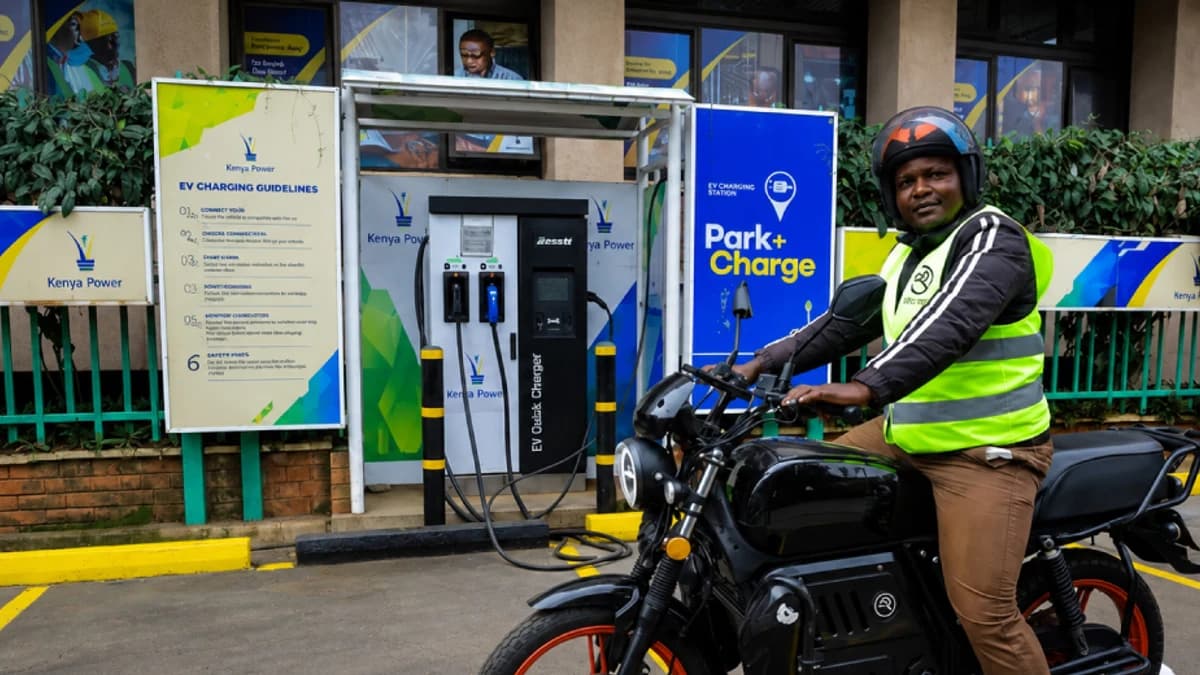
East Africa's electric-vehicle story is increasingly an infrastructure story.
Electric motorcycles and three-wheelers are growing faster than private electric cars because the economics are easier to justify.
Commercial riders travel long distances every day.
Fuel is one of their largest costs.
Electric power can reduce operating expense.
The problem appears after the sale.
Where does the rider get energy?
What you need to know
- East Africa is a leading African market for electric two-wheelers.
- Battery swapping is central to many motorcycle business models.
- Riders increasingly want denser and more interoperable networks.
- Rwanda is formalising rules around charging and battery swapping.
- Kenya has dozens of e-mobility companies.
- Fleet charging can scale faster than public passenger-car charging because routes are predictable.
Why motorcycles lead the transition
A private car may travel thirty kilometres in a day.
A boda-boda can travel many times that.
Fuel savings therefore accumulate quickly.
Commercial use creates a strong total-cost-of-ownership case.
Motorcycles also need much smaller batteries than cars.
That makes swapping practical.
A rider can exchange a pack rather than wait for charging.
This reduces downtime.
Time off the road is lost income.
Infrastructure becomes the real product
A company can sell an excellent electric motorcycle and still fail if riders cannot find energy.
The customer is buying bike, battery, swap access, software, service and financing.
These systems are interdependent.
A dense swap network can make an average motorcycle useful.
A sparse network can make a brilliant motorcycle unusable.
That gives infrastructure providers significant power.
The interoperability problem
Many battery networks are proprietary.
A rider may only use batteries from one company.
That protects the provider's investment.
It also creates lock-in.
If the network has an outage or the rider travels outside coverage, alternatives may not exist.
Interoperability could allow multiple motorcycle brands to use common battery standards.
The engineering challenge is real.
Batteries differ in voltage, connectors, thermal design, communication, physical dimensions and safety systems.
Standardisation needs to happen early enough to avoid permanent fragmentation.
Rwanda's regulatory direction matters
Rwanda has moved toward formal rules for charging and battery-swap infrastructure.
Regulation can improve safety, reliability, interoperability and environmental handling.
Poor regulation can freeze innovation around the wrong technical standard.
The best approach defines outcomes and interfaces without dictating every design choice.
Governments should make it easier for networks to cooperate.
They should not accidentally select a winner through a technical rule written too early.
Charging corridors for fleets
Four-wheel fleet electrification creates different infrastructure needs.
Buses, delivery vans and trucks can use depots, route-based , scheduled charging and solar integration.
Fleet operators know where vehicles sleep.
That makes infrastructure easier to plan than public charging for private cars.
A company can install chargers where utilisation is predictable.
That creates a path for commercial EVs before every highway has a charger.
The grid question
Electric mobility does not require perfect electricity infrastructure.
It does require planning.
Charging can increase local peak demand, require transformer upgrades, benefit from off-peak tariffs, integrate solar and use battery .
Motorcycle swap stations can charge packs slowly and manage timing.
That is often easier on the grid than many vehicles fast-charging simultaneously.
The energy network becomes part of transport design.
Why fuel prices accelerate adoption
When petrol prices rise, the savings from electric mobility become easier to explain.
Riders make decisions using daily cash flow.
If a battery swap costs less than the equivalent fuel for the same work, the benefit is immediate.
Financing remains important.
A cheaper operating vehicle can still be unaffordable if the upfront price is high.
The winning business model combines finance, infrastructure, service and a reliable vehicle.
The regional buildout extends the practical case made in why electric motorbikes matter more than flashy EV launches.
The tecMAMBO take
East Africa does not need to wait for electric cars to become common before building an EV economy.
Motorcycles and fleets are already creating the infrastructure layer.
The next competitive advantage will not be who sells the most vehicles.
It will be who gives riders and fleets the most dependable access to energy without trapping them inside one fragile network.
FAQ
Why are electric motorcycles growing faster?
Commercial riders travel enough kilometres for fuel savings to become financially meaningful.
What is battery swapping?
The rider exchanges a depleted battery for a charged pack rather than waiting for charging.
Why is interoperability important?
It reduces lock-in and can make infrastructure more useful across brands.
Are public car chargers still needed?
Yes, but fleet depots and motorcycle networks can scale before a dense public-car network exists.
Which East African markets are active?
Kenya, Rwanda and Uganda are among the important regional markets.
Sources
Share this story
Enjoyed this? Share it with someone who'd appreciate it.
Ask MAMBO
Have a plain-English question about this topic? Send it in and we may answer it in a future guide.
Ask a questionRelated reading

Anker is using Kenya as its East Africa launchpad, and the bigger play is the ecosystem around the charger
Anker has expanded its Kenya presence with a reported $1 million push, wider retail coverage, service centres and a broader ecosystem spanning power, audio and smart-home products.

Bolt Send is adding motorbikes in Mombasa, turning ride-hailing infrastructure into a small-business delivery network
Bolt has expanded Bolt Send in Mombasa from cars to motorbikes, targeting smaller, time-sensitive parcel deliveries for businesses and individuals.

Inside Kenya's "Startup Graveyard": Twiga Joins a KES 93 Billion Wreckage, and One Number Complicates the Story
This is a labeled analysis piece, not neutral reporting.