

Qualcomm Unveils Snapdragon Sound Elite Gen 2 for AI-Enabled Smart Headphones
Qualcomm unveils Snapdragon Sound Elite Gen 2 for AI smart headphones with spatial audio and camera-feed support. Meta's Muse AI also gets Spotify control.
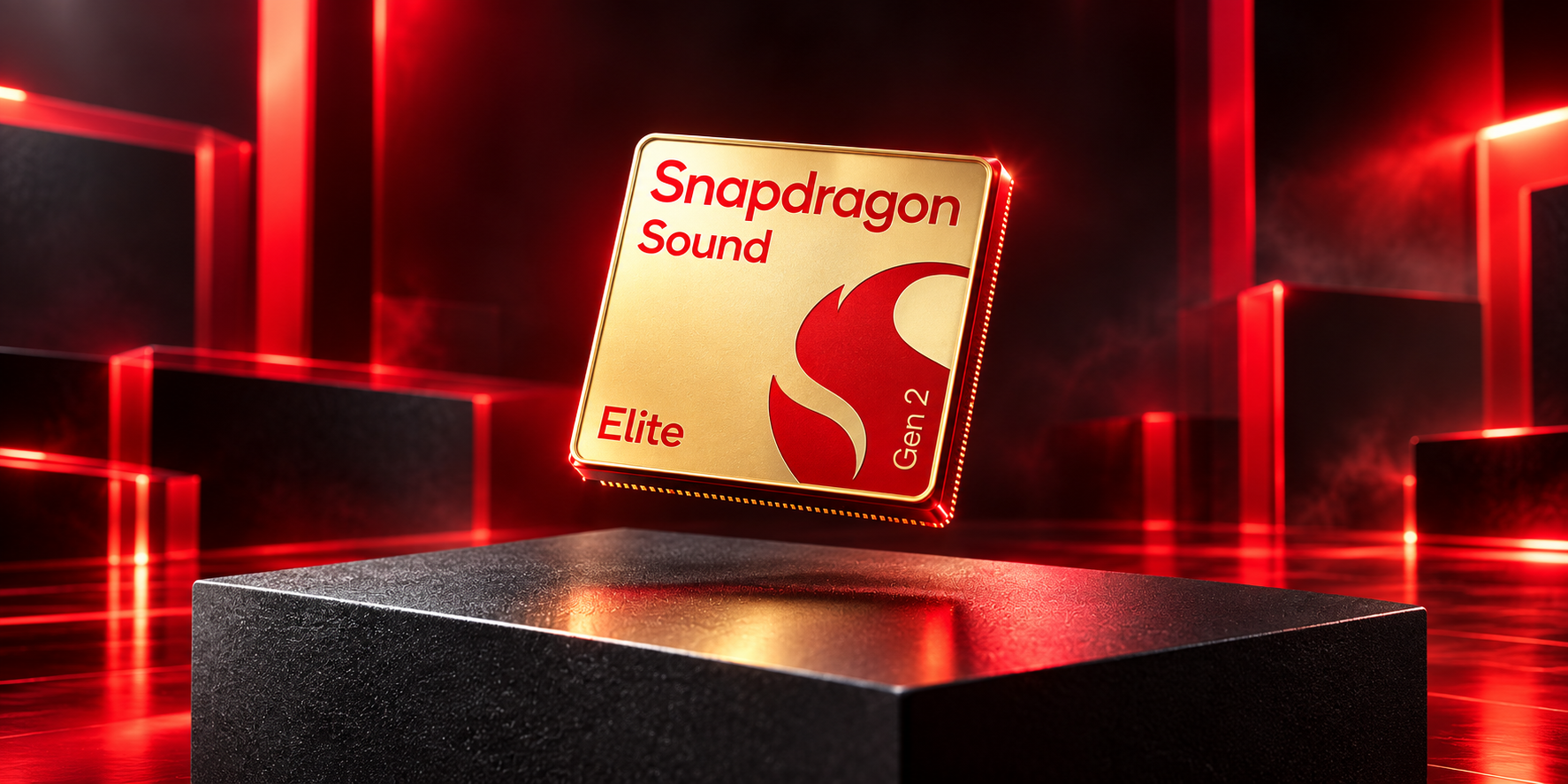
Quick answer
Qualcomm has introduced the Snapdragon Sound Elite Gen 2, an audio chip platform built for AI-enabled smart headphones and audio wearables. It has dedicated hardware blocks for low-latency spatial audio and for handling camera data feeds from head-worn devices. Separately, Meta has updated its Muse AI assistant so users can control Spotify playback directly.
What Qualcomm announced
Qualcomm has unveiled the Snapdragon Sound Elite Gen 2, a new audio chip platform. It is designed for the next generation of AI-enabled smart headphones and other audio wearables, meaning products that do more than play music and cancel noise.
The platform is aimed at device makers rather than directly at shoppers. Qualcomm supplies the chip and its supporting technology, and headphone and wearable brands build products around it. That is the same route Qualcomm has taken with its phone processors, where the company's name appears on the spec sheet while someone else's name appears on the box.
What the platform can do
The platform includes dedicated hardware blocks for two main jobs.
1. Low- . This is sound processed so it seems to come from specific directions around the listener, with as little delay as possible. Low delay matters for gaming, video calls and any situation where sound has to match what you see. 2. Camera data feeds. The chip can handle video data coming from head-worn devices that carry cameras.
The second point is the more interesting one. It suggests Qualcomm expects headphones and other head-worn products to gain visual awareness, for example in smart glasses or hybrid devices that combine audio with a camera. A device that can see as well as hear can, in principle, describe surroundings, recognize objects or respond to what the wearer is looking at.
Why dedicated hardware matters
Running spatial audio and camera processing on a general-purpose chip uses more power and can add lag. A dedicated block is built for one task and usually performs it with less energy. For a wearable that has to be light and last through a full day, that efficiency determines how large the battery must be, how hot the device gets and how long it can run between charges.
It also means the main processor is left free for other work, such as voice recognition and AI features. In a small device, every milliwatt and every square millimeter of silicon counts, so dividing the work among specialist blocks is a common strategy.
Why audio is becoming an AI platform
Headphones are among the most widely worn electronics. People wear them on commutes, at work and while exercising, often for many hours a day. That makes them a natural place for voice-driven AI assistants, because speaking to a device you already wear is easier than pulling out a phone.
The shift also explains the camera support. As AI assistants improve, companies want them to understand not only what a user says but what a user sees. Headphones and glasses are both worn on the head, close to the eyes and ears, which makes them a practical home for that kind of sensing.
What it means for consumers
Phone makers and audio brands can use the platform to build headphones that understand context, respond to voice commands and deliver more immersive sound. Buyers should not expect products right away. Chip announcements normally come months before finished devices reach shops, and Qualcomm has not tied this platform to specific launch dates in the reported details.
When the first devices built on the platform appear, a few questions will matter more than the chip name:
- How long the battery lasts with AI features switched on. - Whether the AI features work on the device or depend on a constant internet connection. - What the product costs compared with current premium headphones. - How the maker handles privacy when a wearable contains a camera.
Meta's Muse AI gains Spotify control
In a related update, Meta has upgraded its Muse so users can directly control Spotify playback. That lets someone ask the assistant to play, pause or change music without opening the app or picking up a phone.
The update is small, but it shows where AI assistants are heading. They are being connected to everyday services so they can perform tasks, not just answer questions. Hands-free control is especially useful on wearables, where there may be no screen at all.
The privacy question
Any wearable that includes a camera raises privacy concerns, both for the wearer and for people nearby. Earlier smart glasses have prompted debate over when it is acceptable to record, and how clearly a device should signal that it is capturing video. Hardware support for camera feeds on a headphone-class chip makes these questions more likely to come up, and manufacturers will need clear answers on indicators, data and consent.
What to watch next
- Which brands announce products on Snapdragon Sound Elite Gen 2. - Whether camera-equipped audio wearables become a real product category. - How much of the AI processing happens on the device rather than in . - Whether other AI assistants add similar controls for music and media services.
The tecMAMBO take
The audio chip is a quiet announcement with a loud implication. Qualcomm is betting that the next AI gadget is not a new phone but something you already wear on your head. The camera support is the tell. We think the real test is trust: people will accept a camera in their headphones only if the privacy rules are clear and the is good. Qualcomm has given device makers the tools. What they build with them, and whether buyers want it, is still to be seen.
FAQ
What is Snapdragon Sound Elite Gen 2?
It is Qualcomm's audio chip platform for AI-enabled smart headphones and audio wearables.
What can it process?
Low-latency spatial audio and camera data feeds from head-worn devices.
What did Meta change in Muse AI?
It added direct playback control for Spotify.
When will devices arrive?
No product dates were included in the reported details.
Sources
Share this story
Enjoyed this? Share it with someone who'd appreciate it.
Ask MAMBO
Have a plain-English question about this topic? Send it in and we may answer it in a future guide.
Ask a questionRelated reading
OpenAI brings real-time voice to developers with GPT-Live-1
OpenAI is pushing voice AI closer to a normal software interface with GPT-Live-1, a real-time voice model available through its API. The system is designed for full-duplex conversations, meaning it can listen and speak at the same time.
Apple's foldable finally arrives, and it's not even the biggest change at the company today
Apple's "Surprise and Shine" event brings the company's first foldable iPhone, new Pro models and a delayed budget lineup, all under new CEO John Ternus.
Samsung goes Ultra: everything announced at the London Unpacked, from a 4.1mm Fold to Gemini glasses
Samsung's London Unpacked delivered the first Ultra foldable at 4.1mm, a wider Fold8, the Flip8, two new watches, and Gemini-powered smart glasses. Every announcement, explained.