
Trump Wants AI Renamed 'Super Intelligence', But Superintelligence Already Means Something Specific
Donald Trump has proposed calling artificial intelligence 'super intelligence'. The term already has an established meaning in AI research, and that distinction matters.
Quick answer
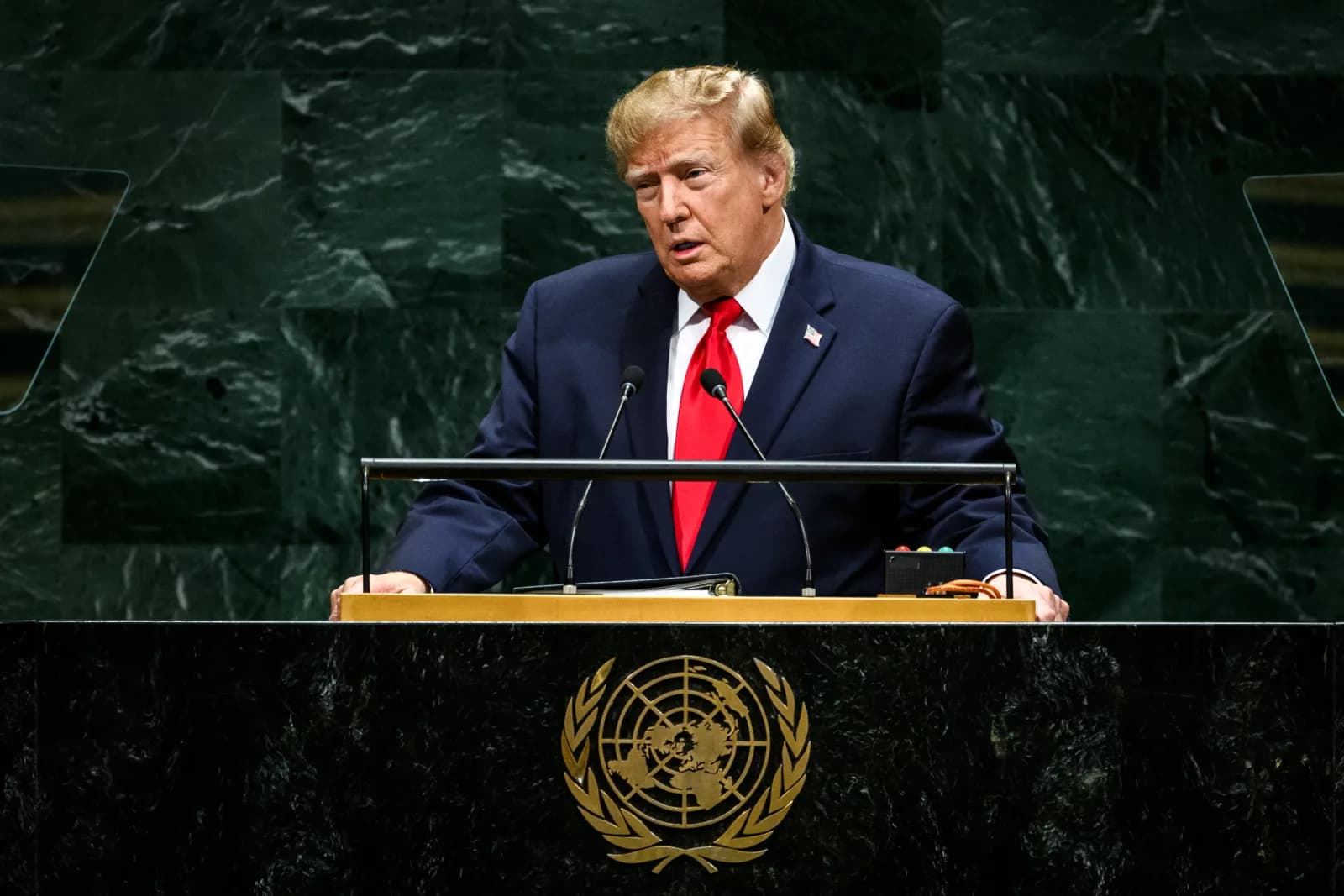
President Donald Trump has proposed a new name for artificial intelligence: 'super intelligence.' Trump made the remark during his September 22, 2026 address to the United Nations General Assembly.
President Donald Trump has proposed a new name for artificial intelligence: 'super intelligence.' Trump made the remark during his September 22, 2026 address to the United Nations General Assembly. Reuters reported that he said US government documents would refer to AI using the new terminology and that the Justice Department could monitor the sector if intervention became necessary.
The naming proposal is notable, but there is an important technical complication. Superintelligence is already a term used in artificial intelligence research. It does not simply mean AI that is very impressive.
The established concept refers to a hypothetical form of intelligence that would exceed human cognitive abilities across a very broad range of domains.
What did Trump propose?
Trump's argument is largely linguistic. He said the word 'artificial' makes intelligence sound fake and presented 'super intelligence' as a more appropriate description of modern AI. The proposal does not change the technical capabilities of AI systems. A government can rename a category in its documents, but a name does not make a model more capable.
What does superintelligence mean?
Cambridge Dictionary defines superintelligence as an entity or intelligence with a level of intelligence higher than humans. IBM describes artificial superintelligence as a hypothetical AI system whose intellectual scope goes beyond human intelligence.
That is different from the AI products people use today. Today's systems can write code, summarize documents, generate images, translate languages, analyze information and assist with research. Some can outperform humans on particular benchmarks. That does not establish superintelligence.
AI, AGI and ASI are different concepts
AI is a broad category covering systems that perform tasks associated with intelligence. AGI is a hypothetical system capable of general intellectual performance across many domains at human-like breadth. ASI is a hypothetical system whose intellectual capabilities exceed those of humans across a broad range of domains.
These definitions remain debated, but the distinctions remain useful.
Why the terminology matters
Technology policy depends on definitions. A government cannot effectively regulate something if nobody agrees on what the word means. A law written around 'superintelligence' would need to clarify whether it applies to a recommendation engine, spam filter, chatbot, autonomous coding agent or a hypothetical system far beyond human cognitive abilities.
Clear language helps regulators match rules to actual capabilities.
The term is much older than this week's announcement
Superintelligence has been part of AI and philosophy discussions for years. Researchers and philosophers have used the term when discussing the possibility of machines exceeding humans across broad intellectual domains.
That is why using it as a universal replacement for AI could create confusion. It would collapse two different categories into one.
Does today's AI qualify?
There is no established evidence that today's mainstream AI systems meet the conventional definition of superintelligence. AWS describes artificial superintelligence as theoretical and says current AI systems remain far from such a state. IBM similarly describes ASI as hypothetical.
Technology journalists and consumers should therefore look at evidence rather than labels.
Why Trump may prefer the term
Trump's stated reason is that 'artificial' makes intelligence sound fake. The alternative phrase also fits a broader political emphasis on the strategic importance of AI. Trump has described AI as a technology with major economic and geopolitical consequences.
The terminology therefore sits inside a larger policy conversation about development, competition and regulation.
Could the name affect regulation?
Potentially, although the effect depends on how government agencies actually use the term. If 'super intelligence' becomes a broad official label for ordinary AI, policymakers may need additional definitions to distinguish different capability levels. If it is used specifically for highly advanced future systems, it could coexist with the existing term AI.
The irony of the phrase
There is a linguistic irony here. 'Superintelligence' is not a softer version of 'artificial intelligence'. It is a much stronger claim. It implies intelligence beyond human capability. Calling an ordinary 'superintelligence' would therefore change the implied meaning of the technology even if the underlying model remained exactly the same.
The useful question is capability
Technology naming can be fascinating, but capabilities matter more. Can a system reason reliably? Can it generalize? Can it operate autonomously? Can it control software safely? Can humans audit its decisions? Those questions tell us more than branding.
Bottom line
Trump's proposal to call artificial intelligence 'super intelligence' is a terminology change, not a technical breakthrough. The phrase already has an established meaning in AI research and generally refers to a hypothetical intelligence that exceeds human cognitive performance across a broad range of domains.
For readers, the useful distinction is simple. AI is a broad technology category. Superintelligence is a much stronger capability claim. Names can influence public debate, but they do not change what a machine can actually do.
Reporting note: Trump's remarks are reported from his September 22, 2026 UN General Assembly speech. The technical meaning of superintelligence was cross-checked against established reference material from Cambridge Dictionary, IBM and AWS.
Sources
Share this story
Enjoyed this? Share it with someone who'd appreciate it.
Ask MAMBO
Have a plain-English question about this topic? Send it in and we may answer it in a future guide.
Ask a questionRelated reading

Kenya's emerging technology sandbox deadline is here. What happens next?
The CA sandbox gives selected innovators a supervised route to test AI, 5G, 6G, IoT, cybersecurity and digital-content products before full market deployment.

Kenya wants Oracle's cloud and AI expertise. It should negotiate like the data matters
Oracle and the ICT Authority are exploring deeper cooperation on government cloud, AI and certification. Kenya needs skills transfer, interoperability and enforceable data controls.

RISE 2026 takes Nigeria's technology debate to Jos, where it belongs
Hosting a major national technology conference in Jos challenges the idea that Nigeria's digital economy begins in Lagos and ends in Abuja.