
Africa has a seat at the AI governance table. Now it needs real leverage
Africa is no longer completely absent from the global AI governance conversation.
Africa is no longer completely absent from the global AI governance conversation.
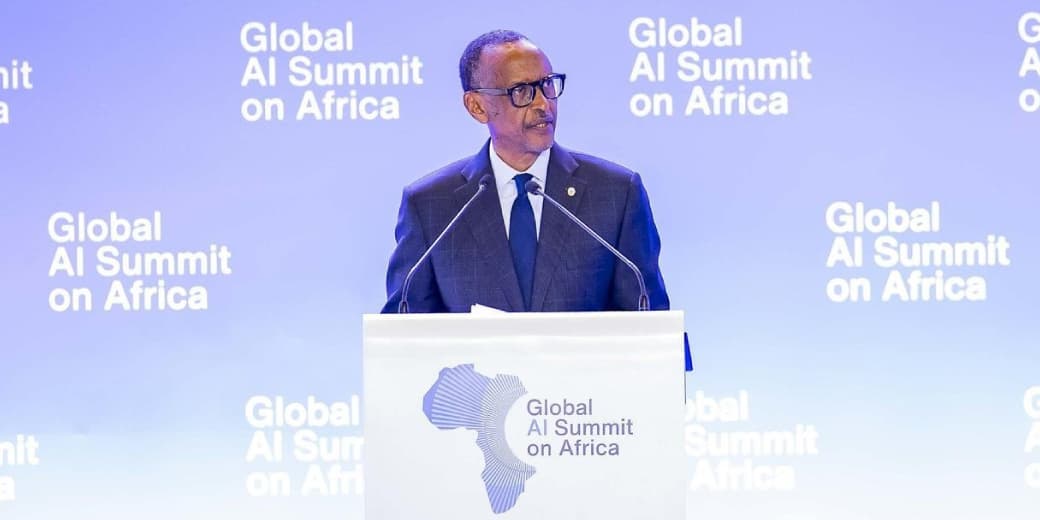
Rwandan President Paul Kagame is a co-chair of the new AI for Good Global Commission, and African policy groups are convening alongside the United Nations Global Dialogue on AI Governance in Geneva.
That representation matters. It does not settle the problem.
A seat can influence rules, or it can decorate a photograph. Africa's real test is whether its governments, researchers, businesses and communities can shape decisions about data, languages, safety, infrastructure, procurement and economic benefit.
What you need to know
- The AI for Good Global Commission is holding its inaugural meeting in Geneva in July 2026.
- President Paul Kagame is one of its co-chairs.
- African policy organisations are coordinating around the UN Global Dialogue on AI Governance.
- Representation alone does not agenda-setting power.
- African languages and contexts remain underrepresented in many datasets and evaluation systems.
- Compute access, research funding and procurement power are as important as ethical principles.
- A unified African position will still need room for different national priorities.
Why global AI rules can fail African users
AI systems are shaped by their training data, testing environments, safety rules and product assumptions.
A model trained mainly on English-language internet data may perform poorly in African languages. A fraud system developed around European banking patterns may misread behaviour. A medical assistant trained on foreign patient data may not reflect local disease burdens or care pathways.
Even apparently universal safety rules can carry cultural assumptions.
What counts as harmful speech, legitimate political expression, sensitive identity data or acceptable automation differs across legal and social contexts. Global standards need common principles, but they also need local interpretation.
A rulebook written far away can be technically elegant and operationally wrong.
What "AI neo-colonialism" actually means
The phrase is useful when it describes a specific power imbalance, not when it becomes ceremonial outrage.
AI colonialism can appear when:
- African data is extracted without fair value or consent
- Models are deployed without local testing
- Foreign vendors define public-sector infrastructure
- Cloud and compute costs send value outward
- Local languages receive poor support
- Safety research excludes regional harms
- Governments become dependent on proprietary systems they cannot audit
- Workers provide data-labelling labour without sharing in the intellectual property
- Global rules limit local innovation while protecting established foreign firms
The problem is not that foreign technology exists.
The problem is a system where African markets provide data, users and social consequences while receiving little control over design or profit.
Why language is governance
Language support is often treated as a product feature. It is also a question of public access and political power.
If an AI system works brilliantly in English but poorly in Kiswahili, Kinyarwanda, Amharic, Yoruba or isiZulu, then the people who can use public and commercial services most effectively are already selected.
Translation quality affects healthcare instructions, legal information, education, government forms and crisis communication.
African languages also contain cultural context that direct translation cannot fully preserve. Proverbs, politeness, kinship and local meaning can shape whether an answer is merely grammatical or genuinely useful.
A model that speaks the words but misses the world is not localised.
Why data diversity is not enough
Adding more African data does not automatically create fair AI.
The questions include:
- Who collected the data?
- Did people consent?
- Who owns the resulting dataset?
- Can communities request removal?
- Are marginalised groups represented safely?
- Who labels the data?
- Which harms are evaluated?
- Who profits from the model?
- Can local researchers inspect the system?
A larger dataset can reproduce a larger injustice.
Governance needs rights, institutions and accountability, not only a more colourful spreadsheet.
The compute problem
AI influence follows infrastructure.
Countries and companies with advanced chips, data centres, cloud platforms, research labs and energy capacity can build and test systems. Countries without them negotiate from a weaker position.
Africa's governance agenda therefore cannot focus only on ethics documents. It needs investment in:
- Regional compute facilities
- Reliable and affordable electricity
- Research networks
- Public-interest datasets
- Universities
- Local cloud capacity
- Open models
- Independent audits
- Cybersecurity
- Procurement expertise
A country that cannot evaluate a model independently may have to trust the vendor's own report.
That is not governance. It is reading the brochure carefully.
Can Africa speak with one voice?
Coordination helps, especially when negotiating with global platforms and standards bodies.
The African Union can articulate shared priorities around inclusion, sovereignty, development and human rights. Regional blocs can coordinate cross-border data rules and procurement.
Still, Africa is not one market or political system.
Countries differ in language, legal tradition, infrastructure, conflict, economic priorities and regulatory capacity. A unified seat should not erase those differences.
The goal should be coordinated leverage with local implementation, not a single generic "African context" that becomes another stereotype.
What meaningful representation would achieve
A serious African role in AI governance should produce measurable outcomes:
- Funding for local safety and language research
- Access to global model evaluations before deployment
- African participation in standards bodies
- Transparent data and procurement agreements
- Support for regional compute infrastructure
- Rules for public-sector AI accountability
- Stronger competition and interoperability
- Remedies when systems discriminate or fail
- Protection for data workers
- Clear economic participation in AI value chains
The success metric is not how many African leaders speak at a summit.
It is whether a Kenyan teacher, Congolese trader, Nigerian developer or South African patient receives a safer and more capable system because those leaders were there.
The tecMAMBO take
Africa has moved closer to the table. That is progress.
The next danger is symbolic inclusion: one high-profile chair, several panels and no transfer of money, infrastructure or decision-making power.
Global AI governance will be credible only when regions affected by the technology can define the problems, test the systems and enforce remedies.
Representation opens the door. Capacity decides who owns the room.
FAQ
Does Africa have representation in the AI for Good Global Commission?
Yes. Rwandan President Paul Kagame is a co-chair, and the commission includes global political and technology leaders.
What is the UN Global Dialogue on AI Governance?
It is a United Nations process bringing governments and other stakeholders together to discuss international AI governance principles and cooperation.
Why do African languages matter for AI safety?
Poor language and cultural understanding can make systems inaccurate or harmful in healthcare, education, public services, finance and communication.
What is AI neo-colonialism?
It describes power structures where data, labour and markets are extracted from lower-power regions while control, profit and rule-making remain elsewhere.
Should Africa have one AI policy?
Shared principles and bargaining positions can help, but national policies must reflect different legal systems, languages, economies and risks.
Sources
Ask MAMBO
Have a plain-English question about this topic? Send it in and we may answer it in a future guide.
Ask a questionRelated reading
 MAMBO Take
Kenya wants Oracle's cloud and AI expertise. It should negotiate like the data matters
Oracle and the ICT Authority are exploring deeper cooperation on government cloud, AI and certification. Kenya needs skills transfer, interoperability and enforceable data controls.
 MAMBO Take
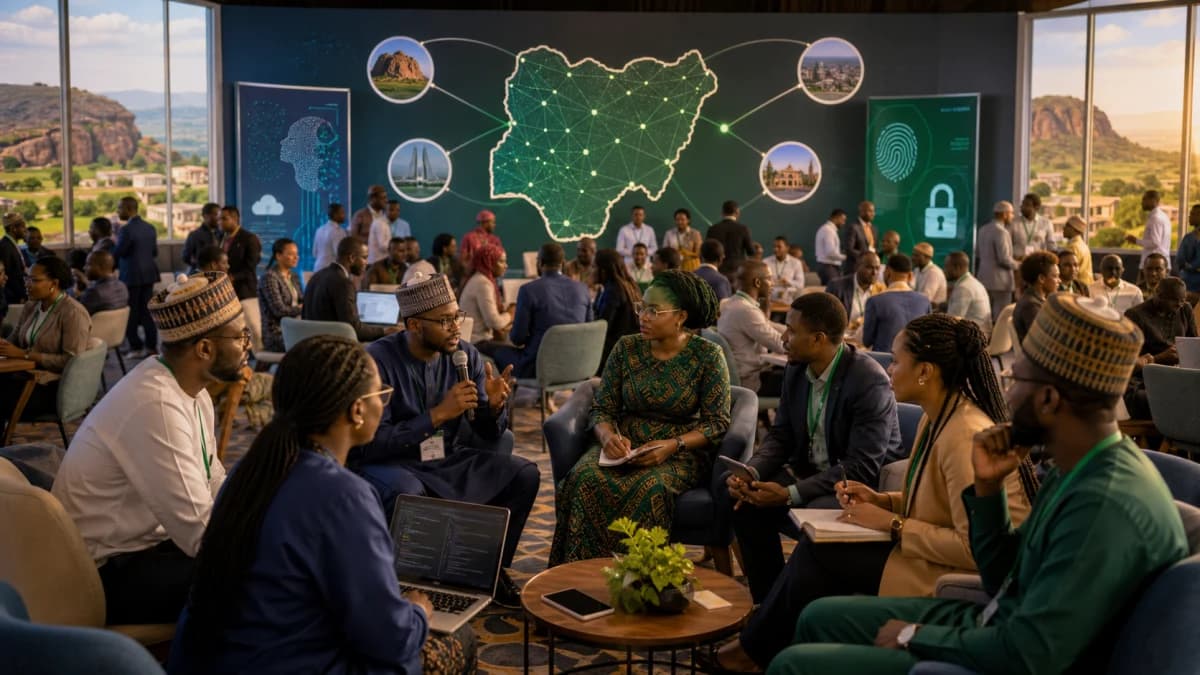
RISE 2026 takes Nigeria's technology debate to Jos, where it belongs
Hosting a major national technology conference in Jos challenges the idea that Nigeria's digital economy begins in Lagos and ends in Abuja.
 MAMBO Explains
Africa's Laptop LLM Challenge asks AI to fit the computers people already own
Instead of asking developers to find bigger GPUs, the competition asks them to compress, optimise and localise AI for common African hardware.