
RISE 2026 takes Nigeria's technology debate to Jos, where it belongs
Hosting a major national technology conference in Jos challenges the idea that Nigeria's digital economy begins in Lagos and ends in Abuja.
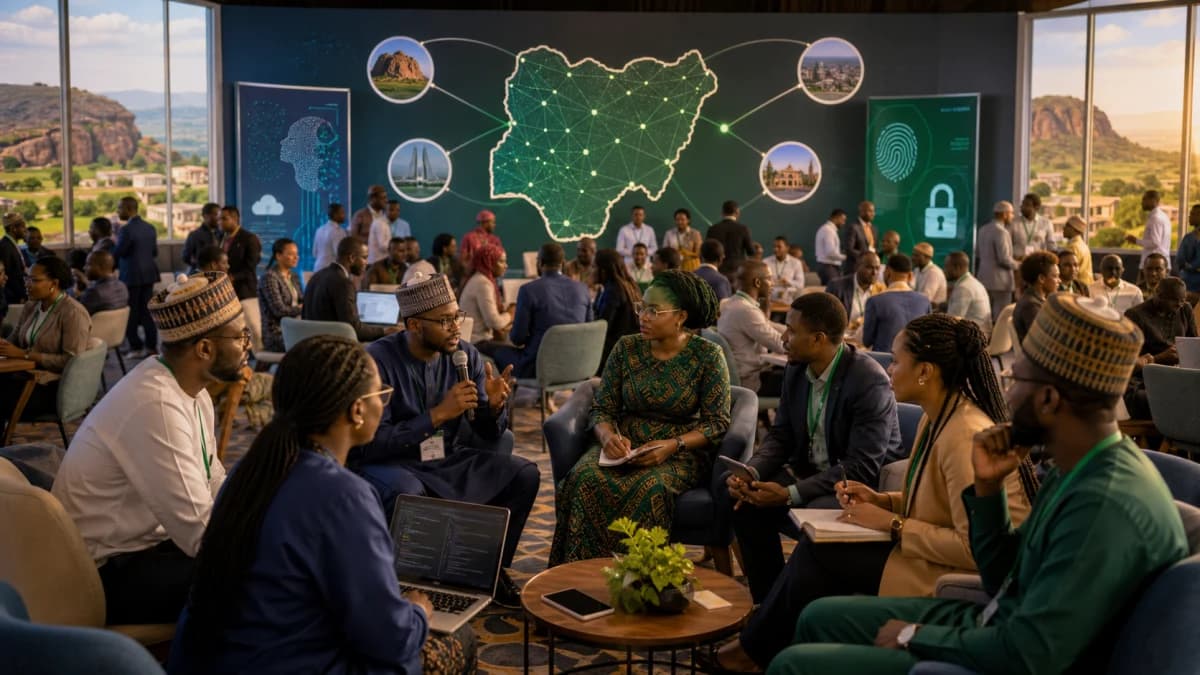
The Nigeria Computer Society's 20th International Conference on Technology and Computing has been running in Jos, Plateau State, from 27 to 30 July 2026.
RISE 2026 is organised around the theme "Harnessing Digital Innovation and Emerging Technologies for Inclusive Growth and Economic Renaissance."
The official programme covers artificial intelligence, data governance, privacy, cybersecurity, fintech, , education, health, IoT and the future of work.
The location is part of the message. Nigeria's digital economy is too large and too uneven to be discussed only inside Lagos hotels and Abuja ministries.
What you need to know
- RISE 2026 takes place at Crispan Hotel in Jos.
- The event was rescheduled from August to 27 to 30 July.
- Organisers expected more than 2,000 delegates, but a verified final attendance figure was not available at publication.
- The conference includes policy, research, professional and industry sessions.
- Its theme emphasises inclusive growth and economic transformation.
What is RISE 2026?
RISE is the annual international conference of the Nigeria Computer Society. It brings together officials, researchers, engineers, entrepreneurs, investors, students and industry leaders.
The programme focuses on responsible AI, data governance, privacy, cybersecurity, fintech, blockchain, cloud, IoT, robotics, digital health, education technology and smart governance.
These are broad categories. The useful question is whether conference discussion becomes policy, procurement, research and companies after the final panel ends.
Why Jos matters
Lagos is Nigeria's commercial technology centre. Abuja is the seat of federal power.
That concentration helps talent, investors, customers and regulators find one another. It also distorts the ecosystem.
A founder in Jos, Kano, Enugu, Ibadan, Port Harcourt or Kaduna may face weaker investor networks, fewer senior mentors, less reliable infrastructure and less national attention.
Holding a major conference in Jos does not remove those differences. It signals that national technology strategy should be shaped closer to the people and industries it claims to serve.
Agriculture, health, education, logistics, energy and regional-security problems do not wait for a startup to relocate to Lagos.
What inclusive growth should mean
Inclusive growth is conference language until it becomes measurable.
A useful agenda should ask whether broadband and devices are affordable outside major cities, whether regional universities can access research infrastructure, whether government contracts reach smaller companies and whether graduates can find paid entry-level work.
It should also ask whether digital services work on weak connections, support local languages and provide meaningful remedies when users are harmed.
Digital inclusion is not the number of people with a . It is the ability to use technology safely, productively and on fair terms.
Nigeria's AI governance problem
Nigeria is developing AI policy while public and private adoption accelerates.
That creates immediate questions about high-risk uses, automated public decisions, biometric systems, training data, local-language evaluation, regulatory authority and citizen redress.
A national conference can bring policy and technical communities together. The danger is producing principles that no institution has the budget or authority to enforce.
Governance needs law, skilled regulators, testing capacity and remedies.
Why cloud infrastructure belongs in the conversation
AI and digital public services depend on compute, , connectivity and reliable power.
Nigeria can announce ambitious AI strategies while remaining dependent on foreign cloud regions and expensive international .
Local data centres can improve and support data-residency needs. They do not automatically sovereignty or low cost.
The country also needs competitive cloud markets, open standards, cybersecurity, local internet exchange, reliable electricity and strong procurement capacity.
The less glamorous infrastructure decides whether the conference vision survives contact with a power cut.
What should happen after RISE?
The NCS and participating institutions should publish a conference report, specific recommendations, responsible owners, timelines, research priorities, regional investment commitments and apprenticeship proposals.
Events create useful collisions between people. They also create an easy illusion of movement.
The test is what changes in Jos and beyond after the banners come down.
What decentralised technology investment would look like
Nigeria does not need every state to imitate Lagos. It needs regions to build around their own economic strengths and public needs.
Plateau State could connect technology investment to agriculture, education, tourism, health, logistics and public administration. Other regions may prioritise manufacturing, energy, creative industries, financial services or trade. The aim is not to distribute identical startup hubs across the map. It is to build locally relevant capability with national and global connections.
Practical decentralisation would include reliable broadband at universities and business districts, regional cloud and data access, research grants, public procurement for local firms, founder support, technical apprenticeships and investor networks that visit more than once for a conference. Federal agencies can also publish open datasets and challenge programmes around regional problems.
Remote work helps, but it is not a complete development policy. A developer can work for a Lagos or foreign company from Jos while the local ecosystem remains weak. Regional growth requires companies, institutions and intellectual property that remain rooted locally.
The success of RISE 2026 should therefore be judged partly by what returns to Plateau State: partnerships, training, contracts, laboratories, jobs and follow-up events. Moving the microphone is symbolic. Moving opportunity is structural.
The tecMAMBO take
RISE 2026 is right to connect emerging technology with inclusive economic growth. It is also right to hold the national conversation in Jos.
Nigeria cannot build a resilient technology economy by treating every region outside Lagos and Abuja as a talent-export zone.
Decentralisation means more than moving a conference. It means moving capital, infrastructure, decision-making and opportunity.
FAQ
When is RISE 2026?
The revised conference dates are 27 to 30 July 2026.
Where is the conference held?
RISE 2026 is held at Crispan Hotel in Rayfield, Jos, Plateau State.
Who organises RISE?
The conference is organised by the Nigeria Computer Society.
Did more than 2,000 people attend?
The NCS president said more than 2,000 delegates were expected. A verified final attendance count was not available at publication.
What subjects does RISE 2026 cover?
The programme includes AI, data, privacy, cybersecurity, cloud, fintech, IoT, digital health and inclusive digital growth.
Sources
Ask MAMBO
Have a plain-English question about this topic? Send it in and we may answer it in a future guide.
Ask a questionRelated reading

Kenya wants Oracle's cloud and AI expertise. It should negotiate like the data matters
Oracle and the ICT Authority are exploring deeper cooperation on government cloud, AI and certification. Kenya needs skills transfer, interoperability and enforceable data controls.
Kenya's plan to put AI in eight million small businesses, explained
Kenya's MSME ministry is pushing AI adoption across millions of small firms as the Artificial Intelligence Bill 2026 moves through the Senate. The plan, the law, and the catch.
Kenya's emerging technology sandbox deadline is here. What happens next?
The CA sandbox gives selected innovators a supervised route to test AI, 5G, 6G, IoT, cybersecurity and digital-content products before full market deployment.