
Kenya just opened a $390 million tender to expand its fiber backbone, here's exactly what's being bid on
Kenya's ICT Authority opened an international tender to expand the National Optic Fibre Backbone, funded by $390 million in World Bank credits. Here's the full scope, deadlines, and evaluation criteria.
Quick answer
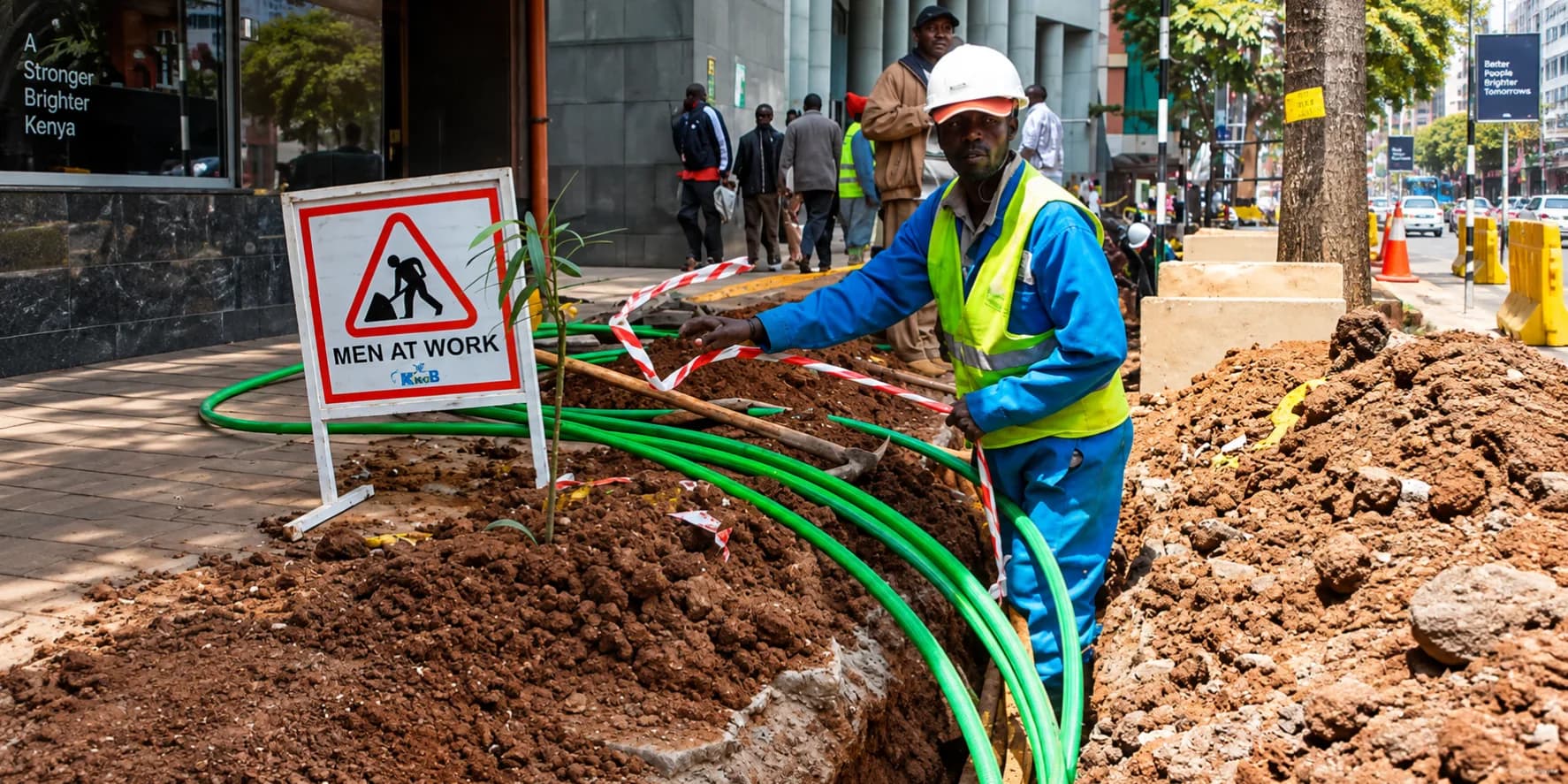
Kenya's ICT Authority opened an international tender, referenced KE-ICTA-538567-NC-RFB, to expand the National Optic Fibre Backbone Infrastructure and strengthen cross-border and metropolitan connectivity, under the World Bank-backed Kenya Digital Economy Acceleration Project. The tender is financed through $390 million in World Bank credits and splits into two lots: national backbone links, selecting 5 to 20 service providers, and cross-border and metro links, selecting 5 to 8 providers. Bids are due October 29, 2026, with framework agreements running an initial three years, extendable by up to two more.
Kenya's ICT Authority has launched an international tender to expand the country's National Optic Fibre Backbone Infrastructure, known as NOFBI, and to strengthen cross-border and metropolitan connectivity across East Africa.
What's actually being procured
The tender, formally referenced KE-ICTA-538567-NC-RFB, is structured around two separate lots rather than a single undifferentiated contract. Lot One covers National Backbone Links, the core domestic fiber infrastructure connecting Kenya's counties and major population centers, and will select between 5 and 20 qualified service providers. Lot Two covers Cross-Border and Metro Links, focused on connections to neighboring countries and metropolitan-area networks, and will select between 5 and 8 providers.
Both lots will operate as closed framework agreements, meaning ICTA will act as the sole contracting authority, with an initial three-year term and the option to extend by up to two further years. Winning a place on a framework agreement doesn't automatically a specific contract; ICTA has been explicit that individual projects will be awarded through a secondary, separate procurement process once the framework agreements are in place.
Who's paying for it, and how bids get evaluated
The procurement is financed through $390 million in World Bank credits, specifically Credits 7289-KE and 7290-KE, delivered under the Kenya Digital Economy Acceleration Project, a broader World Bank-backed initiative already funding other digital infrastructure work in the country. As a World Bank-financed procurement, bidders face specific transparency requirements beyond standard technical evaluation, including mandatory beneficial ownership disclosure and compliance with World Bank anti-corruption standards and environmental and social safeguards.
Bid evaluation weights heavily toward technical capability over price: non-price and technical factors account for 80% of the assessment, with cost weighted at 20%. Within the technical evaluation, performance requirements carry the largest share at 52%, followed by company profile at 30% and implementation and staffing capacity at 18%, according to ICTA's published tender documentation. Bids must be submitted in a two-envelope format, separating technical and financial proposals.
The timeline
ICTA has set October 29, 2026, at 10:00am East African Time as the deadline for bid submission and public bid opening, to take place at Telposta Towers in Nairobi. Submitted bids must remain valid until March 30, 2027, giving ICTA a roughly five-month window to complete evaluation and award framework agreements before bidders' commitments expire.
Why this fits into a much larger national target
It's worth placing this specific tender against Kenya's broader fiber ambitions, since the two shouldn't be conflated. This procurement covers a defined set of national backbone and cross-border links, not the entirety of Kenya's fiber buildout. The country's wider digital infrastructure strategy targets deployment of 100,000 kilometers of national fiber optic cable overall, a target this tender contributes toward rather than completes on its own. Eng. John Tanui, Principal Secretary in Kenya's State Department for ICT and the Digital Economy, framed this specific procurement's purpose directly: "This investment will strengthen the resilience and redundancy of our national infrastructure." He added that the project is expected to connect more public institutions to the network, expand affordable access, and create room for private operators to extend last-mile connectivity to homes and businesses that a national backbone alone can't reach.
Why the cross-border component matters beyond Kenya's own borders
Lot Two's focus on cross-border and metro links is the piece with the most direct regional significance. Kenya has spent much of 2026 building out its position as a connectivity hub for East and Central Africa, work that includes commercial cross-border fiber routes like Paratus Group's 2,000km Mombasa-to-Goma corridor through Uganda and Rwanda, alongside new data center capacity in Nairobi from operators like Digital Realty. A government-backed expansion of cross-border and metro fiber links, procured through a World Bank-financed, internationally competitive tender rather than a single private operator's commercial buildout, adds public infrastructure investment to what has so far been a largely private-sector-led push, potentially giving neighboring countries more resilient, redundant connectivity options into Kenya's network rather than depending on any single commercial route.
The tecMAMBO take
Fiber infrastructure tenders rarely generate headlines the way product launches or funding rounds do, but the structure of this one is worth paying attention to regardless. A closed framework agreement selecting up to 20 providers for domestic links and up to 8 for cross-border links, evaluated 80% on technical merit rather than lowest price, is a materially different procurement approach than a single winner-take-all contract would be. It spreads execution risk across multiple providers and gives ICTA flexibility in how it awards individual projects later, at the cost of a more complex, longer procurement and evaluation process. Whether that trade-off pays off in faster, more resilient rollout, or in slower coordination overhead across a larger provider pool, will become clear only once the framework agreements are actually awarded and call-off contracts start moving.
FAQ
What is NOFBI?
Kenya's National Optic Fibre Backbone Infrastructure, the government-owned fiber network connecting the country's counties and institutions, first built out starting in the 2010s and now being expanded under this tender.
How is this tender being funded?
Through $390 million in World Bank credits (Credits 7289-KE and 7290-KE), delivered under the Kenya Digital Economy Acceleration Project.
When is the bid deadline?
October 29, 2026, at 10:00am East African Time, with bid opening at Telposta Towers, Nairobi.
Does this tender cover Kenya's full 100,000km fiber target?
No. It covers a specific set of national backbone and cross-border/metro links. The 100,000km figure is Kenya's broader, longer-term national fiber deployment target, which this tender contributes toward.
Sources
- ICT Authority Kenya: open tender for national backbone and cross-border links
- ICT Authority Kenya: official Request for Bids, KE-ICTA-538567-NC-RFB
- World Bank: $390 million Kenya Digital Economy Acceleration Project
- TechAfrica News: Kenya ICTA opens fiber and cross-border connectivity tender
- TechTrendsKE: Kenya floats tender for national fiber backbone and cross-border links
Share this story
Enjoyed this? Share it with someone who'd appreciate it.
Ask MAMBO
Have a plain-English question about this topic? Send it in and we may answer it in a future guide.
Ask a questionRelated reading
Kenya's High Court just unwound a $1.58 billion Safaricom sale that closed three months ago
Kenya's High Court declared the government's sale of a 15% stake in Safaricom PLC to Vodacom Group unconstitutional, null and void, and ordered the shares restored to the state.
Nairobi E-Mobility Week opened at KICC, and Kenya's electric two-wheeler numbers explain why it matters
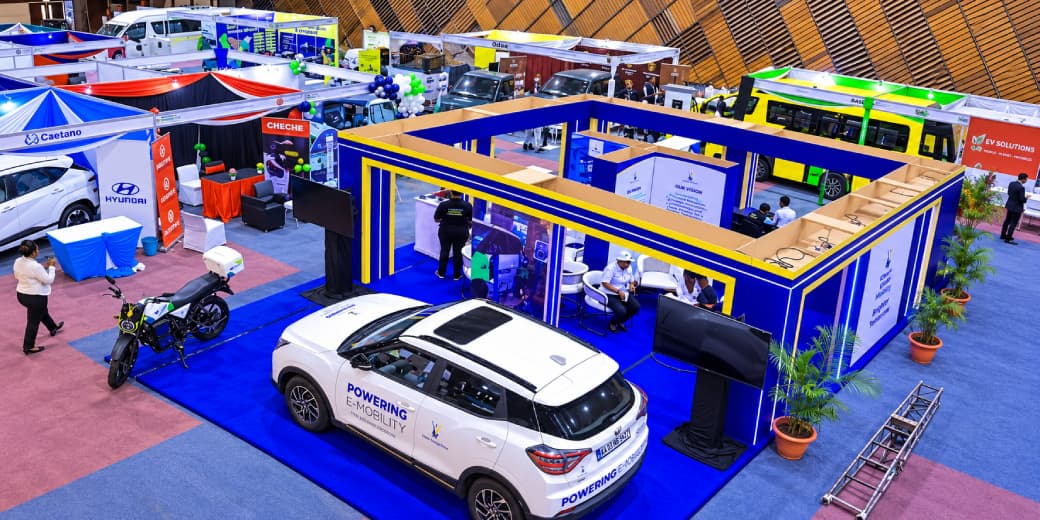
Nairobi E-Mobility Week 2026 launched at the Kenyatta International Convention Centre on September 14 and runs free to the public through September 19, organized by UNEP and Kenya's Ministry of Transport as part of UNEP's Global Electric Mobility Programme.
Kenya's smartboard rollout to 10,382 schools isn't new news, but here's where it actually stands
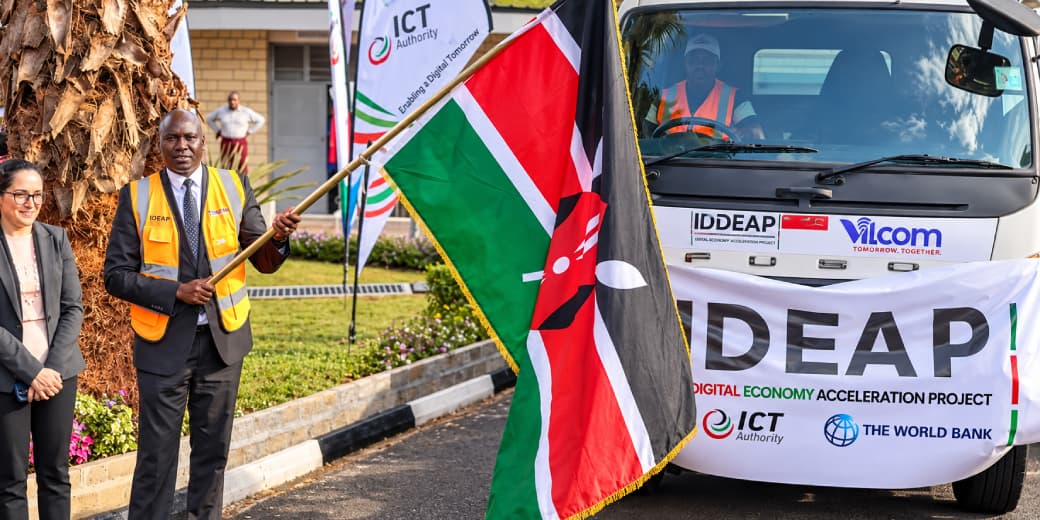
Kenya's rollout of interactive smartboards and teacher laptops to 10,382 public junior secondary schools launched with an official flag-off on June 9, 2026, under the World Bank-funded Kenya Digital Economy Acceleration Project (KDEAP), not this week.