

Nairobi E-Mobility Week opened at KICC, and Kenya's electric two-wheeler numbers explain why it matters
UNEP and Kenya's Ministry of Transport launched Nairobi E-Mobility Week at KICC, running through September 19. Here's what's on, and the market data behind why Kenya is hosting it.
Quick answer
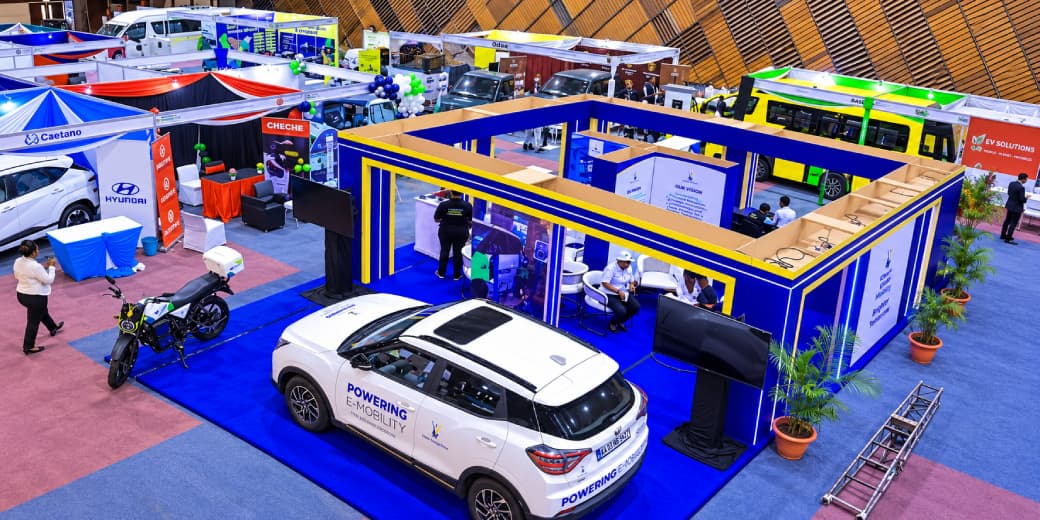
Nairobi E-Mobility Week 2026 launched at the Kenyatta International Convention Centre on September 14 and runs free to the public through September 19, organized by UNEP and Kenya's Ministry of Transport as part of UNEP's Global Electric Mobility Programme. The week includes EV exhibitions, test drives, panel discussions on policy, electric boda boda demonstrations, and a charging infrastructure showcase. It lands at a specific moment for Kenya's e-mobility sector: electric motorcycles went from 0.5% of new motorcycle registrations in 2021 to roughly 10% by mid-2025, and a major new multi-brand battery-swapping network launched in Nairobi and Mombasa just weeks before this event.
The United Nations Environment Programme and Kenya's Ministry of Transport opened Nairobi E-Mobility Week on September 14 at KICC, a free, week-long program running through September 19, with daily sessions from 9am to 6pm covering EV exhibitions, test drives, cycling events, policy panel discussions, electric boda boda demonstrations, and a showcase of charging infrastructure.
Why this event, and why now
This isn't Kenya's first e-mobility gathering this year, and it's worth situating it against what's already happened in 2026 to understand what's actually new about it. Kenya launched its National Electric Mobility Policy on February 3 at the same venue, establishing the country's first official regulatory framework covering electric motorcycles, bicycles, buses, private cars, and commercial fleets. The 4th Annual E-Mobility Stakeholders Conference and Expo, organized separately by Kenya Power with GIZ Kenya and the Electric Mobility Association of Kenya, ran at KICC in early June, drawing more than 2,500 participants in previous years.
Nairobi E-Mobility Week is UNEP's own event within that broader 2026 calendar, distinct from the government's policy launch and the Kenya Power-organized conference, but clearly part of the same accelerating push. UNEP has direct history in Kenya's electric two-wheeler sector specifically, having launched some of the country's earliest public and private electric motorcycle pilots at Karura Forest back in 2021, in partnership with the Kisumu County Government, Kenya Power, and Powerhive.
The market data behind the policy push
Kenya's electric motorcycle adoption curve is the actual story underneath the event listing. Electric motorcycles captured just 0.5% of new motorcycle registrations in Kenya in 2021. By 2024, that had risen to 7.1%. In the first eight months of 2025, it climbed further to roughly 10%, a progression from curiosity to near-mainstream adoption in under four years that industry analysts have compared to the speed of early-stage EV adoption curves in Vietnam and China. That growth has made Kenya Africa's fastest-growing market for electric two-wheelers.
The economics driving that shift are concrete and rider-specific. At a battery-swap station on Nairobi's Mombasa Road, a rider can exchange a depleted lithium-ion pack for a charged one in under five minutes for roughly 290 Kenyan shillings, about $2, compared to needing roughly double that in petrol for the same distance. Kenya Power itself has introduced dedicated e-mobility tariff arrangements and reported cumulative charging revenue of KSh 382 million by 2026, a signal that the utility now treats EV charging as a meaningful, trackable part of its business rather than a marginal pilot activity.
The infrastructure that just got more competitive
The timing of this event follows a significant infrastructure development by weeks, not coincidence. SUN Mobility, an Indian battery technology company, launched a shared, open, multi-brand battery-swapping network across Nairobi and Mombasa in late August, with 35 swap stations designed to work across electric scooters, motorcycles, and both passenger and cargo three-wheelers from more than ten manufacturers at launch. That open-architecture approach, where different vehicle brands can use the same swapping infrastructure rather than each manufacturer building its own network, has reportedly drawn more than ten additional electric motorcycle and three-wheeler manufacturers from India, China, Italy, and Kenya to prepare market entry through the shared network.
That sits alongside Kenya's existing battery-swapping and EV players: Roam, a Kenyan electric motorcycle manufacturer whose Gen 3 battery cuts charging time to under 40 minutes; Ampersand, a Rwanda-and-Kenya-based operator that opened its swap network to third-party manufacturers in late 2025; ARC Ride, focused on Nairobi's boda boda and delivery segment; and BasiGo, which is applying the same electrification approach to buses rather than motorcycles. Nairobi E-Mobility Week's exhibition and demonstration components give this now-crowded field of competing operators a shared public stage during the same week, rather than each running separate, smaller showcases.
What to actually watch during the week
The policy panel discussions are likely the more consequential sessions relative to the exhibition and test-drive components, since Kenya's February e-mobility policy still leaves significant implementation questions open: how public transport electrification mandates get enforced, how charging infrastructure investment gets coordinated between private operators and Kenya Power, and how battery-swapping standards interoperate across the now-multiple competing networks operating in Nairobi. A single company's press conference at Karura Forest in 2021 helped establish this sector's earliest pilots. A UNEP-and-government-convened week at KICC with a genuinely competitive commercial market already operating underneath it is a materially different kind of event, closer to industry coordination than early-stage advocacy.
The tecMAMBO take
What makes Nairobi E-Mobility Week worth more attention than a typical government-convened conference is the market that already exists underneath it. This isn't a policy event trying to will a nascent industry into existence. It's happening after electric motorcycles crossed into double-digit market share, after a major new multi-brand charging network launched just weeks earlier, and after Kenya Power started reporting real charging revenue. The open question for the week isn't whether Kenya's e-mobility sector is growing, that's already established in the registration data. It's whether the policy coordination on display this week can keep pace with a commercial market that's now moving faster than the regulatory framework built to govern it.
FAQ
When and where is Nairobi E-Mobility Week 2026?
September 14 to 19, 2026, at the Kenyatta International Convention Centre in Nairobi, free to attend.
Who organized it?
UNEP and Kenya's Ministry of Transport, as part of UNEP's Global Electric Mobility Programme.
How big is Kenya's electric motorcycle market?
Electric motorcycles rose from 0.5% of new motorcycle registrations in 2021 to roughly 10% by mid-2025, making Kenya Africa's fastest-growing electric two-wheeler market.
Is this the same as Kenya's National Electric Mobility Policy launch?
No. That policy launched separately at KICC on February 3, 2026. Nairobi E-Mobility Week is a distinct UNEP-organized event within the same broader 2026 push toward electric mobility.
Sources
Ask MAMBO
Have a plain-English question about this topic? Send it in and we may answer it in a future guide.
Ask a questionRelated reading
Kenya's smartboard rollout to 10,382 schools isn't new news, but here's where it actually stands
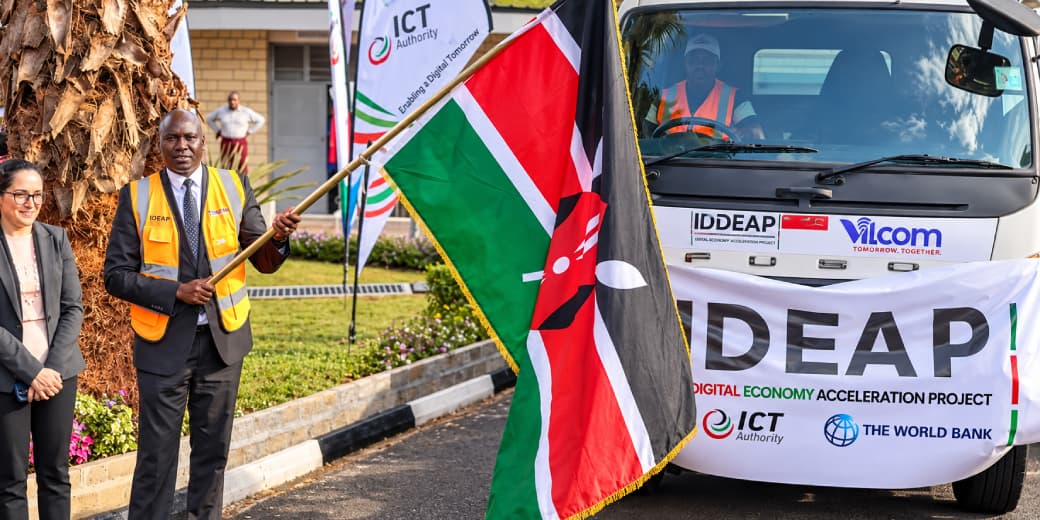
Kenya's rollout of interactive smartboards and teacher laptops to 10,382 public junior secondary schools launched with an official flag-off on June 9, 2026, under the World Bank-funded Kenya Digital Economy Acceleration Project (KDEAP), not this week.

Kenya's ICT ministry held cybersecurity talks with Fortinet, but this is one conversation in a much longer year
Principal Secretary for ICT and the Digital Economy John Tanui held discussions with Fortinet East Africa this week focused on strengthening Kenya's cyber defenses using AI-driven threat intelligence and automated response systems.

Beyond Range: How Roam Engineered Its Gen-3 Battery Around the Working Boda-Boda Rider
Roam’s new Gen-3 battery is faster to charge, more connected and built to withstand the realities of commercial electric motorcycle use. But its most important upgrade may be something less obvious: reliability.