

Kenya's smartboard rollout to 10,382 schools isn't new news, but here's where it actually stands
Kenya's rollout of smartboards and laptops to 10,382 junior secondary schools launched in June 2026. Here's the program's actual timeline and current status.
Quick answer
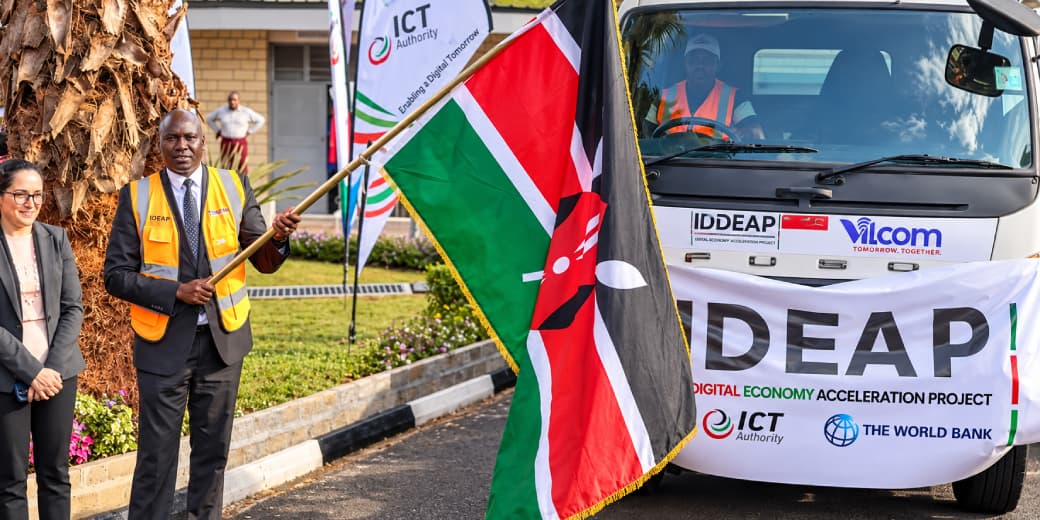
Kenya's rollout of interactive smartboards and teacher laptops to 10,382 public junior secondary schools launched with an official flag-off on June 9, 2026, under the World Bank-funded Kenya Digital Economy Acceleration Project (KDEAP), not this week. It's an ongoing, multi-phase program being implemented in stages by county, and it remains active as of September 2026.
A note on timing before anything else: this program did not launch in the past few days. Its official flag-off, led by Principal Secretary for Broadcasting and Telecommunications Stephen Isaboke at the Centre for Mathematics, Science and Technology Education in Africa, took place on June 9, 2026. Coverage of specific county rollouts, including Nyandarua County's initial phase covering 172 junior secondary schools, continued through July. Any framing suggesting this is a fresh September announcement is describing an earlier phase of an existing program.
What the program actually involves
The rollout equips each of 10,382 public junior secondary schools with one teacher laptop and one 65-inch interactive smart board per school, delivered under the Kenya Digital Economy Acceleration Project, a World Bank-funded initiative implemented through Kenya's ICT Authority in partnership with the Ministry of Education, the Kenya Institute of Curriculum Development, and the Teachers Service Commission.
Government officials have framed the program as more than a hardware distribution effort. At the June launch, Cabinet Secretary William Kabogo said the initiative is meant to prepare learners with digital skills for an increasingly AI-driven world, positioning it as part of Kenya's broader push to integrate AI and digital technologies into the Competency-Based Curriculum, rather than a one-time equipment handout.
Why the rollout happens county by county
The program isn't distributing all 10,382 schools' worth of equipment simultaneously. Nyandarua County's documented first phase covered 172 junior secondary schools, with the remainder of the county's schools scheduled for a second phase, a structure that suggests the national total is being delivered through a rolling, county-by-county schedule rather than a single nationwide event.
That phased structure is a reasonable approach for a program of this scale, but it also means headline figures like "10,382 schools" describe the program's eventual full scope, not necessarily how many schools have devices in classrooms as of any specific date. Readers should treat county-level rollout dates, not the national flag-off date, as the more meaningful marker of actual progress in any given area.
What we couldn't independently confirm
A commonly cited figure attached to this program describes more than 20,700 digital learning devices being distributed, consistent with two devices (one smartboard, one laptop) per school across the 10,382 school total. We were not able to independently verify a specific teacher training completion figure tied to this exact program as of this report; treat any precise teacher-training headcount attributed to this initiative with appropriate caution until an official, dated figure is published.
The tecMAMBO take
Digital learning rollouts of this scale are genuinely significant, and Kenya's approach, pairing hardware distribution with curriculum digitization and teacher training rather than shipping smartboards into classrooms with no accompanying pedagogical support, is a more thoughtful design than many similar programs across the region have managed. The bigger open question isn't whether the hardware arrives, it's whether the county-by-county rollout reaches full national coverage on a defined timeline, and whether the promised teacher training keeps pace with the hardware rather than lagging behind it, which is the more common failure mode for programs like this one.
Hardware is only the first checkpoint
A smartboard can improve a lesson only when the classroom has reliable electricity, appropriate digital content, a trained teacher, and a maintenance path when equipment fails. Procurement totals are easy to announce, but those supporting conditions determine whether a device becomes daily infrastructure or locked . A serious evaluation should therefore count working installations and classroom use, not merely equipment dispatched from a central warehouse.
Connectivity matters too, but not every lesson should depend on a live connection. Schools need approved materials that can work offline, secure update processes, and clear rules for student data. Teachers need time to practice with the equipment before being assessed on its use. County-level reporting can make these dependencies visible by showing delivery, installation, training, uptime, and repair status separately.
How progress should be measured
The national figure of 10,382 schools describes intended coverage. A transparent progress dashboard would add the number delivered, installed, connected, actively used, and repaired, with dates for each county. It should also disclose device specifications, terms, content availability, accessibility support, and the number of teachers trained for each installation. That would let parents and school leaders distinguish a shipment milestone from a functioning classroom service.
Learning outcomes should remain the final measure. Useful indicators could include teacher adoption, student access to curriculum materials, lesson preparation time, and improvements in specific subjects, while controlling for other changes. None of that diminishes the importance of the June launch. It simply sets a higher standard for judging a publicly funded digital programme than the number printed on a distribution plan.
Parents and school boards can help verify delivery locally by recording when equipment arrives, whether it is installed, how often it is used, and how quickly faults are resolved. Aggregated reporting from schools would give the national programme an evidence base that is harder to produce from procurement records alone and would highlight counties that need extra infrastructure or training support. It would also help the ministry identify recurring technical failures before warranties expire and show whether replacement parts reach rural schools on time.
FAQ
When did Kenya's junior schools digital learning program actually launch?
The official flag-off was June 9, 2026, at CEMASTEA, not in September 2026.
How many schools are covered?
10,382 public junior secondary schools, according to the Ministry of Information, Communications and the Digital Economy's own published figures.
Is the rollout complete?
No. It's being implemented in phases by county. Some counties, including Nyandarua, have documented multi-phase rollouts within the county itself.
Sources
Ask MAMBO
Have a plain-English question about this topic? Send it in and we may answer it in a future guide.
Ask a questionRelated reading

Kenya's ICT ministry held cybersecurity talks with Fortinet, but this is one conversation in a much longer year
Principal Secretary for ICT and the Digital Economy John Tanui held discussions with Fortinet East Africa this week focused on strengthening Kenya's cyber defenses using AI-driven threat intelligence and automated response systems.

Kenya has a new startup intelligence map, and its hardest job will be keeping the data trustworthy
A new independent platform maps Kenyan startups, investors, funding, hubs, policy and government programmes. Its value will depend on verification and freshness.

Anthropic caught someone using Claude to fake grassroots support for a Kenyan Cabinet Secretary
Anthropic's September 2026 threat intelligence report, covering misuse activity between December 2025 and August 2026, identified an operation labeled GTG-54004 in which a single operator used Claude to mass-produce social media posts designed to look like spontaneous Kenyan public opinion ahead of the 2027 general election.