

Kenya has a new startup intelligence map, and its hardest job will be keeping the data trustworthy
A new independent platform maps Kenyan startups, investors, funding, hubs, policy and government programmes. Its value will depend on verification and freshness.

Kenya's startup ecosystem does not suffer from a complete lack of information.
It suffers from information being scattered everywhere.
Funding announcements sit in news articles.
Investor portfolios live on separate websites.
Government programmes have their own portals.
Policy changes appear in gazettes, regulator notices and conference presentations.
Startup directories can become outdated quickly.
A new independent project called the Kenya Innovation Ecosystem Intelligence Platform is trying to pull those pieces into one structured view.
The platform maps startups, investors, innovation hubs, government programmes, funding activity, regulatory developments and geographic trends.
That is useful.
The difficult part is not building the database.
It is keeping the database true.
This is not a government platform
The platform should be described accurately.
It is an independent digital intelligence initiative, not an official Government of Kenya registry.
That distinction matters because users may interpret a national-sounding name as a state-backed source of record.
Founder Haim Etkin describes the goal as turning fragmented ecosystem information into structured intelligence for investors, entrepreneurs, policymakers and researchers.
The platform is currently accessible as a web-based resource and is expected to grow over time.
What it is trying to map
Current coverage says the platform tracks categories including:
- Startups and technology companies
- Investors
- Funding activity
- Innovation hubs
- Accelerators
- Government programmes
- Policy developments
- County or geographic innovation trends
- Ecosystem opportunities and risks
That is broader than a conventional startup directory.
A directory tells you a company exists.
An intelligence platform should help answer what is changing around that company.
Why Kenya needs better ecosystem data
Kenya is one of Africa's most closely watched technology markets.
That does not mean basic ecosystem questions are easy to answer.
How much startup capital actually reached Kenyan companies last year?
Which sectors are receiving the most funding?
Which counties outside Nairobi have active innovation hubs?
Which investors are still deploying capital?
Which regulatory changes affect fintech, healthtech or climate startups?
Different databases can produce different answers because they define companies, deals and locations differently.
A useful platform needs transparent methodology, not only more rows.
Verification is the real product
The project says it includes a verification layer that distinguishes information that has been confirmed from information that still requires validation or contains gaps.
That is the right instinct.
Startup data becomes unreliable quickly.
Companies shut down.
Funding rounds are announced late.
Investors leave markets.
Founders change roles.
Policy pages move.
A database without visible freshness becomes a museum.
The most valuable field may eventually be something as simple as:
Last verified on: [date]
Funding data needs especially careful methodology
African startup funding numbers are notoriously inconsistent.
One database may count debt.
Another may exclude it.
One may include grants.
Another may count only equity.
A company registered in Delaware but operating in Nairobi may be classified differently across datasets.
If the Kenya platform wants to become a reference source, it should publish definitions for:
- What counts as a Kenyan startup
- What counts as funding
- Whether debt is separate
- How undisclosed rounds are handled
- How duplicate reports are removed
- How currency conversion is calculated
The methodology is part of the product.
Policy mapping could become the strongest feature
Funding databases already exist.
Policy intelligence is harder.
A founder may need to track:
- Communications Authority rules
- Central Bank guidance
- CMA frameworks
- Data-protection requirements
- Tax changes
- Sector licences
Bringing those developments into the same environment as startup and investor data could make the platform more useful than a simple company list.
The challenge is avoiding legal overstatement.
A policy summary should link to the original regulator or legislation and show when it was last checked.
AI can help, but it cannot become the source
Future plans include AI-assisted research and verification tools.
That can help organise information.
It can also amplify errors at scale.
The platform should treat AI as a research assistant, not an authority.
A model can extract a funding amount from an article.
A human or rule-based verification process still needs to establish whether the article is credible and whether the amount has already been counted elsewhere.
The tecMAMBO take
Kenya does not need another startup list that looks impressive for three months and quietly becomes outdated.
It does need a living map of companies, capital, policy and institutions.
The Kenya Innovation Ecosystem Intelligence Platform is aiming at the right problem.
Its success will depend on an unglamorous capability: maintaining trustworthy data when the ecosystem keeps moving.
If it can make freshness, provenance and verification visible, it could become useful infrastructure for the people trying to understand Kenyan technology rather than another website people cite once and forget.
Sources
Ask MAMBO
Have a plain-English question about this topic? Send it in and we may answer it in a future guide.
Ask a questionRelated reading
 MAMBO Explains
Kenya's emerging technology sandbox deadline is here. What happens next?
The CA sandbox gives selected innovators a supervised route to test AI, 5G, 6G, IoT, cybersecurity and digital-content products before full market deployment.
 MAMBO Explains
Agentic AI could cut the cost of running scams by 90 percent. Kenyan banks should treat that as an automation problem
The next fraud problem is not simply better phishing copy. Autonomous agents could make social engineering cheaper to run at enormous scale, forcing financial institutions to automate defence too.
 MAMBO Explains
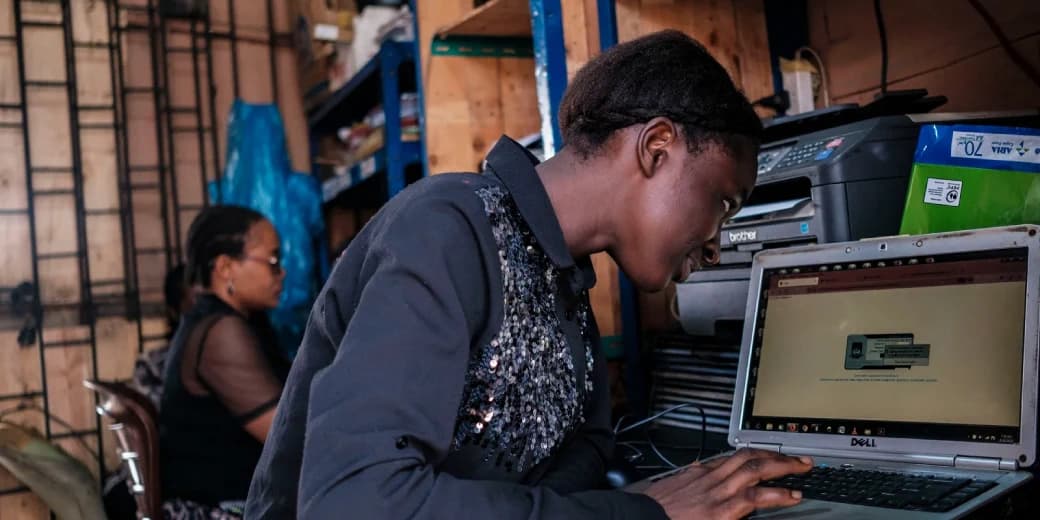
Kenya's cyber cafe rules do not require browsing history, but the logging debate is not over
The CA has clarified that cyber cafes must keep basic session records, not private browsing histories. The remaining question is whether the identification framework is proportionate in 2026.