

EPRA Removes Kenya's 15,000 kWh Monthly EV Charging Limit, Changing the Economics of Electric Mobility
EPRA has removed Kenya's 15,000 kWh monthly ceiling for the special e-mobility electricity tariff. Here is what the change means for EV charging stations, fleets and battery swapping.
Quick answer
Kenya's electric mobility industry has received a regulatory change that could materially affect the economics of charging infrastructure.
Kenya's electric mobility industry has received a regulatory change that could materially affect the economics of charging infrastructure. The Energy and Petroleum Regulatory Authority, or EPRA, has removed the previous 15,000 kilowatt-hour monthly ceiling associated with the special e-mobility electricity tariff. The amendment was published in a Gazette Notice dated September 18, 2026.
The underlying special e-mobility rates remain KSh 16 per kWh during normal periods and KSh 8 per kWh during the designated off-peak period from 10 PM to 6 AM, according to Kenyan reporting on the revised tariff.
What actually changed?
The previous framework created a monthly consumption threshold. Once a charging operation crossed 15,000 kWh, additional electricity consumption could become more expensive. That created an unusual commercial problem. A charging station that attracted more electric vehicles naturally consumed more electricity, yet higher utilization could push the operator beyond the threshold.
The revised framework removes that ceiling from the e-mobility category. This does not mean electricity is free or that every charging business receives unlimited cheap power without conditions. Operators still pay for the electricity they consume, and their costs remain affected by tariffs, connection arrangements, equipment and time of use.
Why the old limit mattered
Imagine a commercial charging station serving an electric bus fleet. At low utilization, the station may consume comfortably below 15,000 kWh a month. As more buses are added, consumption rises. Under the old structure, the operator could encounter a pricing problem precisely because the business was succeeding.
That matters when investors calculate the economics of charging infrastructure. A charging network requires substantial investment in chargers, transformers, site preparation, software, maintenance and grid connections. Operators then recover those costs over time through charging revenue. Predictable electricity costs therefore matter.
The KSh 16 and KSh 8 rates still matter
The removal of the ceiling should not distract from the tariff itself. The reported e-mobility rates remain KSh 16 per kWh during normal periods and KSh 8 per kWh between 10 PM and 6 AM. The off-peak rate encourages charging when electricity demand is lower. For fleet operators, this can fit naturally into overnight schedules.
Battery swapping could benefit too
Electric mobility in Kenya is not limited to passenger cars. Electric motorcycles are increasingly important for commercial riders and delivery fleets. Many businesses use battery swapping rather than asking riders to wait for a battery to recharge.
A swap station needs electricity to recharge depleted batteries. As the number of riders using the network increases, electricity demand increases as well. Removing the previous monthly threshold therefore matters for battery-swapping operators as well as conventional charging stations.
What the change does not solve
It would be misleading to describe the policy as the end of Kenya's EV infrastructure problems. Charging operators still need suitable sites, grid connections, chargers, transformers, maintenance, software systems and enough vehicles using their stations. A tariff change can improve the economics, but it cannot create demand by itself.
Grid capacity is another issue. A station may have access to a favourable electricity price but still require a stronger connection before it can install high-power equipment.
Why electric buses are especially relevant
Electric buses consume substantially more electricity than passenger vehicles. A depot serving dozens of buses can reach high monthly consumption much faster than a small public charging site. The policy change could make large commercial depots easier to model because the previous monthly threshold is no longer the same barrier.
Fleet operators compare electricity with diesel fuel, maintenance, financing and vehicle downtime. If electricity costs become more predictable, operators can model total cost of ownership more accurately.
Could drivers eventually pay less?
Possibly, but it is not automatic. Charging companies can use lower or more predictable operating costs to reduce prices, expand networks, improve equipment or strengthen margins. Competition will influence the outcome.
If several charging companies compete in the same market, cost savings can create pressure to offer better prices. In a less competitive market, the benefit may appear through network expansion and reliability instead.
The bigger story
Kenya's electric mobility market is moving from demonstration projects toward commercial infrastructure. Regulations created when the industry was small can become restrictive as demand grows. Removing the 15,000 kWh threshold is an example of the framework being adjusted to a changing market.
Bottom line
EPRA's removal of the 15,000 kWh monthly limit is a technical regulatory change with potentially broad implications for Kenya's electric mobility sector. It gives charging stations, battery-swapping networks and commercial fleets more room to grow without encountering the same monthly consumption ceiling. It does not solve every challenge facing EV adoption, but it removes one constraint at a time when Kenya's electric mobility industry is trying to scale.
Reporting note: The amendment was published through an EPRA Gazette Notice dated September 18, 2026. Tariff details and market context were cross-checked against Kenyan technology and business reporting.
Sources
Share this story
Enjoyed this? Share it with someone who'd appreciate it.
Ask MAMBO
Have a plain-English question about this topic? Send it in and we may answer it in a future guide.
Ask a questionRelated reading
Nairobi E-Mobility Week opened at KICC, and Kenya's electric two-wheeler numbers explain why it matters
Nairobi E-Mobility Week 2026 launched at the Kenyatta International Convention Centre on September 14 and runs free to the public through September 19, organized by UNEP and Kenya's Ministry of Transport as part of UNEP's Global Electric Mobility Programme.

Beyond Range: How Roam Engineered Its Gen-3 Battery Around the Working Boda-Boda Rider
Roam’s new Gen-3 battery is faster to charge, more connected and built to withstand the realities of commercial electric motorcycle use. But its most important upgrade may be something less obvious: reliability.
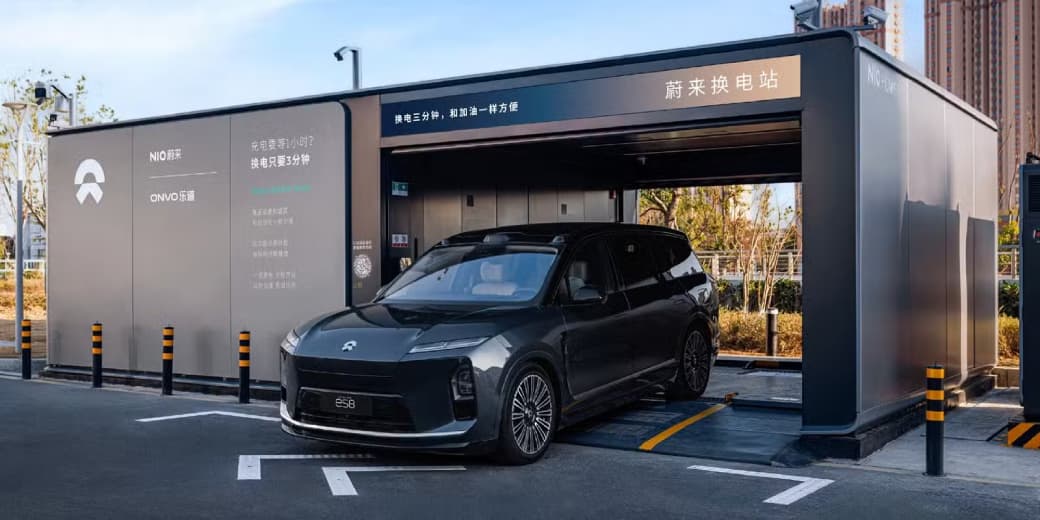
NIO's 4,000th battery swap station shows what charging networks still cannot do
NIO's new station can hold more batteries and complete a swap in under two minutes, but the model remains expensive and difficult to standardise.