

Vodacom's new Safaricom powers go far beyond owning more shares
Vodacom's reported 55 percent stake now comes with stronger board and executive influence over a company that carries Kenya's communications and money.
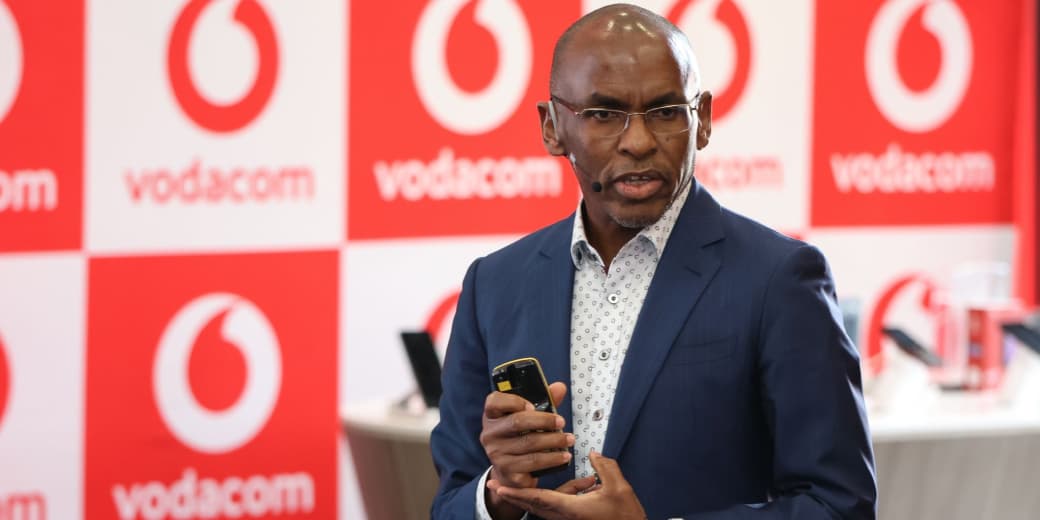
Safaricom shareholders approved a series of special resolutions that reshape the company's internal governance after Vodacom increased its stake.
The amended structure reportedly gives Vodafone Kenya, through which Vodacom holds its interest, the right to appoint one director for each complete 10 percent shareholding.
At 55 percent, that translates to five seats.
The Kenyan government, with 20 percent, receives two.
The changes also strengthen Vodacom's role in the chief executive nomination process and provide mechanisms for resolving board deadlocks.
This is not administrative tidying.
It is the conversion of economic ownership into operational influence.
What you need to know
- Shareholders approved governance amendments.
- Vodacom's reported stake is 55 percent.
- The structure gives Vodafone Kenya five board appointments.
- The Kenyan government can appoint two.
- Vodacom gains influence over the chief executive shortlist.
- Deadlock clauses may strengthen the majority shareholder.
- The wider transaction remained legally sensitive at publication.
- Safaricom operates critical financial and communication infrastructure.
The amendments build on the transaction covered in Vodacom takes majority control of Safaricom and the earlier Safaricom AGM governance analysis.
Why the Articles of Association matter
A company's Articles of Association are its internal constitution.
They define board appointments, voting, executive selection, meetings, deadlocks and decision thresholds.
Ownership gives a shareholder votes.
The Articles determine how those votes translate into control.
Changing them can be more important than changing the ownership percentage alone.
Vodacom's larger stake becomes strategically meaningful because it gains formal appointment and nomination rights.
Five board seats change the balance
A board oversees strategy, risk, executive performance and major investment.
Five directors give Vodacom a strong organised presence.
The Kenyan government retains two appointees, while independent directors and public-shareholder interests remain part of the structure.
The concern is not that Vodacom directors will automatically act improperly.
The concern is alignment.
Vodacom may prioritise:
- Regional integration
- Group procurement
- Shared technology
- Dividend returns
- Common products
- South African group strategy
Kenya may prioritise:
- National connectivity
- Public revenue
- sovereignty
- Local employment
- Data protection
- Universal service
- Domestic innovation
These priorities can overlap.
They are not identical.
Chief executive shortlist influence matters
Safaricom's chief executive shapes strategy, investment and the company's relationship with the state.
The reported changes give Vodafone Kenya influence over the shortlist of candidates.
The formal appointment remains a board process.
Controlling the shortlist still shapes the outcome before voting begins.
A chief executive selected from a majority shareholder's preferred candidates may align naturally with group strategy.
That can improve coordination.
It can also reduce the independence expected from a company embedded in Kenyan national infrastructure.
The process should be transparent enough to preserve confidence.
What is a deadlock provision?
Boards can become stuck when directors divide evenly.
A tie-breaking mechanism prevents paralysis.
The design determines who gains the stronger hand.
If a majority-linked chair or appointee receives the deciding vote, the majority shareholder may prevail in contested decisions.
Deadlock clauses are useful because companies need to act.
They are dangerous when minority representation becomes decorative.
The public should examine which decisions receive special protections and whether national-interest matters require broader consent.
Why Safaricom is not an ordinary company
Safaricom provides:
- Mobile connectivity
- M-Pesa
- Emergency communication
- Government payment channels
- Business infrastructure
- Identity-linked services
- Data
- International connectivity
A major disruption affects the economy.
Control over the company therefore attracts public interest beyond normal shareholder analysis.
Private ownership can bring capital and expertise.
Critical infrastructure still needs safeguards.
The answer is not political micromanagement.
It is clear governance, competition and regulation.
What Vodacom can bring
A stronger relationship may deliver:
- Shared procurement
- Network expertise
- Cybersecurity
- Regional
- Enterprise products
- Cloud services
- International scale
- Capital
- Management experience
Safaricom can access capabilities developed across Vodacom and Vodafone.
Regional integration may also help M-Pesa expand.
The risk begins when group efficiency reduces local flexibility.
A product that works in South Africa may not fit Kenyan behaviour.
Safaricom's success came partly from local understanding.
That should not be traded for a regional template.
What the Kenyan government should protect
The Kenyan government remains a shareholder and regulator.
It should protect:
- Competition
- Data governance
- Service quality
- National resilience
- Consumer rights
- Local innovation
- Tax revenue
- Emergency access
- Financial stability
Shareholding is not the only tool.
A state can own shares and still regulate weakly.
It can own fewer shares and regulate effectively.
The government should avoid confusing ownership with oversight.
Legal uncertainty still matters
Reports noted that the broader ownership transaction faced legal and regulatory scrutiny.
That means the governance amendments should be reported with context.
Shareholder approval does not erase pending legal questions.
Readers should distinguish:
- Approved internal rules
- Completed share transfers
- Regulatory approval
- Court outcomes
- Final operational control
Corporate announcements often sound final before the legal process finishes reading the documents.
What minority shareholders should ask
Investors should ask:
- How are independent directors chosen?
- Which decisions require special approval?
- How is the chief executive shortlist created?
- Who chairs the board?
- What happens during a deadlock?
- How are related-party contracts disclosed?
- How does Vodacom influence M-Pesa strategy?
- What protections remain for public investors?
A strategic shareholder can create value.
It can also extract value through group contracts and control.
Transparency separates synergy from self-dealing.
The tecMAMBO take
Vodacom's reported 55 percent stake is not merely a larger investment.
The governance changes give it the machinery of influence.
That may make Safaricom more coordinated, regional and efficient.
It also changes the balance around Kenya's most important communications company.
The sensible response is not panic or nationalism.
It is scrutiny.
When a company carries a country's conversations and money, boardroom rules are public-interest technology.
FAQ
How many board seats can Vodacom appoint?
The reported formula gives one seat for each complete 10 percent stake, which means five seats at 55 percent.
How many seats can the Kenyan government appoint?
A 20 percent stake translates to two seats under the reported formula.
Can Vodacom choose Safaricom's chief executive?
Vodacom gains shortlist influence, while the formal appointment remains a board process.
Why were governance resolutions needed?
They amended Safaricom's internal rules to reflect the new ownership and control structure.
Is the transaction fully settled?
The governance changes should be read alongside continuing legal and regulatory developments.
Sources
Share this story
Enjoyed this? Share it with someone who'd appreciate it.
Ask MAMBO
Have a plain-English question about this topic? Send it in and we may answer it in a future guide.
Ask a questionRelated reading
Safaricom's new board appointments show what Vodacom's 55% control looks like in practice
Safaricom's appointment of two senior Vodacom executives is more than a routine board refresh. It shows how the telco's new majority ownership is beginning to shape governance.
Kenya's High Court just unwound a $1.58 billion Safaricom sale that closed three months ago
Kenya's High Court declared the government's sale of a 15% stake in Safaricom PLC to Vodacom Group unconstitutional, null and void, and ordered the shares restored to the state.

Safaricom's KSh 80.13 billion dividend is a victory for shareholders and a test for growth
The record payout shows renewed confidence after years of Ethiopia investment. It also raises the question of how much cash Safaricom should return versus reinvest.