
Safaricom's KSh 80.13 billion dividend is a victory for shareholders and a test for growth
The record payout shows renewed confidence after years of Ethiopia investment. It also raises the question of how much cash Safaricom should return versus reinvest.
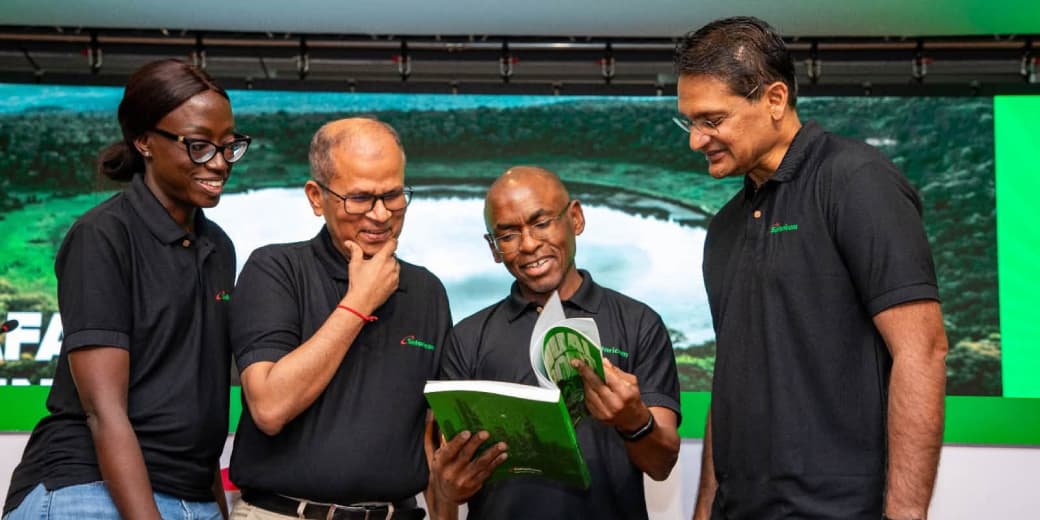
Safaricom shareholders approved a total dividend of KSh 80.13 billion for the financial year ended 31 March 2026.
The company will pay KSh 2.00 per share across the interim and final dividends, the highest total in Safaricom's history.
The payout follows a stronger financial year and improving expectations around the company's Ethiopian operation.
Shareholders have reason to celebrate.
The company now faces an old corporate question: how much cash should a mature market leader return, and how much should it keep to build the next business?
What you need to know
- The final dividend is KSh 1.15 per share.
- The interim dividend was KSh 0.85 per share.
- The total is KSh 2.00 per share.
- The total payout is KSh 80.13 billion.
- Eligible shareholders must meet the stated register date.
- Safaricom expects the final dividend payment around 4 September 2026.
- Ethiopia's improving trajectory helped support confidence.
- A large dividend does not automatically mean future growth is secure.
The payout sits beside a larger ownership shift. Read how Vodacom took majority control of Safaricom and what the new governance powers mean in our Safaricom board analysis.
Why the dividend increased
Safaricom held its dividend steady for several years while investing heavily in Ethiopia.
Launching a mobile network requires enormous spending on spectrum, towers, fibre, staff, retail, marketing, technology, licences, and customer acquisition.
Currency depreciation in Ethiopia added pressure when local earnings were translated into group accounts.
The stronger payout suggests management believes the group can support both investment and shareholder returns.
Safaricom has indicated that the Ethiopian business is moving toward break-even.
That reduces the fear that Kenya's profits will subsidise expansion indefinitely.
What KSh 80.13 billion represents
Dividends transfer company cash to shareholders.
Safaricom's ownership includes Vodacom, the Kenyan government and public investors.
The payout therefore moves money to a strategic corporate shareholder, the National Treasury, pension funds, institutions and individual investors.
For the government, dividends provide non-tax revenue.
For retirement funds and households, they provide income.
For Safaricom, the cash is no longer available for infrastructure, acquisitions or debt reduction.
The correct dividend is not the largest possible payout.
It is the payout the company can sustain without weakening future performance.
Is Safaricom becoming a mature utility?
Safaricom still describes itself as a technology company moving beyond telecoms.
Its revenue base includes mobile connectivity, M-Pesa, fixed internet, enterprise services, devices, digital platforms and Ethiopia.
A large dividend can signal maturity and predictable cash flow.
It can also signal that management has fewer high-return uses for retained cash.
Safaricom needs to prove that Vision 2030 creates new growth rather than rebranding existing businesses.
The company is too large to rely only on adding Kenyan mobile subscribers.
Future value must come from deeper financial services, enterprise infrastructure, Ethiopia and new digital products.
M-Pesa remains the engine
M-Pesa is central to Safaricom's profitability and strategic power.
The platform handles payments, transfers, savings, loans, merchant transactions and international connections.
Its scale creates transaction revenue, customer retention, data, merchant relationships, financial-product partnerships and regulatory influence.
That strength also creates concentration risk.
Regulators may push for lower fees, interoperability or stronger competition. Customers may object to pricing. Banks and fintechs continue building alternative rails.
Safaricom must grow M-Pesa while avoiding the behaviour of an infrastructure monopoly.
The dividend is partly a payment from the strength of that position.
What Ethiopia must prove
Ethiopia offers a large population and significant long-term opportunity.
The operation must demonstrate subscriber growth, network quality, affordable pricing, distribution, mobile money adoption, currency resilience and a path to profit.
Break-even is an important milestone.
It is not the end of the investment story.
A network can reach accounting break-even and still need heavy capital spending.
Investors should watch cash generation, not only management language.
The Vodacom ownership change
Vodacom increased its effective stake in Safaricom to 55 percent through Vodafone Kenya.
The Kenyan government holds 20 percent and public investors hold 25 percent under the reported structure.
The ownership change gives Vodacom greater influence over board and leadership matters.
That may improve regional coordination and access to group technology.
It also increases concern about control over a company that operates critical Kenyan communication and financial infrastructure.
The dividend should therefore be considered alongside governance.
Who receives the cash matters.
Who controls the strategy matters more.
Should Safaricom pay less and invest more?
An intelligent argument can be made both ways.
The case for the dividend is that Safaricom generates strong cash flow, shareholders deserve a return and management discipline improves when cash is not hoarded.
The case for retaining more cash is that networks require constant investment, AI and cybersecurity are expensive, Ethiopia remains a growth project and competition is increasing.
The best answer depends on future investment returns.
Keeping cash does not create value if it funds weak projects.
Paying cash does not create value if it leaves the network underbuilt.
What the Kenyan government receives
The National Treasury's stake means the dividend contributes directly to public revenue.
That is useful in a fiscally constrained environment.
It also creates a policy tension.
The government benefits financially from Safaricom's profitability while regulating the company on pricing, competition and consumer protection.
A strong regulator must be willing to make decisions that reduce short-term dividends when the public interest requires them.
The state should not become so attached to the payout that it forgets the customer paying the fees.
What investors should watch next
Investors should track Ethiopia break-even timing, M-Pesa revenue growth, capital expenditure, dividend sustainability, growth, fixed internet, regulatory changes, Vodacom governance and network quality.
A record dividend can become the beginning of a stronger growth phase.
It can also become the number everyone remembers before performance slows.
The tecMAMBO take
Safaricom's KSh 80.13 billion payout reflects a strong year and confidence.
The company has earned the right to return more cash.
The harder responsibility is proving that the payout does not come at the expense of the next decade.
Safaricom is national infrastructure, a fintech platform and a listed company at the same time.
Its dividend policy must respect all three identities.
FAQ
How much is Safaricom paying in dividends?
The total approved payout for the year is KSh 80.13 billion.
What is the dividend per share?
The total is KSh 2.00 per share, including the interim and final dividends.
When will the final dividend be paid?
The reported payment date is around 4 September 2026, subject to the company's official timetable.
Why did the dividend increase?
Stronger group performance and improving expectations around Ethiopia contributed to greater confidence.
Who owns Safaricom?
The reported post-transaction structure is Vodacom at 55 percent, the Kenyan government at 20 percent and public investors at 25 percent.
Sources
Share this story
Enjoyed this? Share it with someone who'd appreciate it.
Ask MAMBO
Have a plain-English question about this topic? Send it in and we may answer it in a future guide.
Ask a questionRelated reading
Safaricom's new board appointments show what Vodacom's 55% control looks like in practice
Safaricom's appointment of two senior Vodacom executives is more than a routine board refresh. It shows how the telco's new majority ownership is beginning to shape governance.
Vodacom's new Safaricom powers go far beyond owning more shares
Vodacom's reported 55 percent stake now comes with stronger board and executive influence over a company that carries Kenya's communications and money.
Kenya's High Court just unwound a $1.58 billion Safaricom sale that closed three months ago
Kenya's High Court declared the government's sale of a 15% stake in Safaricom PLC to Vodacom Group unconstitutional, null and void, and ordered the shares restored to the state.