

Bolt has spent a decade and KSh 19 billion building Kenya's ride-hailing habit
Bolt marks 10 years in Kenya after investing over KSh19 billion, connecting more than 8 million riders and supporting 170,000 drivers and couriers.

Bolt entered Kenya in 2016, when app-based ride-hailing was still a novelty rather than a habit.
Ten years later, the company says it has invested more than KSh 19 billion in the country, connecting over 8 million riders and creating income opportunities for more than 170,000 drivers and couriers.
What the milestone actually covers
This is a ride-hailing and gig-economy story, not a quick-commerce or delivery-logistics one. Bolt's announcement centers on rides, driver welfare, and its growing role in Kenya's electric vehicle transition, not on Bolt Food or courier logistics infrastructure, which are separate parts of the business.
Bolt now operates across six regions and 19 towns, having expanded well beyond Nairobi over the decade. Seven in every ten electric vehicles operating in Kenya today do so on Bolt's platform, according to the company, a detail that positions Bolt as an unusually direct driver of Kenya's EV adoption curve, not just a beneficiary of it.
The numbers behind the numbers
Bolt's KSh 19 billion figure is a company-reported total, not an independently audited one, and it's worth treating that distinction seriously when repeating the figure.
More independently interesting is the data from the 2026 Bolt Kenya and Ipsos Gig Economy Report, released in March. It estimates that Kenya's gig economy now supports around 1.5 million workers and generates more than KSh 130 billion annually, with ride-hailing accounting for roughly 20% of that activity, Kenya's second-largest gig category after e-commerce.
Average monthly earnings for Bolt drivers came in around KSh 63,000, with the top 20% of earners making up to KSh 184,000 a month. Those are gross platform earnings, not take-home income. Fuel, vehicle financing, insurance and maintenance all come out of that figure before a driver sees it, which matters for anyone trying to judge what "improved standard of living" actually means in practice.
98% of surveyed ride-hailing participants said their standard of living had improved since joining a platform. That's a striking number, but it's also self-reported and drawn from a survey Bolt commissioned, so it's best read as a company-favorable data point rather than a neutral one.
The tecMAMBO take
A decade in any single African market is genuinely rare for a foreign-headquartered platform business. Most either exit, get bought, or get regulated into a fundamentally different shape long before hitting year ten.
The more interesting question isn't whether Bolt succeeded in Kenya. It clearly did, at least by its own metrics. It's whether the next decade looks like more of the same, or whether rising EV incentives, tighter platform-worker regulation, and increasingly capable local competitors change what "success" requires from here. Bolt says it plans to keep investing in driver welfare and EV expansion. Kenya's gig-economy workers, and the regulators watching how platform work is classified and taxed, will be the ones who decide whether that's enough.
Sources
Ask MAMBO
Have a plain-English question about this topic? Send it in and we may answer it in a future guide.
Ask a questionRelated reading
 MAMBO vs Real Life
Beyond Range: How Roam Engineered Its Gen-3 Battery Around the Working Boda-Boda Rider
Roam’s new Gen-3 battery is faster to charge, more connected and built to withstand the realities of commercial electric motorcycle use. But its most important upgrade may be something less obvious: reliability.
 MAMBO Explains
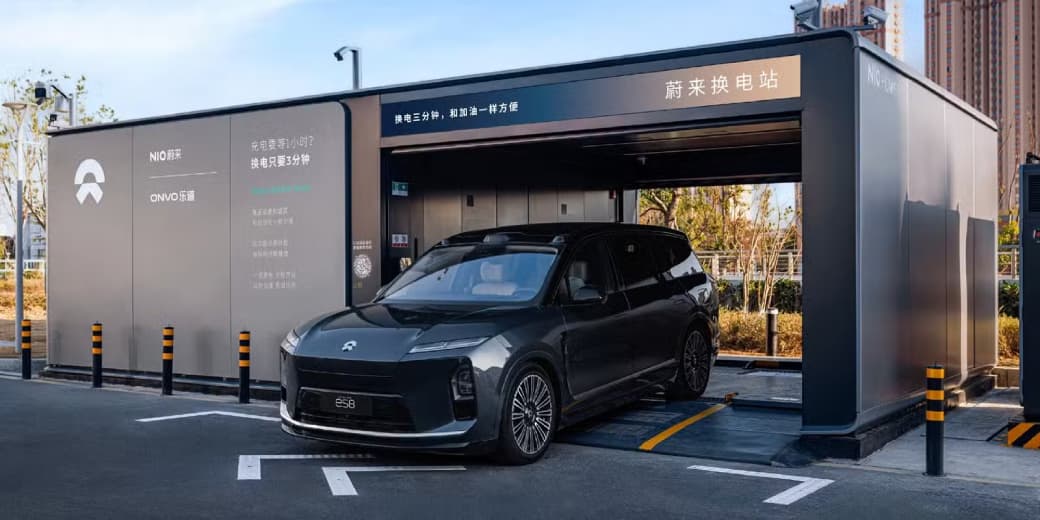
NIO's 4,000th battery swap station shows what charging networks still cannot do
NIO's new station can hold more batteries and complete a swap in under two minutes, but the model remains expensive and difficult to standardise.
 MAMBO Take
Xpeng's G9L turns the electric SUV into a private lounge on wheels
The G9L is not competing only on range and acceleration. It is selling the cabin as a mobile living room, office and rest space.