

Kenya warned to match AI growth with real laws
At a Nairobi conference, a parliamentary committee chair said Kenya's AI ambitions must be matched by governance. It is the same tension playing out worldwide, with a local twist.
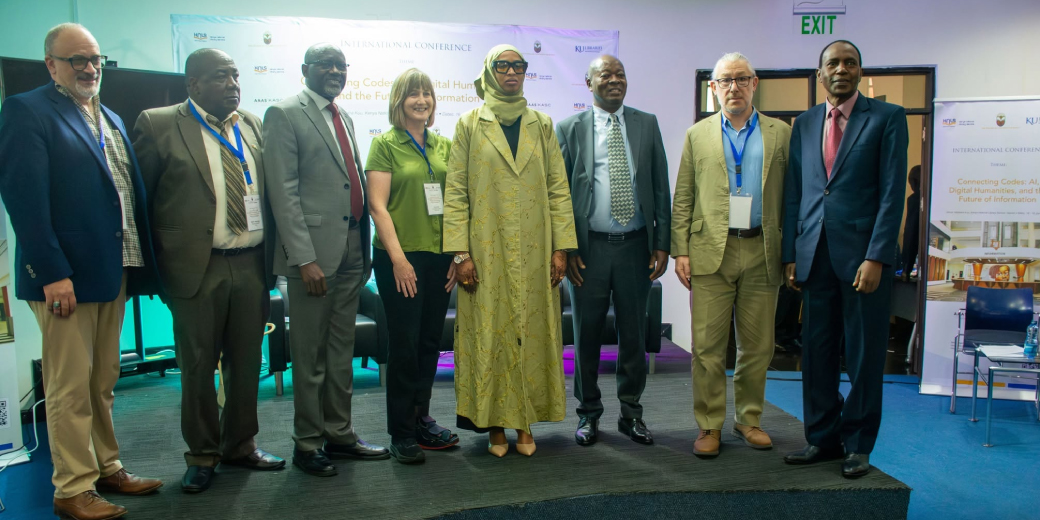
Kenya's lawmakers have a warning about the country's fast-growing use of artificial intelligence: the technology is racing ahead of the rules meant to govern it.
The message came out of the Connecting Codes Conference 2026, held at the Kenya National Library Service headquarters in Nairobi in June, where government leaders, researchers, academics, librarians, and international partners discussed AI, digital humanities, and knowledge systems.
Daniel Epuyo Nanok, the Chairperson of the Parliamentary Broadcasting and Library Committee and Member of Parliament for Turkana West, made the case plainly. AI is already reshaping education, healthcare, agriculture, and public service delivery, but it brings real challenges around accountability, transparency, privacy, and equitable access.
His core argument was that Kenya's legal and governance frameworks must evolve with the technology, and that Parliament has a duty to encourage innovation while safeguarding citizens' rights.
Nanok also added a distinctly African dimension that global AI debates often skip. He warned that limited representation of local languages, histories, and cultural content risks leaving African perspectives out of the world's digital knowledge systems.
The conference itself sat at the meeting point of AI, digital humanities, and information institutions. Its organisers framed it around technical systems, cultural knowledge systems, and the ethical and professional frameworks that shape how information is created, interpreted, preserved, and shared.
None of this is happening in a vacuum. Kenya already has a National AI Strategy running from 2025 to 2030, and an Artificial Intelligence Bill has been moving through Parliament. The instinct on display here is the right one: decide early what Kenya wants from AI instead of inheriting someone else's defaults.
The hard part is execution. Conference speeches are useful only if they become working law, proper oversight, public literacy, and institutions that can protect people without smothering the builders everyone says they want to support.
FAQ
What was the Connecting Codes Conference 2026 about?
It focused on artificial intelligence, digital humanities, knowledge systems, libraries, cultural heritage, and responsible access to information.
What did Daniel Epuyo Nanok warn about?
He warned that Kenya's AI growth needs stronger legal and governance frameworks around accountability, transparency, privacy, and equitable access.
Does Kenya already have an AI policy direction?
Yes. Kenya has a National AI Strategy for 2025 to 2030, and an Artificial Intelligence Bill has been working through Parliament.
Sources
Kenya's AI moment will be judged less by how loudly it celebrates the tools and more by how well it protects the people using them.
Share this story
Enjoyed this? Share it with someone who'd appreciate it.
Ask MAMBO
Have a plain-English question about this topic? Send it in and we may answer it in a future guide.
Ask a questionRelated reading

Microsoft's AI skilling expands across Kenyan counties
Microsoft and partners are expanding practical AI training beyond Nairobi, with 152 participants trained across Kwale, Kilifi, Mombasa, Taita Taveta, and Embu.
Kenya backs a Cybersecurity Agency as AI fraud rises
Kenya is backing a National Cybersecurity Agency as AI-generated deepfakes, online fraud, and attacks on public digital services grow more sophisticated.

Anthropic's top AI models pulled over a US export order
Anthropic has suspended access to Claude Fable 5 and Claude Mythos 5 after a United States export-control directive.