

Apple's next health device may sit on your face, not your wrist
Apple appears to be spreading sensing across glasses and earbuds, but privacy, battery life and clinical credibility will determine whether it works.
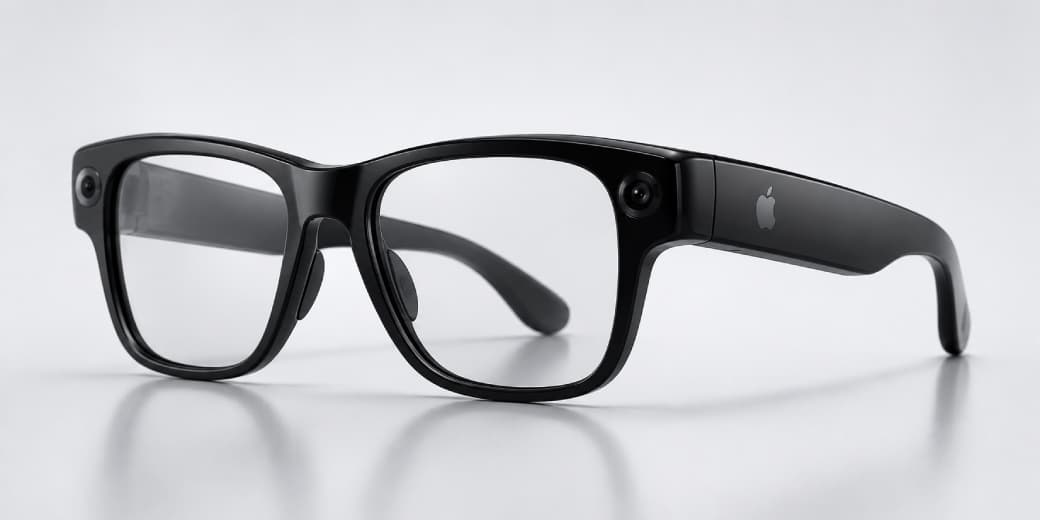
Apple reportedly wants future smart glasses to become health and fitness devices.
The company is also said to be developing camera-equipped AirPods as part of a broader AI wearables strategy.
The first versions may focus on cameras, audio, voice control and environmental understanding.
More advanced health features are expected to arrive gradually over several years.
This distinction matters.
Apple is not preparing a magical pair of glasses that replaces the Apple Watch on day one.
It is building a new sensor platform and deciding what it can safely infer from the user's face, ears, movement and surroundings.
What you need to know
- Apple's smart glasses remain unannounced.
- Reports point to a possible late 2027 launch.
- The first generation may not include an in-lens display.
- Cameras, microphones and speakers are expected.
- Health and fitness functions may develop later.
- Camera-equipped AirPods are also reported.
- Privacy and social acceptance are major risks.
- Consumer health claims require validation.
Before treating every camera-equipped wearable as the same product, use our guide to what smart glasses can actually do.
Why glasses are attractive for health
Glasses sit on the head for long periods.
That position gives them access to:
- Head movement
- Posture
- Gait
- Orientation
- Visual environment
- Audio
- Activity context
A camera can analyse exercise form or recognise food, medication and surroundings.
Motion sensors can estimate movement and balance.
Microphones can detect breathing patterns or environmental risk.
The glasses could complement Apple Watch rather than replace it.
The Watch measures from the wrist.
Glasses understand what the wearer is seeing and how the head is moving.
Combining those perspectives creates richer context.
It also creates a more invasive device.
What camera-equipped AirPods could do
AirPods with infrared or other cameras may help with:
- Spatial awareness
- Gesture detection
- Head tracking
- Environmental understanding
- AI assistance
- Fitness movement
- Accessibility
The camera may not behave like a normal photo camera.
It could collect depth or motion information for local processing.
AirPods already include microphones, motion sensors and hearing-related features.
Adding spatial sensing would turn them into a more complete wearable computer.
The challenge is explaining exactly what the camera captures.
"Earbuds with cameras" is a privacy sentence that writes its own panic.
Apple's health strategy is gradual
Apple built the Watch from a notification accessory into a health platform over many generations.
Heart monitoring, fall detection, sleep tracking and hearing features arrived incrementally.
Smart glasses may follow the same path.
First-generation hardware can establish:
- Fit
- Cameras
- Audio
- Voice interaction
- Connectivity
- Developer interest
Later generations can add validated health functions.
This approach reduces risk.
It also means buyers should not purchase early hardware based on promises about what it may become.
A roadmap is not a sensor.
The Vision Pro lesson
Apple explored fitness and health possibilities for Vision Pro.
The headset's size and weight limited exercise use.
Smart glasses reduce that problem by using a lighter form.
They also provide less room for batteries, processors and sensors.
Apple must balance:
- Weight
- Style
- Battery life
- Heat
- Camera quality
- Privacy indicators
- Prescription lenses
A health wearable works only when people tolerate wearing it.
A brilliant device left on a table collects excellent data about furniture.
Privacy is the central product problem
Glasses point cameras at other people.
AirPods may be less visually obvious.
The wearer may know when recording or analysis occurs. Bystanders may not.
Apple needs:
- Clear recording indicators
- On-device processing
- Minimal
- Consent-sensitive features
- Restricted face recognition
- Transparent controls
- Strong account security
- Physical capture controls
The company can build privacy into the architecture.
It cannot remove social discomfort through a policy page.
People need to know whether they are being recorded without asking the wearer to explain a blinking light.
Could glasses improve fitness?
A camera and motion system could:
- Count repetitions
- Analyse form
- Detect asymmetry
- Guide stretching
- Track route context
- Recognise equipment
- Provide audio coaching
These features may help people exercise.
They can also produce false confidence.
A consumer device should not diagnose injury or replace a professional without strong evidence.
Form analysis depends on camera angle, lighting, clothing and body type.
The system must communicate uncertainty.
An AI coach that sounds certain is not the same as one that is correct.
Accessibility could be the strongest use case
Smart glasses can help users:
- Read text
- Identify objects
- Navigate
- Hear descriptions
- Recognise obstacles
- Translate signs
- Locate items
- Receive captions
Apple has strong accessibility tools.
A wearable camera could make them more immediate.
The concern is price.
An accessibility breakthrough that costs more than a laptop may remain unavailable to people who benefit most.
Apple should consider institutional, insurance and financing pathways if the health functions become serious.
Do smart glasses need a display?
Not for every use.
Camera-and-audio glasses can provide AI help through voice.
A display adds navigation, captions, notifications and visual guidance.
It also increases weight, power use, cost and optical complexity.
Reports suggest Apple's first glasses may compete more directly with camera-and-audio products than full augmented reality.
That is sensible.
The industry has repeatedly discovered that ordinary-looking glasses are difficult enough before adding a hologram.
The tecMAMBO take
Apple is not merely making accessories.
It is distributing the computer across the body.
The Watch measures the wrist. AirPods hear and sense motion. Glasses may see context and track movement.
Together, they could create a powerful health and AI platform.
They could also create the most intimate surveillance system a consumer willingly wears.
Apple's success will depend less on adding sensors than on proving restraint.
FAQ
When could Apple smart glasses launch?
Reports suggest late 2027, but Apple has not announced a product.
Will the first glasses have a display?
Reports suggest the first version may focus on cameras, audio and AI rather than a full display.
What health features could they provide?
Potential uses include movement analysis, fitness, posture, accessibility and environmental context.
Why would AirPods need cameras?
They could support spatial awareness, gestures, AI context and movement tracking.
Are the health features confirmed?
No. They remain reported plans and long-term ambitions.
Sources
Share this story
Enjoyed this? Share it with someone who'd appreciate it.
Ask MAMBO
Have a plain-English question about this topic? Send it in and we may answer it in a future guide.
Ask a questionRelated reading

Apple's camera-equipped AirPods just leaked, and the privacy question is bigger than the hardware
A leaked Apple video inside macOS Tahoe 26.7 shows camera-equipped AirPods using Visual Intelligence. Here is what appears real and what remains unconfirmed.

Apple's new Watch feature summarizes conversations for you, and Apple went out of its way to say it doesn't record them
Apple Watch Series 12 and Watch Ultra 4 run on a new S11 chip and introduce Audio Intelligence, a feature that includes Siri Recap, which can summarize things like meetings based on audio notes you choose to capture.
Apple's foldable finally arrives, and it's not even the biggest change at the company today
Apple's "Surprise and Shine" event brings the company's first foldable iPhone, new Pro models and a delayed budget lineup, all under new CEO John Ternus.