

Smart glasses are finally useful, but most pairs do not do what buyers imagine
"Smart glasses" is not one product category.
"Smart glasses" is not one product category.
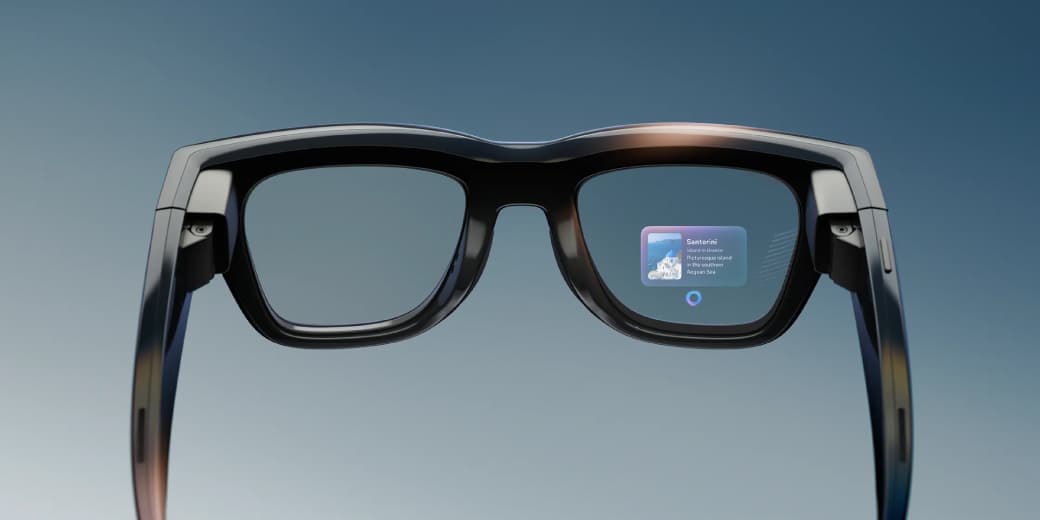
One pair may be open-ear headphones built into spectacles. Another may include cameras and an . Another may project a private cinema screen. A more advanced device may place digital information into the real world.
All can be marketed as smart glasses.
The first buying question is therefore not which model is best. It is what kind of glasses you are actually looking at.
What you need to know
- Audio glasses provide speakers, microphones and voice assistants without a visual display.
- Camera glasses capture photos or video and may use AI to interpret what the wearer sees.
- Display glasses show text, navigation, prompts or a private virtual screen.
- True spatial AR glasses anchor digital objects in the physical environment.
- Many products marketed as AR are personal displays rather than full augmented reality.
- Prescription support, comfort and can matter more than processor specifications.
- Camera glasses create serious privacy and social-consent questions.
Type 1: Audio smart glasses
Audio glasses place open-ear speakers and microphones inside the arms of the frame.
They can handle:
- Music and podcasts
- Calls
- Voice assistants
- Notifications
- Navigation instructions
- Translation audio
They do not normally show information in front of your eyes.
The advantage is simplicity. They can look close to ordinary eyewear and remain useful throughout a day.
The weakness is sound leakage and limited bass. Open-ear speakers do not seal the ear canal like earbuds. People nearby may hear audio at higher volume, and noisy environments can make calls difficult.
Buy audio glasses if you want discreet, hands-free sound without blocking the world.
Do not buy them expecting Iron Man.
Type 2: Camera and AI glasses
Camera glasses add one or more outward-facing cameras.
They can:
- Capture first-person photos and video
- Stream or share content
- Identify objects
- Read text
- Translate signs
- Answer questions about the environment
- Provide voice-based AI help
Ray-Ban Meta helped make this category mainstream by placing camera and audio features in familiar frames.
The strongest use case is hands-free capture. Parents, travellers, creators and athletes can record moments without holding a phone.
The largest problem is everyone else.
People may not know whether the glasses are recording. An indicator light helps, but it does not solve consent, workplace rules, school policies or private-space etiquette.
Camera glasses are convenient because the camera is always ready. They are unsettling for exactly the same reason.
Type 3: Display glasses
Display glasses project information into the wearer's view.
There are several levels.
Simple heads-up displays may show:
- Notifications
- Captions
- Translation
- Navigation
- Teleprompter text
- Calendar prompts
Media glasses from companies such as Xreal, Viture and RayNeo can create a large virtual screen for films, games or laptop work. They may need a phone, computer or separate processing accessory.
These are often called AR glasses, but many do not map digital objects into the room. They place a floating screen in front of you.
That can still be useful.
A private large display on a flight is not spatial computing, but neither is it a gimmick when the seat-back screen has the of a calculator.
Type 4: Spatial AR glasses
True augmented-reality glasses understand the environment and anchor digital objects to physical space.
They require more advanced combinations of:
- Cameras
- Depth sensing
- Motion tracking
- Displays
- Processors
- Mapping
- Hand or controller input
- Software ecosystems
This category remains expensive, power-hungry and less ordinary-looking.
The science-fiction goal is a lightweight pair that overlays useful information all day without heat, poor battery life or social awkwardness.
The industry is improving. The goal has not fully arrived.
Buy current spatial devices for specialised development, enterprise work or enthusiastic experimentation, not because a promotional video made a hologram look emotionally available.
The specifications that matter
Weight and fit
A few grams can determine whether glasses remain comfortable after two hours. Check nose pressure, temple pressure and frame balance.
Prescription lenses
Confirm whether prescription inserts, direct lenses or local optical fitting are available. Include the cost.
Battery life
Ask what the quoted battery covers. Music, video recording, AI queries and display use consume power differently.
Camera indicator
Look for a visible recording light and tamper protection. Then follow local laws and social etiquette anyway.
Microphone quality
Wind and road noise can ruin calls and recordings.
Display
A display that works indoors may disappear in Nairobi sunlight.
Field of view
For display and AR glasses, a narrow field of view can make digital content feel like a small window rather than an integrated layer.
Ecosystem
Check phone compatibility, required subscriptions, regional AI features and whether the product still works without cloud access.
Repairability
Glasses are worn on the face, dropped, bent and adjusted. Ask how lenses, batteries and arms are serviced.
Who should buy smart glasses now?
They make sense for:
- Hands-free content creators
- Travellers using translation and navigation
- People who prefer open-ear audio
- Presenters using a teleprompter
- Remote workers needing a private display
- Accessibility use cases
- Early adopters with a specific workflow
- Developers building spatial applications
They make less sense for:
- People expecting all-day holographic AR
- Buyers uncomfortable with subscriptions
- Users who need excellent music quality
- Anyone who frequently enters camera-restricted spaces
- People who already dislike wearing glasses
- Buyers without access to prescription support
- People who cannot explain the use case in one sentence
A product without a clear daily job becomes an expensive forehead accessory.
Privacy rules for camera glasses
Before recording:
- Check local law
- Ask permission in private or sensitive settings
- Avoid bathrooms, clinics, schools and confidential workplaces
- Respect no-camera rules
- Do not assume an LED creates consent
- Review cloud upload settings
- Protect the associated account
- Delete accidental recordings
- Consider camera-free alternatives
The wearer experiences convenience. Everyone else experiences uncertainty.
Good product design must account for both.
The tecMAMBO verdict
Smart glasses are ready for specific real-world jobs.
Audio glasses can replace some earbud use. Camera glasses are strong for hands-free capture. Display glasses can become portable screens. Spatial AR remains more experimental.
The category becomes disappointing only when buyers purchase one type while imagining another.
Read past the phrase "AI-powered." Find the camera, display, battery, subscription and prescription details.
The future is already on your face.
It is simply divided into several incompatible product pages.
FAQ
Do smart glasses show information in front of your eyes?
Some do. Audio and many camera glasses have no display. Check whether the product includes an in-lens or projected display.
Are Ray-Ban Meta glasses augmented reality?
They are camera and audio smart glasses with AI features. Models without a visual display do not provide traditional in-view AR overlays.
Can smart glasses use prescription lenses?
Many models support prescription options or inserts, but availability and price vary by country and frame.
How long do smart glasses batteries last?
It depends heavily on use. Audio playback, video recording, AI processing and displays consume different amounts of power. Use independent reviews rather than the maximum marketing number.
Are camera smart glasses legal?
Laws vary by country and location. Legal recording can still violate privacy, workplace policy or social consent.
Sources
Ask MAMBO
Have a plain-English question about this topic? Send it in and we may answer it in a future guide.
Ask a questionRelated reading
 MAMBO Take
Apple's camera-equipped AirPods just leaked, and the privacy question is bigger than the hardware
A leaked Apple video inside macOS Tahoe 26.7 shows camera-equipped AirPods using Visual Intelligence. Here is what appears real and what remains unconfirmed.
 MAMBO Take
Apple's next health device may sit on your face, not your wrist
Apple appears to be spreading sensing across glasses and earbuds, but privacy, battery life and clinical credibility will determine whether it works.
 MAMBO Explains
Kenya's emerging technology sandbox deadline is here. What happens next?
The CA sandbox gives selected innovators a supervised route to test AI, 5G, 6G, IoT, cybersecurity and digital-content products before full market deployment.