

Carrefour's prepaid card turns grocery money into a controlled digital budget
The card could help diaspora families fund groceries directly, but fees, exchange rates, privacy and usage restrictions will decide its value.
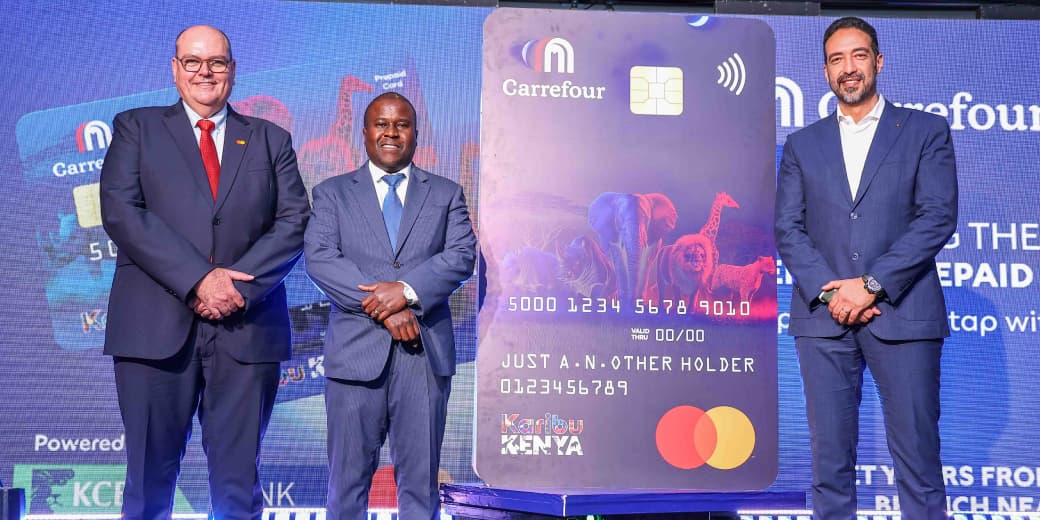
Carrefour Kenya, KCB Bank Kenya and Mastercard have launched a reloadable prepaid card designed for grocery spending.
The card lets users set aside money for household essentials, monitor spending and access Carrefour rewards.
It can also be topped up through Mastercard's payment gateway using a bank card from another country.
That makes it especially interesting for diaspora families and people supporting relatives remotely.
Instead of sending unrestricted cash, a sender can fund a payment tool intended for groceries.
The convenience is real.
So is the need to read the fee table.
What you need to know
- Carrefour, KCB and Mastercard launched the card together.
- It is a prepaid product rather than a credit card.
- The card can receive top-ups from international bank cards.
- It is designed around grocery budgeting and Carrefour rewards.
- Fees, exchange rates and usage limits need clear disclosure.
- A restricted spending tool can support a household or feel controlling.
- Fraud protection and refund handling are important.
The card belongs to a wider shift from payments into specialised financial products, explored in our analysis of African fintech's second wave.
Who is the card for?
The strongest use case is directed family support.
A person in another country may want to make sure money sent for food remains available for food.
The card reduces the steps between international funding and household shopping.
It may also suit:
- Shared households
- Employers funding meal benefits
- Parents supporting students
- Families separating grocery money
- Customers avoiding cash
- People without a traditional credit card
Good budgeting often begins by giving money a job before it arrives.
The card formalises that principle.
How is it different from a debit card?
A debit card draws money from a bank account.
A prepaid card spends money loaded onto the card.
That separation can provide:
- Spending limits
- Protection from overdraft
- Easier gifting
- Lower exposure if compromised
- A clear purpose
- No need for credit
The card is also connected to one retail relationship.
The exact terms matter.
Can it be used only at Carrefour? Can it be used online? Does it expire? Are there inactivity fees? Can money be withdrawn?
A prepaid card's usefulness lives inside these details.
The launch announcement provides the idea.
Consumers need the operating manual.
Why international top-ups matter
Traditional remittances can involve transfer fees, cash withdrawal, , bank accounts and agent visits.
A direct card top-up can simplify the route.
The sender uses a bank card abroad. The recipient spends locally.
The difficult questions are:
- Which currencies are supported?
- What exchange rate is used?
- Does the sender pay a top-up fee?
- Does the issuing bank add another fee?
- Are there daily limits?
- How quickly do funds appear?
- Can a failed top-up be reversed?
- Who handles disputes?
"Top up from another country" is attractive marketing.
The cost of doing it determines whether it is better than existing remittance methods.
Does restricted money improve budgeting?
It can.
A dedicated grocery balance protects essentials from competing expenses.
That is valuable when income is irregular or several people contribute to one household.
It can also create tension.
The person providing money may use the product to control another adult's choices.
Financial tools are not socially neutral.
The healthier version involves agreement about:
- Budget
- Who can use the card
- What counts as groceries
- Who sees transaction history
- What happens during emergencies
- Whether funds can be redirected
A budgeting tool works best when it supports trust rather than replacing it.
What Carrefour gains
Carrefour gains repeat customers, loyalty data, predictable spending and lower cash handling.
The product can also lock spending inside Carrefour's ecosystem.
That is commercially valuable.
Consumers should compare prices rather than assuming rewards always produce savings.
A five percent reward does not help when the same basket costs ten percent more than elsewhere.
Loyalty should be earned through value, not trapped balances.
What KCB and Mastercard gain
KCB expands beyond normal bank-account products.
Mastercard adds another transaction flow to its network and demonstrates an embedded retail use case.
The partnership reflects a wider fintech shift.
Consumers do not begin by asking for a financial product.
They begin by asking how to buy groceries, pay school fees or support a parent.
Finance becomes part of the task.
That makes the product easier to understand and potentially easier to adopt.
What security should the card include?
Users should expect:
- PIN protection
- Transaction alerts
- Freeze controls
- Card replacement
- Fraud reporting
- Strong top-up verification
- Spending history
- Clear account recovery
- Defined liability rules
Remote funding creates several fraud targets.
A criminal may attack the sender's bank card, the prepaid account or the recipient's phone.
Mastercard and KCB should explain who carries the loss when an international top-up is disputed.
Convenience is incomplete without a reachable support team.
Could employers use it?
Yes.
A company could provide grocery or meal benefits without issuing cash.
That may improve tracking and reduce administration.
Employees should understand whether the benefit affects pay, tax or freedom of choice.
A restricted grocery card should not replace wages.
Benefits can be targeted.
Compensation should remain spendable by the person who earned it.
What could make the product fail?
The card may struggle if it has:
- High top-up fees
- Poor exchange rates
- Limited customer support
- Confusing restrictions
- Slow refunds
- Weak app access
- Few useful rewards
- Difficult replacement
A strong partnership logo does not rescue a weak daily experience.
The product must be cheaper or more convenient than mobile money and normal cards for a clear group of users.
The tecMAMBO take
The Carrefour prepaid card is a smart use of payment infrastructure.
It connects diaspora support, budgeting and retail in one product.
Its value cannot be judged from the partnership announcement alone.
The decisive information is boring:
Fees, exchange rates, limits, refunds and where the card works.
Fintech becomes useful when the small print agrees with the headline.
FAQ
Who launched the card?
Carrefour Kenya, KCB Bank Kenya and Mastercard launched it together.
Can someone abroad top it up?
Yes. The launch says it supports top-ups through Mastercard Gateway using a bank card from another country.
Is it linked to a bank account?
It is a prepaid card, so spending is based on funds loaded onto it.
Are international top-ups free?
The launch material did not clearly disclose all fees and exchange-rate costs.
Where can it be used?
It is designed around Carrefour shopping. Exact usage restrictions should be checked in the terms.
Sources
Share this story
Enjoyed this? Share it with someone who'd appreciate it.
Ask MAMBO
Have a plain-English question about this topic? Send it in and we may answer it in a future guide.
Ask a questionRelated reading
I&M Bank's World Elite Metal Card is not just luxury. It is Kenyan banking signalling
The metal card targets high-value Kenyan customers with lounge access, concierge services and high credit limits. The real story is the race to own premium digital banking relationships.
Twiga Foods is in administration, and the paperwork traces years of trouble most people missed
GT Flow Limited, the operating entity formerly known as Twiga Foods One Limited, entered statutory administration in Kenya on August 17, 2026, confirmed by a Kenya Gazette notice published September 11.

Lagos just became Africa's busiest tech city for a month, and the calendar isn't even done
Lagos hosts eight major tech and creative-economy events in September 2026, led by Lagos Blockchain Week and Nigeria Fintech Week.