

I&M Bank's World Elite Metal Card is not just luxury. It is Kenyan banking signalling
The metal card targets high-value Kenyan customers with lounge access, concierge services and high credit limits. The real story is the race to own premium digital banking relationships.
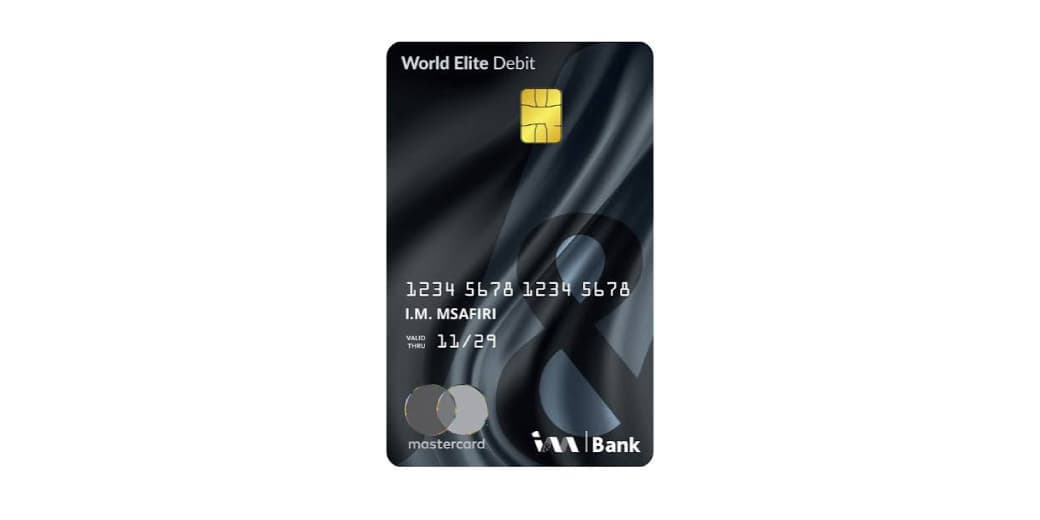
I&M Bank has launched a Mastercard World Elite Metal Credit Card in Kenya, aimed at affluent customers, high-value professionals and globally mobile executives.
On paper, the headline is a premium card with travel benefits, lifestyle privileges, concierge services, unlimited airport lounge access and a credit limit of up to KSh 5 million for qualifying customers.
Underneath, the more interesting story is about Kenyan banks fighting for the premium relationship. The card is hardware, yes. But the business is data, loyalty, spend, travel behaviour and everyday financial visibility.
What you need to know
- I&M Bank's World Elite Metal Credit Card is positioned for premium Kenyan banking customers.
- The card offers Mastercard World Elite privileges, lounge access, concierge services and rewards.
- I&M lists a credit limit of up to KSh 5 million, depending on income and banking relationship.
- Metal construction is a status signal, not a security by itself.
- The product reflects a wider battle for affluent digital-first customers.
- The real value depends on fees, interest, eligibility, rewards redemption and actual lifestyle use.
What has I&M launched?
I&M's World Elite Metal Credit Card expands the bank's premium card portfolio.
The official product page highlights a credit limit of up to KSh 5 million, up to 50 days interest-free on every statement cycle, unlimited airport lounge access, Mastercard World Elite privileges, global concierge services and rewards through the bank's Milele ecosystem.
The card is crafted from metal, which gives it the familiar premium feel associated with elite banking products globally. That metal matters less than the proposition around it.
A heavy card is nice. A badly managed credit balance remains heavy in a very different way.
Why banks love premium cards
Premium cards give banks more than transaction fees. They create a deeper relationship with customers who travel, spend online, run businesses, subscribe to global services, book hotels, buy flights and hold higher account balances.
A strong premium card can become the centre of a customer's financial life because it connects payments, credit, loyalty, travel, insurance, lifestyle offers, mobile banking, foreign exchange, merchant partnerships and customer service.
That is why banks treat premium cards like status products. The card is a visible badge of the relationship. In modern banking, the card is not dying. It is becoming a loyalty device.
Is a metal card more secure?
Not automatically. Security comes from the payment network, chip, tokenisation, fraud monitoring, transaction alerts, strong app controls, dispute handling and user behaviour.
Metal can make the card harder to physically damage. It can also make it feel more exclusive. But criminals do not usually pause a attack because the card has good build quality.
Users should still use card controls in the banking app, enable transaction alerts, set realistic limits, avoid sharing card photos, watch subscriptions, use virtual cards where available, report suspicious activity quickly and understand chargeback rules.
Premium does not mean invincible.
Why this matters for Kenyan fintech
Kenya's financial market is often discussed through , digital loans and agency banking. That is only one side of the story. The premium layer is also evolving.
Affluent professionals and business owners want global acceptance, travel benefits, better fraud protection, quick dispute , digital controls, usable rewards, relationship management, cross-border payment convenience and lifestyle partnerships.
Banks are competing with each other, fintech apps, mobile wallets, global neo-banks and card networks.
A premium metal card is therefore not a nostalgic plastic product with better posture. It is part of the same embedded-finance race, just wearing a suit.
Who should consider it?
The card makes sense for someone who regularly uses the benefits: frequent travellers, executives, business owners, high-income professionals, customers who value concierge and lounge access, people who can clear balances responsibly, and customers already banking deeply with I&M.
It makes less sense for someone who wants the status but will carry expensive debt. Credit-card rewards are most attractive when you are not paying interest that eats the reward for breakfast.
Questions to ask before applying
- What is the annual fee?
- What are the interest rates and penalty charges?
- Which lounges are actually covered?
- Is guest access free every time?
- How do rewards redeem into real value?
- Are forex markups competitive?
- Is travel insurance automatic or conditional?
- What income level or relationship qualifies?
- Can limits be controlled in-app?
- What happens if the metal card is lost abroad?
The correct comparison is not metal card versus normal card. It is value received versus total cost.
The tecMAMBO take
I&M's World Elite Metal Card is a useful signal that premium banking in Kenya is becoming more product-led and lifestyle-aware.
It is also a reminder that status products deserve boring scrutiny. A beautiful card can still be a costly instrument if the user does not travel, redeem rewards or manage credit properly.
Treat the card as a financial tool first and a flex second. The flex will age better when the statement is clean.
FAQ
What is the I&M World Elite Metal Credit Card?
It is a premium Mastercard credit card from I&M Bank Kenya aimed at high-value customers and offering travel, lifestyle, concierge and rewards benefits.
What credit limit does the card offer?
I&M lists a credit limit of up to KSh 5 million, scaled to the customer's income and banking relationship.
Does the card include airport lounge access?
I&M's product page highlights unlimited airport lounge access, including one accompanying guest per visit. Users should confirm terms before travel.
Is a metal card safer than a plastic card?
Not by itself. Security depends on chip technology, tokenisation, fraud monitoring, card controls, alerts and user behaviour.
Who is the card best for?
It is best for customers who frequently travel, spend internationally, use premium benefits and can manage credit without carrying expensive debt.
Sources
Ask MAMBO
Have a plain-English question about this topic? Send it in and we may answer it in a future guide.
Ask a questionRelated reading
 MAMBO Explains
Carrefour's prepaid card turns grocery money into a controlled digital budget
The card could help diaspora families fund groceries directly, but fees, exchange rates, privacy and usage restrictions will decide its value.
 Business
Six Nigerian fintechs crack the world's top 500, and it is not luck
Six Nigerian fintechs made CNBC and Statista's 2026 World's Top Fintech Companies list, over half of Africa's 11 entries, cementing Lagos as the continent's fintech capital.
 Business
Yellow's new Series C is a bet that the next billion-dollar African credit product may be an asset, not cash
Yellow has closed a Series C backed by Convergence Partners and SSI as it scales asset financing for smartphones and solar systems across seven African markets.