

Twiga Foods is in administration, and the paperwork traces years of trouble most people missed
Kenyan agritech startup Twiga Foods, through its operating entity GT Flow Limited, has entered statutory administration after years of restructuring. Here's the full timeline.
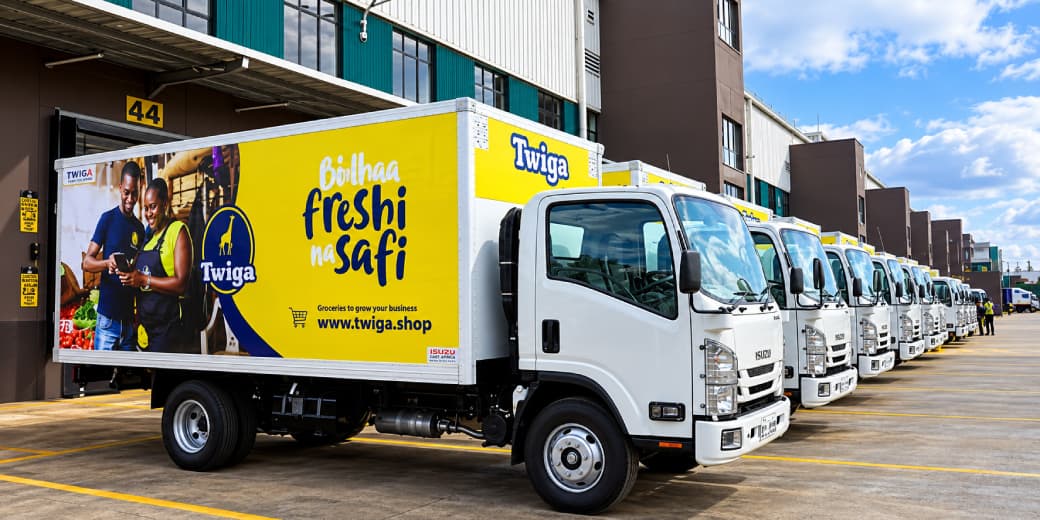
Quick answer
GT Flow Limited, the operating entity formerly known as Twiga Foods One Limited, entered statutory administration in Kenya on August 17, 2026, confirmed by a Kenya Gazette notice published September 11. An independent administrator, Mohamed Mohamed, was appointed by the company's own board of directors under Section 541(2) of Kenya's Insolvency Act, and now controls GT Flow's business, assets, and affairs; the company's own directors can no longer act on assets without his permission. Twiga Foods had raised approximately $185.4 million over its lifetime, making this one of the most significant setbacks yet for a startup that was once held up as a model for tech-enabled distribution in East Africa.
A Kenya Gazette notice published September 11 confirmed that GT Flow Limited, the entity registered until recently as Twiga Foods One Limited, entered statutory administration on August 17. It's worth being precise about the mechanics here: GT Flow is the company that entered administration. It did not take over anything. Mohamed Mohamed, an independent administrator appointed under Section 541(2) of Kenya's Insolvency Act, is the one who took control, and the appointment was initiated by GT Flow's own board of directors, not imposed by a court or an external creditor action.
What administration actually means
Administration is not liquidation. Under Kenya's Insolvency Act 2015, it's a rescue and debt-management process: an administrator takes over a company that can't pay its debts and works, in order of priority, to keep it trading if possible, to secure creditors a better return than liquidation would provide, or, failing both, to sell the business and distribute proceeds to secured and preferential creditors. A moratorium takes effect immediately, freezing lawsuits and enforcement actions against the company while the administrator does that work. Administration ends automatically after 12 months unless a court grants an extension.
The gazette notice quotes the standard language for this kind of appointment: the administrator will engage all key stakeholders of the company to elicit their cooperation in order to achieve the best possible outcome. Creditors have 30 days from the notice's publication, until October 11, to submit their claims.
The years that led here
This didn't happen suddenly. Twiga Foods, founded in 2014 by Peter Njonjo and Grant Brooke to connect smallholder farmers with informal retailers through a technology-enabled distribution network, built a substantial operation at its peak, serving roughly 140,000 informal retail outlets across 12 Kenyan cities and Kampala, Uganda, with up to 12,000 daily deliveries.
The pressure became visible starting around 2024, with job cuts as the company worked through financial strain. In April 2025, Twiga executed a strategic pivot, acquiring stakes in three regional distribution companies, Jumra, Sojpar, and Raisons, through a subsidiary called Kimo Kali Holdings, integrating them into its supply chain and repositioning itself as an asset-light distribution platform rather than running the more capital-intensive original model. In June 2025, the company temporarily suspended Nairobi operations to execute an internal supply chain upgrade, including evaluating alternatives to its Tatu City logistics hub, among them Baba Dogo, Mombasa Road, and Syokimau, before restarting operations in August 2025.
A separate but related legal thread has been running in parallel. In March 2026, creditors filed a High Court petition seeking the liquidation of Twiga Tatu SEZ Limited, a different entity within the Twiga corporate ecosystem that holds the Tatu City logistics hub, over unpaid debts. That case remains distinct from GT Flow's administration, and the gazette notice for GT Flow does not clarify whether or how the two proceedings relate, or whether GT Flow's administration affects the three acquired distributors, Jumra, Sojpar, and Raisons, directly.
What isn't yet known
The gazette notice is deliberately narrow. It does not specify which assets or liabilities sit within GT Flow specifically, doesn't give a date for the company's rename from Twiga Foods One Limited, and doesn't confirm whether Twiga's broader operations, including the three distributor acquisitions, continue functioning normally, wind down, or get restructured separately. Administrator Mohamed Mohamed has said he'll engage stakeholders toward the best possible outcome, standard language at this stage of a process that could still end in a rescued, restructured business rather than a full wind-down. Kenyan tech outlet tech-ish, which had reported on leaked Twiga restructuring plans as early as 16 months before this notice, noted that the notice explicitly states the administrator was appointed by the company's own board, not through an external creditor petition or court order, a detail that shapes how this specific filing should be read relative to other insolvency proceedings.
The tecMAMBO take
Twiga's trajectory over the past three years, layoffs, a pivot to an asset-light model, a parallel liquidation petition against a related entity, and now formal administration for its core operating company, describes a startup that has been managing decline for a while rather than one that failed suddenly. That distinction matters for how this should land across East Africa's startup ecosystem: this isn't a shock collapse so much as the final, formal step in a restructuring process that's been visible in pieces for at least two years to anyone tracking the company closely.
The bigger pattern worth watching is what this signals about capital availability for pan-African late-stage startups more broadly. A company that raised $185.4 million and built genuinely significant distribution infrastructure still ended up here, in a funding environment where reduced global venture capital has forced a broader shift from growth-at-all-costs toward debt restructuring and asset preservation across the region's most heavily capitalized startups. Twiga's specific outcome, rescue, sale, or wind-down, will become clearer as the administration process unfolds. What's already clear is that its path there is a data point the rest of the ecosystem should be reading carefully.
FAQ
Did Twiga Foods shut down?
No, not as of this report. Administration is a legal process distinct from liquidation. GT Flow Limited, Twiga's operating entity, is under administrator control while options including rescue, restructuring, or sale are assessed.
Who is running Twiga Foods now?
Mohamed Mohamed, an independent administrator appointed by GT Flow's own board of directors under Kenya's Insolvency Act, now controls the company's business, assets, and affairs.
How much funding did Twiga Foods raise?
Approximately $185.4 million over its lifetime, according to Crunchbase data cited in reporting on the administration.
Is this related to the Twiga Tatu SEZ liquidation petition?
It's a separate legal proceeding involving a related entity that holds Twiga's Tatu City logistics hub. The gazette notice for GT Flow's administration doesn't clarify how, or whether, the two cases connect.
Sources
Ask MAMBO
Have a plain-English question about this topic? Send it in and we may answer it in a future guide.
Ask a questionRelated reading

Lagos just became Africa's busiest tech city for a month, and the calendar isn't even done
Lagos hosts eight major tech and creative-economy events in September 2026, led by Lagos Blockchain Week and Nigeria Fintech Week.

Kenya has a new startup intelligence map, and its hardest job will be keeping the data trustworthy
A new independent platform maps Kenyan startups, investors, funding, hubs, policy and government programmes. Its value will depend on verification and freshness.

NCBA finally joins Kenya's KSh 20 PesaLink push, and the pressure now moves to the remaining holdouts
NCBA now offers free PesaLink transfers up to KSh 1,000 and a flat KSh 20 fee above that on the NCBA NOW App. Here is why the move matters.