

Researchers taught a humanoid robot to sprint and spin-kick using 2.5 hours of human motion data
UC Berkeley and Stanford researchers built BeyondMimic, combining motion-specific control policies with a diffusion model that composes agile skills on a Unitree G1 robot.
Quick answer
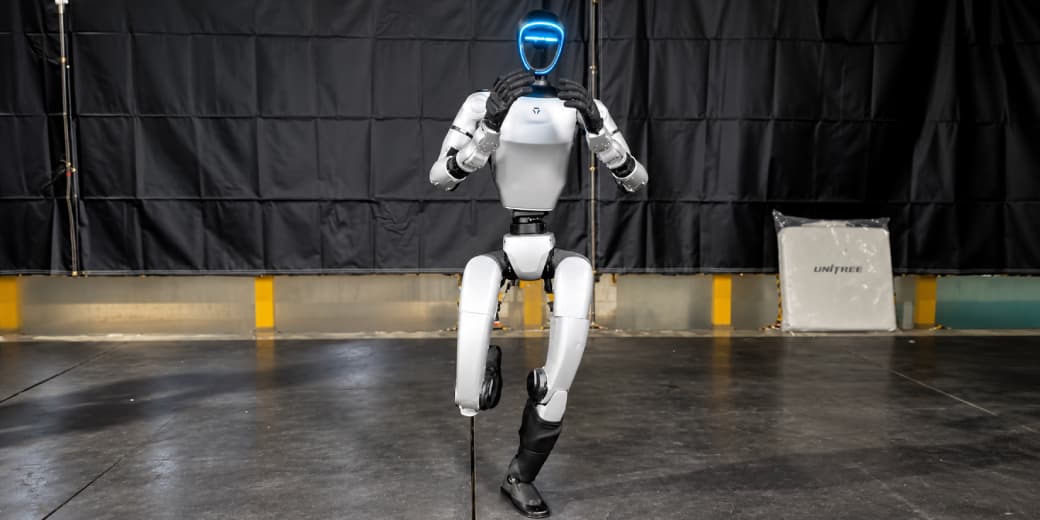
Researchers at UC Berkeley and Stanford published a framework called BeyondMimic in Science Robotics on August 26, 2026. It trains motion-specific tracking policies with a shared recipe, then uses a unified diffusion policy to compose those learned movement skills for downstream tasks without retraining the high-level planner. The team used about 2.5 hours of human motion data and transferred representative movements to a Unitree G1 humanoid robot.
Getting a humanoid robot to walk reliably is hard enough. Getting one to perform a broad range of agile, human-like movements, including running, dancing, and martial arts kicks, while composing those skills into useful tasks has been a much harder problem. A framework from UC Berkeley and Stanford researchers, published in Science Robotics on August 26, is a meaningful step toward solving it.
How BeyondMimic actually works
The system combines two techniques. Reinforcement learning trains a tracking controller, essentially the algorithm deciding how the robot's joints and limbs move, using human demonstration data as a reference rather than hand-coded joint trajectories. The training recipe and hyperparameters are shared, but the published system trains a separate tracking policy for each motion. On top of those low-level policies, a unified diffusion model generates higher-level movement plans by refining a compressed representation over successive steps.
The practical result is a robot that learned a large library of natural, agile human motions and can compose them to handle tasks and objectives it wasn't specifically trained on, guided by the diffusion model's ability to generate plausible new movement sequences from what it learned about human motion generally, rather than only replaying memorized clips.
What the researchers actually tested
The team trained the system on approximately 2.5 hours of human motion capture data covering walking, running, dancing, and other movement types. After validating the approach in simulation, they deployed 30 representative motion clips onto a physical Unitree G1 humanoid robot, a widely used research platform in humanoid robotics, to confirm the learned behaviors transferred from simulation to real hardware, a step where many robotics approaches that look impressive in simulation fail to hold up.
Why the sprinting and spin kicks matter less than the "unseen tasks" part
Videos of a robot sprinting or performing a spin kick are the part of this research that travels well on social media, but the more significant technical claim in the paper is the framework's ability to handle downstream tasks it wasn't explicitly trained on, using the guided diffusion approach to generalize learned motor skills to new situations. That's the difference between a robot that can only perform a fixed set of pre-programmed moves and one that can adapt its learned movement vocabulary to a task it's encountering for the first time, which is the actual bottleneck that's kept humanoid robots from being broadly useful outside of narrow demo scenarios.
The tecMAMBO take
It's worth being honest about what a research paper like this does and doesn't establish. A robot performing a spin kick in a lab is not the same as a robot ready for real-world deployment, and the gap between "works on 30 curated motion clips on one research platform" and "reliably works across arbitrary real-world tasks" remains large. What BeyondMimic actually demonstrates is a more general method for closing that gap faster than task-by-task retraining allows, which is a meaningful contribution to how humanoid robots get built even if it doesn't mean agile household robots are arriving imminently.
The bigger pattern worth watching is how much of the recent progress in humanoid robotics is coming from combining techniques originally developed for entirely different purposes, reinforcement learning and diffusion models, both with roots in other AI domains, rather than robotics-specific breakthroughs. That cross-pollination is likely to keep accelerating progress in this field faster than robotics researchers working in isolation could manage on their own.
One training recipe does not mean one controller
The paper's architecture is easy to flatten into an inaccurate claim. BeyondMimic uses a common reinforcement-learning recipe and shared hyperparameters, but the low-level tracking stage produces motion-specific policies. The unifying step comes later: a conditional diffusion policy can compose those primitives to pursue task objectives. That is more scalable than hand-engineering every sequence, but it is not one universal controller learning every movement in a single pass.
This distinction helps explain why the physical demonstrations matter. Simulation lets researchers train at scale and expose a controller to many variations. Real hardware introduces motor limits, , imperfect sensing, balance errors, and impacts. Transferring representative motions to the Unitree G1 tests whether the learned behavior survives that gap, even though it does not prove reliability across every surface or unpredictable environment.
What would count as the next breakthrough
The next step is not a more dramatic kick. It is longer task sequences with recovery from interruptions, interaction with unfamiliar objects, safe operation near people, and consistent performance across different robot bodies. Researchers will also need ways to constrain generated motion so that a high-level plan cannot demand forces, speeds, or contacts that the hardware cannot safely execute.
BeyondMimic is best understood as infrastructure for robot learning. The public-facing clips demonstrate agility, while the research contribution is a pipeline that turns human motion references into reusable control skills and composes them toward new goals. That is a narrower claim than general-purpose humanoid intelligence, but it is also a more concrete and testable advance.
Independent replication on different machines will show how much of the result comes from the general method and how much depends on the Unitree G1 setup. That is normal for research at this stage, and it is the evidence to watch next.
FAQ
What is BeyondMimic?
A reinforcement learning and diffusion-based AI framework developed by researchers at UC Berkeley and Stanford that lets humanoid robots learn a broad range of agile, human-like motions from human motion capture data.
What robot was it tested on?
A Unitree G1 humanoid robot, after the approach was first validated in simulation.
How much training data did it use?
Approximately 2.5 hours of human motion capture data covering activities like walking, running, and dancing.
Where was this research published?
In the journal Science Robotics.
Sources
Ask MAMBO
Have a plain-English question about this topic? Send it in and we may answer it in a future guide.
Ask a questionRelated reading
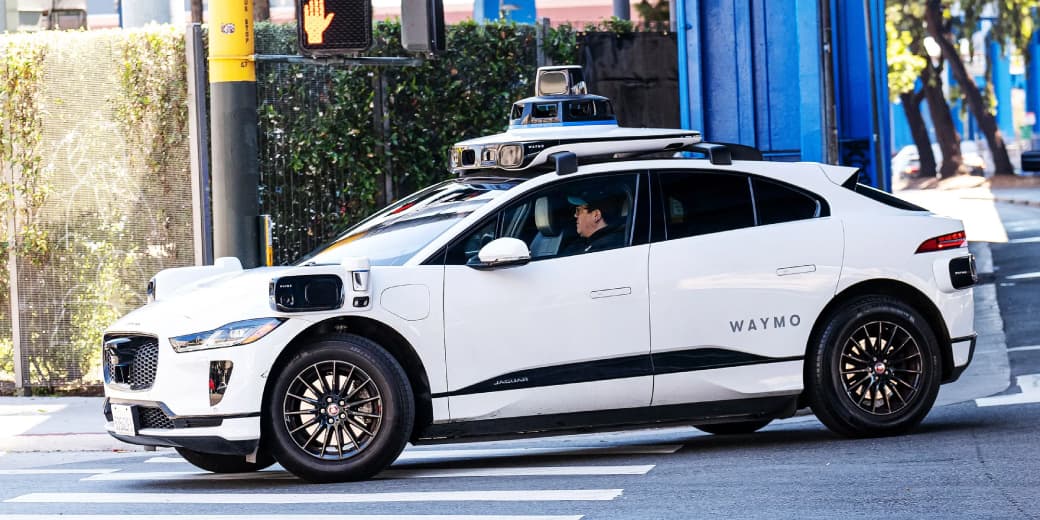
A new AI framework builds realistic virtual worlds to train self-driving cars, and it splits the city into two layers to do it
Researchers at the Singapore University of Technology and Design, led by Assistant Professor Zhao Na, published HieraScaffold, an AI framework that generates large-scale, realistic 4D LiDAR environments, meaning 3D spatial data that also changes over time, for training autonomous vehicles.
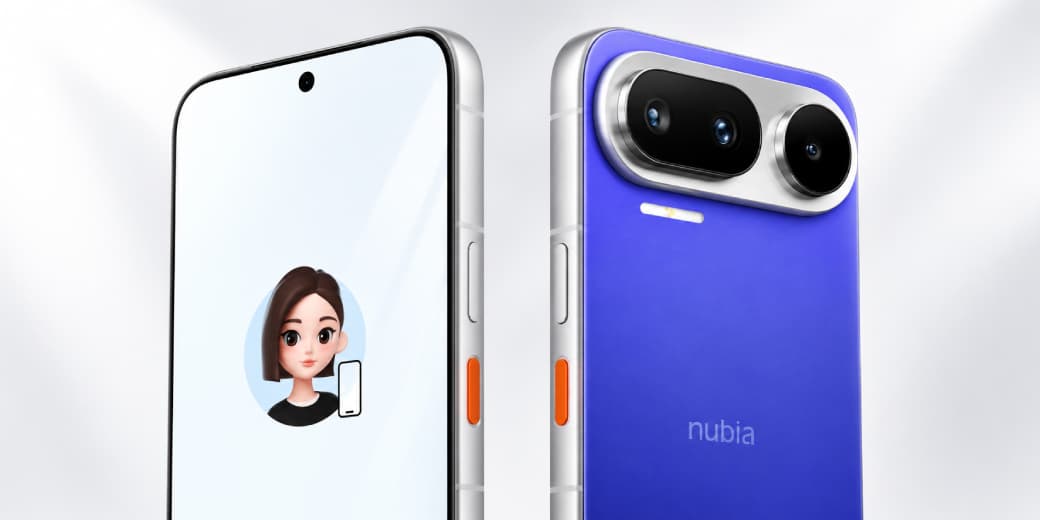
Nubia's Doubao-powered NaviX Ultra launches next week after its predecessor ran into app blocks
Nubia, ZTE's phone brand, will launch the NaviX Ultra in China on September 16, 2026, built jointly with ByteDance around the Doubao Phone Assistant, an AI agent designed to read the screen and complete multi-step tasks across apps from a single spoken request.

Gemini finally has a real Windows app, and Google didn't leave Windows 10 users behind
Google released a native Gemini desktop app for Windows 10 and Windows 11 on September 10, 2026.