

Nubia's Doubao-powered NaviX Ultra launches next week after its predecessor ran into app blocks
Nubia's NaviX Ultra launches September 16 with ByteDance's Doubao AI assistant. Its predecessor ran into trouble with WeChat and Chinese banks over system permissions.
Quick answer
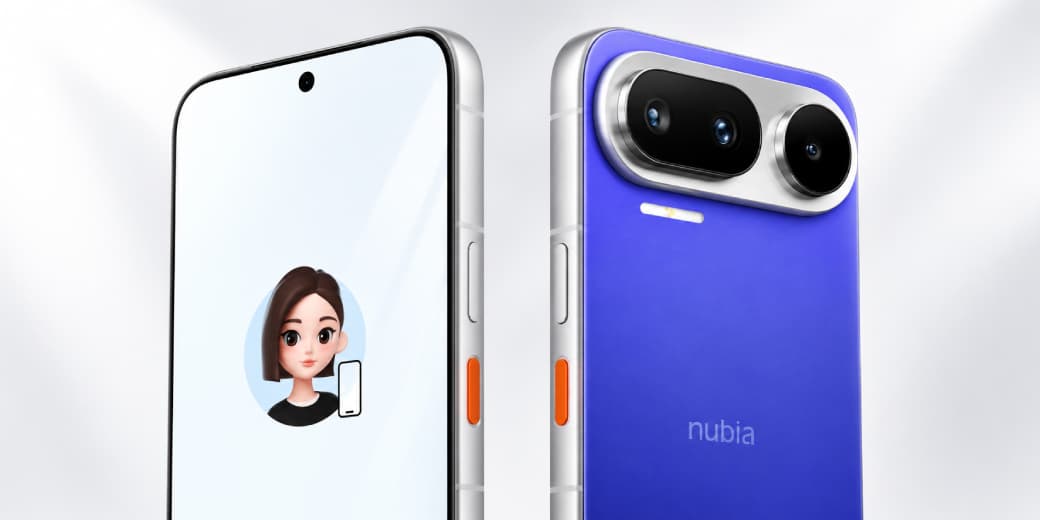
Nubia, ZTE's phone brand, will launch the NaviX Ultra in China on September 16, 2026, built jointly with ByteDance around the Doubao Phone Assistant, an AI agent designed to read the screen and complete multi-step tasks across apps from a single spoken request. LPDDR5X memory running at 10,667Mbps is confirmed, while the flagship processor, battery, display, and camera details circulating before launch remain reported specifications. An earlier engineering prototype of the same assistant, the Nubia M153, was flagged by WeChat and major Chinese banking apps over the system-level permission that lets it read screens and simulate taps.
Nubia is positioning the NaviX Ultra as a mass-market smartphone, launching September 16 at 2pm Beijing time. The device is developed jointly by ZTE and ByteDance, and has been referred to as "Doubao Phone 2.0." Claims that it is the world's first mass-produced agent phone come from pre-launch marketing and reports, not an independently verifiable product category with an agreed definition.
What the Doubao Phone Assistant actually does
Rather than functioning as a chat window layered on top of a normal phone interface, the Doubao Phone Assistant is built around four core capabilities Nubia describes as understanding commands, completing tasks, remembering information, and security. In practice, that means giving the assistant a single spoken instruction, ordering food, booking a ride, or checking a bank balance, and having it navigate across the relevant apps on your behalf, tapping through screens the way a human would rather than relying on each app having its own dedicated AI integration. A dedicated physical button on the phone's side, alongside a voice command, summons the assistant.
One hardware detail has been confirmed ahead of launch: LPDDR5X from ChangXin Memory Technologies running at 10,667Mbps, which the supplier describes as the first mass-production use of domestically produced memory at that speed. Reports also point to a Snapdragon 8 Elite Gen 5 processor, a 6.78-inch 144Hz display, multiple 50MP cameras, a battery above 7,000mAh, and fast wired charging. Those remaining details should be treated as reported until Nubia publishes the final product sheet on September 16.
The part of this story that matters more than the specs
Before the NaviX Ultra existed as a retail product, ZTE and ByteDance tested the same assistant technology on an engineering prototype called the Nubia M153. Within days of that prototype reaching early users, WeChat began logging some owners out with a message describing "an abnormality in the login environment," while apps from the Agricultural Bank of China and China Construction Bank displayed pop-ups instructing users to disable the assistant.
The friction traces to a specific system-level permission called INJECT_EVENTS, which allows an app to read what's on screen and simulate taps on a user's behalf, exactly the capability the Doubao assistant needs to complete tasks across other apps. Phone manufacturers typically reserve that permission for their own built-in system components, not third-party or co-developed software, which is likely why WeChat's automated security systems treated it as suspicious. WeChat said it hadn't taken deliberate action against the assistant specifically, attributing the blocks to automated controls firing on their own, while the Doubao team said on Weibo that no malicious hacking was involved and that the assistant would not handle payments or identity authentication. ByteDance has since opened permissions with some of Alibaba's platforms, suggesting at least partial with some app ecosystems ahead of the full retail launch.
The NaviX Ultra cleared network access approval in China on September 1, and its underlying has been certified by China's Ministry of Industry and Information Technology, both regulatory steps the earlier prototype had already passed before the WeChat and banking app friction emerged.
The tecMAMBO take
An AI agent that can tap through your banking app on your behalf is exactly the kind of feature that sounds impressive in a launch demo and terrifying to a bank's security team, and the WeChat and banking app pushback against the M153 prototype is a preview of a tension every AI-agent phone is going to run into eventually, not a Nubia-specific problem. The permission an agent needs to be genuinely useful, reading your screen and acting on it, is functionally identical to the permission a malicious app would want for exactly the same reason.
Whether the NaviX Ultra succeeds commercially will depend less on its camera specs than on whether ByteDance and Nubia can convince the app ecosystem around it, banks especially, that this specific implementation is trustworthy enough to leave enabled. That's a much harder problem than shipping and a big battery, and it's one the rest of the industry is watching closely, since every company chasing an "agentic AI" phone is going to hit the same wall eventually.
Permission is the product
Traditional voice assistants mostly answer questions or trigger functions exposed through approved interfaces. A screen-operating agent is different because usefulness depends on seeing what another app shows and acting inside it. That collapses the distance between assistant, accessibility tool, and automation framework. The same capability can save time for a user and trigger fraud controls for a bank because both outcomes rely on synthetic taps that resemble remote control.
A durable design needs more than a one-time permission prompt. Users need a visible record of what the agent opened, which data it read, what actions it attempted, and where confirmation was required. App developers need a reliable way to allow low-risk tasks while blocking payments, identity checks, security settings, or messages that should never be sent without explicit approval.
What to verify at the September 16 launch
The final launch should settle the processor, display, camera, battery, charging, price, memory configurations, and sale date. More important, Nubia and ByteDance need to explain whether the retail software still depends on INJECT_EVENTS, which apps are compatible, how on-screen information is processed, and whether sensitive tasks are excluded by policy or by technical enforcement. Pre-launch specification reports should not be mistaken for that final disclosure.
Availability outside China is another open question. Doubao is built around ByteDance's Chinese AI ecosystem and local app relationships, so international expansion would require different services, regulatory reviews, and partner agreements. The NaviX Ultra can still be influential even if it remains domestic. Its launch will provide a real test of whether an agent phone can negotiate app trust at consumer scale rather than only perform a controlled stage demonstration.
FAQ
When does the Nubia NaviX Ultra launch?
September 16, 2026, in China, at 2pm Beijing time.
Did WeChat block the Doubao AI assistant?
An earlier engineering prototype, the Nubia M153, was flagged by WeChat and Chinese banking apps over a system permission that lets the assistant read the screen and simulate taps. WeChat said this resulted from automated security controls rather than a deliberate block, and ByteDance has since resolved permissions with some app partners.
What chip does the NaviX Ultra use?
Pre-launch reports point to Qualcomm's Snapdragon 8 Elite Gen 5. Nubia had not published the final full specification sheet when this article was checked.
Sources
Ask MAMBO
Have a plain-English question about this topic? Send it in and we may answer it in a future guide.
Ask a questionRelated reading
TECNO EllaClaw shows the next phone war is not megapixels. It is agents
Smartphone AI is moving from photo tricks to agents that act across apps. TECNO's EllaClaw shows why budget phones may become the real test ground.
Apple's foldable finally arrives, and it's not even the biggest change at the company today
Apple's "Surprise and Shine" event brings the company's first foldable iPhone, new Pro models and a delayed budget lineup, all under new CEO John Ternus.
Your next Android flagship's chip can already act on its own. Here's what that actually means
Qualcomm's Snapdragon 8 Elite Gen 5 and MediaTek's Dimensity 9500 have both shipped with agentic AI built into their NPUs. Here's what's real and what's still rumor.