

NVIDIA's RTX Spark wants to reinvent the Windows PC
A 20-core Arm CPU, a Blackwell GPU, and 128GB of shared memory in a thin laptop. Also: NVIDIA has tried this before, and it ended in a billion-dollar write-off.
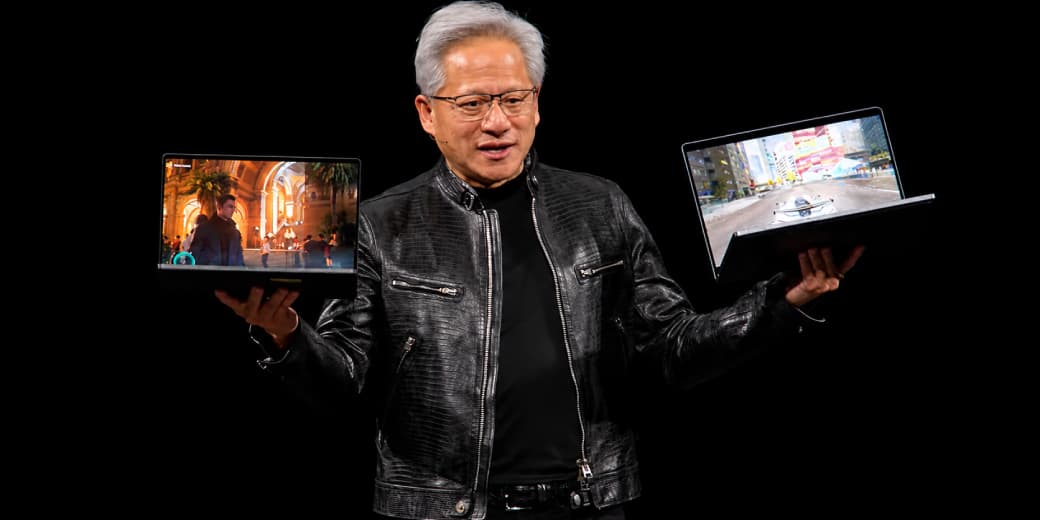
NVIDIA has declared war on the Windows PC processor market. At Computex in Taipei, chief executive Jensen Huang unveiled RTX Spark, an Arm-based superchip that pairs a 20-core NVIDIA Grace CPU, co-developed with MediaTek, with a Blackwell RTX carrying 6,144 CUDA cores, joined by NVIDIA's NVLink chip-to-chip interconnect.
NVIDIA claims up to one petaflop of AI compute and up to 128GB of unified shared across CPU and GPU. One correction to the hype matters immediately: these machines are not shipping yet. NVIDIA says the first RTX Spark laptops and compact desktops arrive in fall 2026, from partners including ASUS, Dell, HP, Lenovo, Microsoft Surface, and MSI.
The pitch
The argument is about where AI runs. Today, serious AI work usually happens in a data centre, with subscriptions, , and privacy trade-offs attached. NVIDIA's bet is that more of that work should happen on your own machine. It claims RTX Spark can run large local models, handle demanding video workflows, and still play games well.
The differentiator is memory. No integrated neural processor in a conventional laptop chip competes with thousands of CUDA cores for local generative work, and 128GB of shared memory changes what a laptop can attempt.
Microsoft is part of the story too, with new operating-system security primitives and agent permission work designed so agents touch only the data and tools a user permits. That is necessary because an with unrestricted access to your PC is not convenience. It is a security incident waiting for a calendar invite.
Why scepticism is fair
NVIDIA has been here before. Windows RT ran on NVIDIA Tegra chips in 2012 and collapsed because it could not run the x86 desktop software that defined Windows. Microsoft wrote down Surface RT heavily, and NVIDIA left the Windows PC processor fight for years.
Two things are different now. Microsoft's x86-to-Arm emulation is much better, and the software ecosystem has spent years adapting because of Qualcomm's Windows on Arm push. RTX Spark inherits a world that did not exist in 2012. But compatibility remains the issue to check before buying any Arm Windows machine.
Price and Kenya
NVIDIA has not announced pricing. Analyst notes have suggested premium configurations could sit far above mainstream laptop budgets. At that level, this is not a product for most Kenyan buyers in 2026.
Still, the direction matters. If local AI becomes the thing premium laptops compete on, that logic eventually flows downmarket. A machine that runs capable models locally needs less cloud subscription, less latency, and less reliable connectivity. In a market with expensive data and uneven connections, that is genuinely interesting.
The caution is equally real. The same memory demand fuelling local-AI machines is part of what is raising ordinary PC costs. The AI PC boom may make everyday laptops more expensive before it makes them smarter.
FAQ
What is NVIDIA RTX Spark?
It is an Arm-based Windows PC platform combining an NVIDIA Grace CPU, Blackwell RTX graphics, and large shared memory for local AI workloads.
When do RTX Spark laptops arrive?
NVIDIA says the first systems arrive in fall 2026, with several major PC makers named as partners.
Can RTX Spark run normal Windows apps?
It is Arm-based, so apps run natively or through emulation. Compatibility is much better than the Windows RT era, but buyers should still check critical apps and drivers.
Why does RTX Spark matter?
It challenges the Intel and AMD foundation of Windows PCs and shifts the premium laptop fight toward local AI performance.
Sources
RTX Spark is not just another laptop chip. It is a test of whether Windows can survive a post-x86 identity crisis.
Ask MAMBO
Have a plain-English question about this topic? Send it in and we may answer it in a future guide.
Ask a questionRelated reading
 Business
Intel raises CPU prices, and AMD looks better for it
Intel's 2026 CPU price increases are narrow but revealing: desktop bumps are modest, server hikes are steep, and AMD gets a value opening.
 MAMBO Take
Kenya wants Oracle's cloud and AI expertise. It should negotiate like the data matters
Oracle and the ICT Authority are exploring deeper cooperation on government cloud, AI and certification. Kenya needs skills transfer, interoperability and enforceable data controls.
 MAMBO Explains
Why old CPUs are suddenly the smart buy again
Older DDR4 platforms are back in the conversation because AI demand is squeezing memory supply and changing the real cost of a PC build.