

Visa's new East Africa chief comes from mobile money, and that changes the strategy
Visa has appointed an executive who grew a mobile money challenger. Her task is to connect cards, wallets, banks and merchants across seven markets.
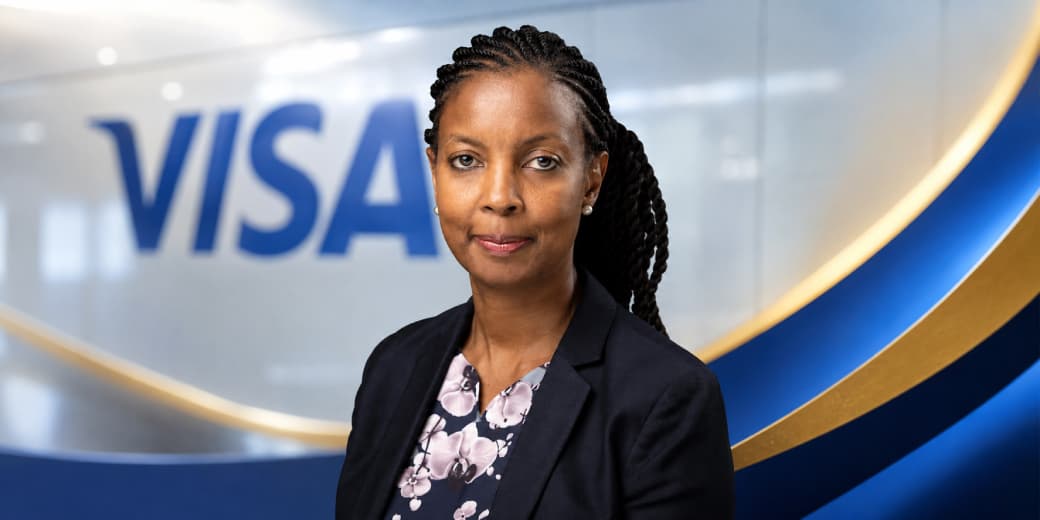
Visa has appointed Anne Kinuthia-Otieno as Vice President and Head of East Africa.
She starts the role on 4 August 2026, based in Nairobi, and will oversee seven regional markets.
Her previous job matters.
Kinuthia-Otieno led Airtel Money Kenya during a period when the service grew its share of subscriptions from about 3.1 percent in 2022 to 10.9 percent by March 2026.
Visa has hired someone who understands that East African payments do not begin with a plastic card.
They begin with the mobile phone, agent network and everyday merchant.
What you need to know
- Kinuthia-Otieno begins the Visa role on 4 August 2026.
- She previously served as managing director of Airtel Money Kenya.
- Visa says she will oversee seven East African markets.
- Her work includes digital-payment growth, partnerships and financial inclusion.
- Airtel Money gained meaningful market share during her tenure.
- Visa increasingly connects cards with mobile wallets and account-to-account payments.
- The appointment does not mean Visa is abandoning banks or cards.
Visa is already testing how global networks can sit behind familiar local rails. Our explainer on Visa, M-Pesa and Onafriq's stablecoin test shows one version of that strategy.
Why mobile money experience matters
East Africa is one of the world's most developed mobile money regions.
Consumers use phones to send money, pay bills, buy airtime, receive salaries, borrow, save, pay merchants and move money across borders.
A card-network executive entering the region needs to understand this behaviour.
Visa's traditional strength is card acceptance and global payment routing.
Mobile money provides a different model based on phone numbers, local agents and domestic networks.
The growth opportunity lies in connecting the two.
A mobile wallet can issue a virtual card for international purchases. A card can fund a wallet. Merchants can accept contactless payments through phones. Remittances can enter local accounts.
Kinuthia-Otieno has operated inside the local system Visa wants to connect with.
What she achieved at Airtel Money
When Kinuthia-Otieno took over in 2021, Airtel Money was a small challenger in a market dominated by M-Pesa.
By March 2026, its reported share of mobile money subscriptions had increased to 10.9 percent.
That growth involved more than marketing.
A mobile money network needs agents, liquidity, merchant acceptance, system reliability, pricing, trust, regulatory compliance and customer support.
A challenger must convince people that money can be deposited and withdrawn nearby.
A service can have an excellent application and still fail because the agent has no cash.
The appointment suggests Visa values operational experience at the last mile.
What Visa wants in East Africa
Visa's regional priorities likely include card issuance, merchant acceptance, tokenised payments, cross-border commerce, mobile wallet integration, remittances, contactless payments, government payments, fintech partnerships and cybersecurity.
The company competes with Mastercard, domestic switches, mobile money operators, bank transfers and fintech platforms.
It also partners with many of them.
Payment networks are unusual competitors.
Visa can help a mobile money operator issue cards while competing for the same transaction.
The strategy is to remain valuable regardless of which interface the customer sees.
The seven-market challenge
East Africa is not one payments market.
Countries differ in regulation, currency, mobile money adoption, bank penetration, card acceptance, income, internet access, tax, foreign exchange and identity systems.
A solution successful in Kenya may not transfer directly to Ethiopia or another market.
Regional leadership requires a common strategy with local execution.
Visa must avoid treating Nairobi's fintech ecosystem as a complete model of East Africa.
The region includes markets at very different stages of digital-payment development.
Financial inclusion needs a stricter definition
Payment companies frequently use the phrase financial inclusion.
Opening access is valuable, but meaningful inclusion requires affordable fees, reliable service, consumer protection, fraud resolution, accessibility, transparent exchange rates and useful products.
A virtual card that no local merchant accepts is not complete inclusion.
A wallet that can receive money but charges heavily to withdraw may deepen dependency.
Kinuthia-Otieno's mobile money background should help keep the strategy connected to real consumer behaviour.
Could Visa and M-Pesa become closer partners?
Visa already works with mobile money providers, banks and fintechs across Africa.
The regional opportunity includes easier international e-commerce for wallet users and better remittance connections.
M-Pesa remains dominant in Kenya. Airtel Money is a growing challenger.
Visa should avoid designing partnerships that depend on one operator.
The strongest regional infrastructure lets banks, wallets and merchants connect through common standards.
That increases Visa's relevance while preserving consumer choice.
The competitive pressure from Mastercard
Mastercard is active across Kenya and East Africa through cards, fintech partnerships, merchant platforms and cross-border programmes.
The Carrefour prepaid card launched with KCB is one recent example of a payment network entering a specific household use case.
Visa's regional leadership will be judged on practical products rather than corporate announcements.
Can it make international payments easier, reduce remittance friction, expand small-merchant acceptance and protect users from fraud?
The appointment provides credibility.
Execution will provide evidence.
What success should look like
Kinuthia-Otieno's first years should be judged against measurable outcomes:
- More small merchants accepting digital payments
- Lower friction between cards and wallets
- Faster cross-border settlement
- Better fraud
- Transparent foreign-exchange pricing
- More useful regional products
- Wider access without predatory fees
- Stronger fintech partnerships
- Better support for women-owned and small businesses
A regional title is an organisational fact.
A payment that becomes simpler and cheaper is a customer result.
The tecMAMBO take
Visa has hired the right kind of regional leader.
East African payments are not a smaller copy of Europe or North America.
They are shaped by mobile money, agents, informal commerce and cross-border family support.
Kinuthia-Otieno's challenge is to connect Visa's global network to that reality without forcing local users into a card-first model.
The next era of payments will not be cards versus mobile money.
It will be the company that makes the argument invisible.
FAQ
When does Anne Kinuthia-Otieno start at Visa?
She begins the role on 4 August 2026.
What is her title?
She is Vice President and Head of East Africa at Visa.
Where did she work previously?
She was managing director of Airtel Money Kenya.
How many markets will she oversee?
Visa says she will lead operations across seven East African markets.
Why is mobile money experience valuable to Visa?
Mobile money is central to everyday payments in East Africa and provides routes into wallets, agents, merchants and cross-border services.
Sources
Share this story
Enjoyed this? Share it with someone who'd appreciate it.
Ask MAMBO
Have a plain-English question about this topic? Send it in and we may answer it in a future guide.
Ask a questionRelated reading

Standard Bank and UnionPay just widened Africa's online payment rails across nine markets
Standard Bank and UnionPay have expanded online payment acceptance across nine African markets, connecting nearly 900 merchants to UnionPay cardholders.

NCBA finally joins Kenya's KSh 20 PesaLink push, and the pressure now moves to the remaining holdouts
NCBA now offers free PesaLink transfers up to KSh 1,000 and a flat KSh 20 fee above that on the NCBA NOW App. Here is why the move matters.
M-Pesa Ethiopia users can now turn wallet balance into cash at Bank of Abyssinia ATMs
A new Bank of Abyssinia integration gives M-Pesa Ethiopia customers another way to cash out, turning existing ATM infrastructure into part of the mobile-money network.