

Apple's foldable is official: the iPhone Duo starts at $1,999, and here's what it actually costs to own in Kenya
Apple's first foldable iPhone, the iPhone Duo, is official. Full specs, confirmed US pricing, and a realistic breakdown of what it will cost landed in Kenya.
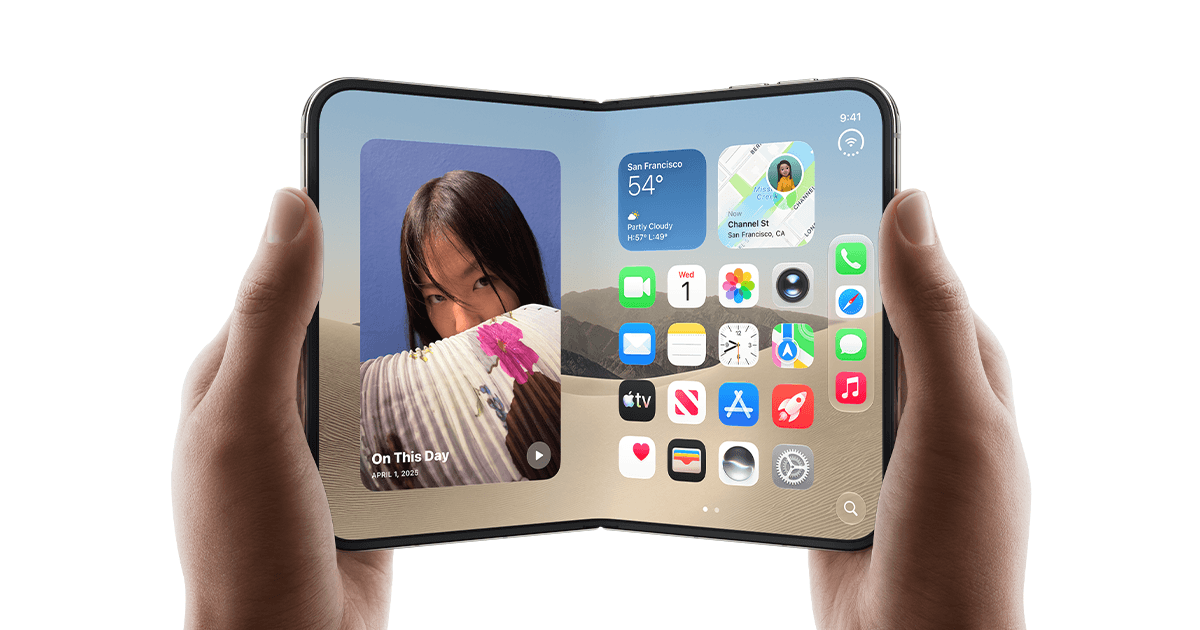
Quick answer: Apple's first foldable iPhone is called the iPhone Duo. It was officially unveiled on September 9, 2026, at Apple's "Surprise and Shine" event, the first keynote led by new CEO John Ternus. It starts at $1,999 for 256GB and rises to $3,199 for 2TB. Pre-orders open October 16, with shipping from October 23. Converted directly, the entry price works out to about KES 258,700, but Kenya's stacked import taxes mean the real retail price on the ground will land considerably higher than that raw conversion, likely well above KES 300,000. We break down why below.
Apple has spent the better part of a decade watching Samsung, Huawei, Google, and half a dozen Chinese manufacturers ship folding phones while staying on the sidelines. That changed today.
At the Steve Jobs Theater in Cupertino, John Ternus, who became Apple's chief executive on September 1 after Tim Cook moved into the role of executive chairman, presented his first keynote in the job. The headline announcement was the iPhone Duo, Apple's first foldable device, ending a rumor cycle that had run under names like "iPhone Fold" and "iPhone Ultra" since as early as 2021.
The final name, and the final price, only became public hours before the keynote began, when Bloomberg's Mark Gurman reported both details ahead of Apple's own presentation. Apple confirmed them on stage shortly after.
What the iPhone Duo actually is
The iPhone Duo is a book-style foldable, opening like a small tablet rather than flipping vertically like a compact clamshell. That puts it in the same broad category as Samsung's Galaxy Z Fold line, though Apple's execution differs in several specific ways.
Closed, the device shows a 5.4-inch outer display. Opened, it reveals a 7.6-inch inner Super Retina XDR display, which Apple says is 50% larger than the screen on the iPhone 18 Pro Max. Apple built the inner display using a multi-layer laminated construction specifically aimed at minimizing the visible crease that has defined, and often undermined, folding phones from every manufacturer to date.
The itself uses an integrated magnet system Apple describes as smooth in operation, built for smooth, balanced resistance, while a Grade 5 titanium frame and hinge cover provide structural strength. Apple uses Ceramic Shield on both the front and back and gives the inner display a scratch-resistant coating.
The specs Apple confirmed on stage
| Feature | iPhone Duo |
|---|---|
| Outer display | 5.4-inch Super Retina XDR |
| Inner display | 7.6-inch Super Retina XDR with a nano-texture finish |
| Processor | Apple A20 Pro, built on a 2 nanometer process |
| Modem | Apple C2, with mmWave 5G support |
| Connectivity | eSIM only, worldwide, no physical SIM tray in any region |
| Biometrics | Touch ID integrated into the side button, plus unlock via paired Apple Watch |
| Rear camera | 48MP Dual Fusion system: Main and Ultra Wide |
| Front camera | 12MP Center Stage camera outside; under-display FaceTime camera inside |
| Battery life | Up to 31 hours using the inner display only, up to 44 hours using the outer display only, up to 24 hours with mixed use of both screens |
| Charging | 50% charge in roughly 20 minutes |
| Build | Grade 5 titanium frame and hinge cover, Ceramic Shield front and back, IP68 |
| Stylus support | Apple Pencil (USB-C), arriving in a later software update, not available at launch |
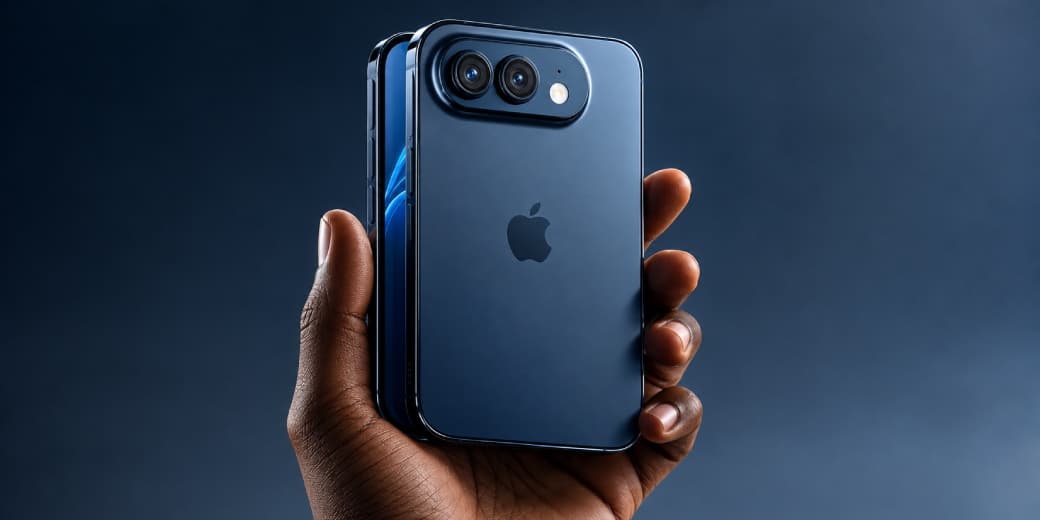
| Colors | Star White and Night Sky |
| Storage options | 256GB, up to 2TB |
| Starting price | $1,999 |
| Top-tier price | $3,199 |
| Pre-orders | October 16, 2026 |
| Ships | October 23, 2026 |
A few of these details are worth flagging specifically because they correct assumptions that circulated widely in pre-event coverage, including some of tecMAMBO's own earlier reporting on the rumors.
Apple did not disclose a in mAh. Several pre-event reports, including some referencing a 5,500 mAh figure, were describing rumors about the iPhone 18 Pro Max, not the Duo, and even that number was never officially confirmed. What Apple did share on stage were estimates in hours, which is what appears in the table above. Treat any specific mAh figure you see attributed to the Duo as unconfirmed until Apple publishes exact battery specifications, which it typically does not do for any iPhone model.
Apple undercut price expectations, it did not exceed them. Multiple analysts, including supply chain researchers at TrendForce, had predicted a starting price as high as $2,500 given component costs tied to the 2 chip process and the folding display assembly. According to Gurman's reporting, Apple deliberately absorbed some of that cost itself to land at $1,999 instead, a move aimed at boosting early demand for a genuinely new product category rather than pricing it purely to protect margin. That is the opposite of the "steep premium" framing some early write-ups assumed.
The colors are Star White and Night Sky, not a generic white and blue. Apple's naming conventions matter for search accuracy and for anyone trying to check retailer stock listings against the correct official names.
Why Touch ID and not Face ID
Apple dropped Face ID entirely on the Duo in favor of Touch ID built into the side button, with an additional unlock option via a paired Apple Watch. This is a hardware constraint as much as a design choice. Face ID depends on a fairly bulky TrueDepth camera module that has historically been difficult to fit behind a folding, laminated inner display without compromising screen quality or thinness. Touch ID sidesteps that problem entirely, at the cost of losing Face ID's convenience for the Duo's specific ownership base, at least for this first generation.
What it will actually cost in Kenya
This is the part most coverage of the Duo, including the version circulating before this article, tends to get wrong, and it is worth being precise about it.
A direct currency conversion of the $1,999 starting price, at the current USD to KES rate of roughly 129.4, comes out to approximately KES 258,700. That number is accurate as a currency conversion. It is not a realistic estimate of retail price in Kenya, and treating it as one understates the real cost by a wide margin.
Kenya applies a genuinely stacked set of taxes and levies to imported smartphones, and it is important to note that this structure was very nearly simplified this year, and was not. The Finance Bill 2026 proposed replacing the existing patchwork with a single 25% excise duty charged at the point of a phone's activation. According to Treasury Cabinet Secretary John Mbadi's own public comments defending the proposal, the current system layers together a 16% VAT, a 10% excise duty, a 25% import duty, a 2.5% Import Declaration Fee, and a 2% Railway Development Levy, which Treasury itself described as a cumulative tax burden of roughly 55.5% on imported devices.
That reform did not survive to the final Finance Act 2026, signed into law in June. The activation-based 25% excise duty was dropped from the enacted version, along with the removal of the IDF and RDL exemptions that would have accompanied it. In practical terms, this means the existing, heavier, multi-layered tax stack Treasury itself criticized as excessive remains the operative framework for any iPhone Duo entering Kenya through standard import and retail channels.
Running the Duo's $1,999 starting price through that stack, alongside typical authorized-reseller margins that Apple hardware has historically carried in the Kenyan market, points toward a realistic retail price well above KES 300,000, quite plausibly into the KES 350,000 range or higher for the base 256GB model once it reaches Kenyan shelves through official channels. This is an estimate, not a confirmed retail figure. Apple does not sell directly in Kenya, and actual pricing will depend on which authorized reseller brings the device in, how it is classified for customs purposes, and whether any importer absorbs part of the tax burden to stay competitive, as happens periodically with flagship iPhone launches.
Anyone budgeting for the Duo in Kenya should treat KES 258,700 as a floor, not a target, and should wait for an official price listing from an authorized Apple reseller once the device is available for order locally, rather than relying on a straight currency conversion.
How the Duo compares to the folding phones already on the market
Samsung has iterated on its book-style Galaxy Z Fold line for several generations now, and Apple's design choices, the wide 4:3-style aspect ratio, the emphasis on minimizing the crease, the Touch ID compromise, all read as direct responses to years of feedback about what has and has not worked in that category. Apple entering years after Samsung is not unusual for the company. It took a similar approach with smartwatches and true wireless earbuds, arriving after the category was established and then setting a template competitors spent years responding to.
What is different this time is price positioning. At $1,999, the Duo sits close to where Samsung's own flagship foldables have priced in recent generations, rather than at a steep premium above them. That is a meaningful signal about how seriously Apple is treating this as a category it intends to compete in and grow, not a niche experiment priced to limit demand.
The tecMAMBO take
The interesting story here is not that Apple finally made a folding phone. Every major competitor got there years earlier, and Apple arriving late to an established hardware category is practically part of its playbook at this point.
The interesting story is the price. Apple choosing to eat margin to land at $1,999 instead of a rumored $2,500 suggests a company that wants Duo sales volume to actually mean something in its first year, not a company treating this as a low-volume prestige object for early adopters with money to spare. That is a different kind of bet than Apple usually makes on a first-generation product, and it puts real pressure on Samsung and the rest of the foldable field to defend their own pricing.
For Kenyan buyers specifically, the gap between the sticker price in Cupertino and the real cost of ownership in Nairobi is going to be the more consequential number. A device priced to drive mainstream folding-phone adoption in the United States is still, once Kenya's tax structure is applied, a device that will realistically sit well outside mainstream affordability here. That tension, a genuinely more accessible global launch price meeting a genuinely unreformed local tax structure, is worth watching as the actual local retail price gets confirmed in the coming weeks.
FAQ
Is the iPhone Duo the same as the iPhone Ultra people were expecting?
Yes. "iPhone Ultra" was the most widely reported unofficial name throughout 2025 and into 2026. Bloomberg's Mark Gurman reported the iPhone Duo name before the September 9 event, and Apple confirmed it when the device was unveiled on stage.
When can I buy the iPhone Duo?
Pre-orders open October 16, 2026, with the device shipping starting October 23, 2026, in initial launch markets.
Does the iPhone Duo support the Apple Pencil?
Yes, but not at launch. Apple confirmed Apple Pencil (USB-C) compatibility will arrive through a later software update rather than being available on day one.
Does the iPhone Duo have Face ID?
No. Apple replaced Face ID with Touch ID built into the side button, plus the option to unlock the device using a paired Apple Watch.
How much will the iPhone Duo cost in Kenya?
Apple has not announced official Kenyan pricing. A direct currency conversion of the $1,999 US starting price is approximately KES 258,700, but Kenya's layered import tax structure and standard reseller margins make a realistic retail estimate considerably higher, plausibly above KES 350,000 for the base model once it reaches authorized resellers. Treat this as an estimate until an official local price is published.
What chip powers the iPhone Duo?
The Apple A20 Pro, built on a 2 nanometer process, the same chip family used in the iPhone 18 Pro and iPhone 18 Pro Max, paired with Apple's in-house C2 modem.
Sources
- Apple: iPhone Duo product overview and specifications
- Apple: September 9, 2026 event stream
- TechCrunch: Apple unveils its first foldable, the iPhone Duo
- MacRumors: iPhone Duo pricing, pre-orders and release date
- Central Bank of Kenya: September 9 foreign exchange rate
- MA Law Africa: Kenya Finance Act 2026 analysis
- Kenya Revenue Authority: Finance Act 2026 guidance
Ask MAMBO
Have a plain-English question about this topic? Send it in and we may answer it in a future guide.
Ask a questionRelated reading
 Should you care?
Apple's foldable finally arrives, and it's not even the biggest change at the company today
Apple's "Surprise and Shine" event brings the company's first foldable iPhone, new Pro models and a delayed budget lineup, all under new CEO John Ternus.
 MAMBO Take
India wants to lock in electronics manufacturing until 2041, and Apple is a major reason why
India proposes extending tax exemptions for foreign electronics suppliers to 2041 as it scales smartphone, laptop, tablet and wearable manufacturing.
 MAMBO Take
Apple's 2026 iPhone plan could leave budget buyers waiting until 2027
A split launch would turn Apple's biggest 2026 phone event into a premium-only season and push value-conscious buyers toward older iPhones or Android.