
Uber's Glovo deal now faces the part regulators care about: antitrust
Uber's move for Delivery Hero would put Glovo and Uber Eats under one roof across Africa. Now competition regulators from Nairobi to North Africa get their say.
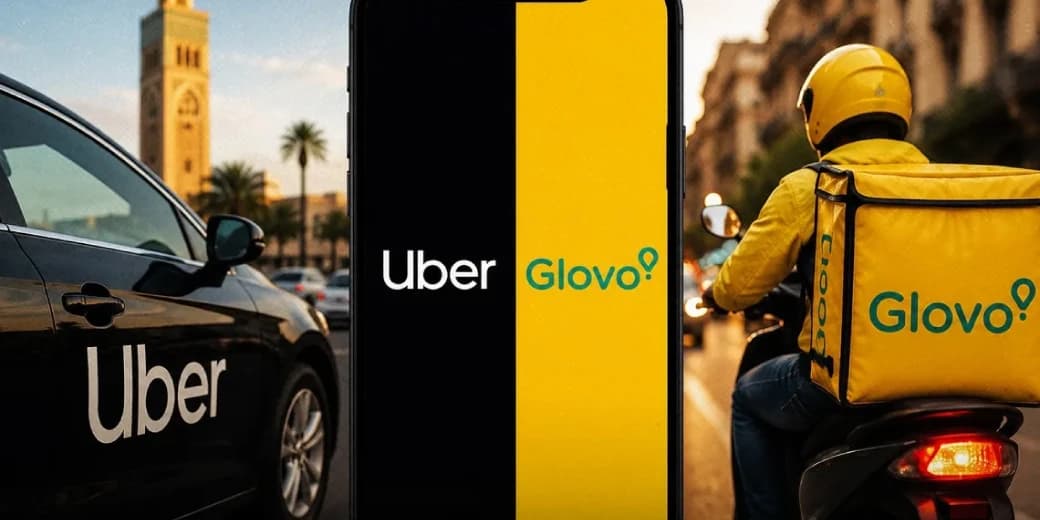
The headline deal has been announced. Now comes the part that actually shapes what customers pay. Uber's roughly 14.8 billion dollar agreement to acquire Delivery Hero, the German parent of Glovo, would fold Glovo's African operations directly into Uber's delivery network. In several markets that means the leading delivery app and one of its biggest rivals, Uber Eats, ending up under a single corporate roof. That is precisely the situation competition regulators exist to examine, and authorities across Kenya, Nigeria, and North Africa are now preparing antitrust reviews. We explained the deal itself and what it means for Kenyan customers at Uber is buying Glovo's owner. What it means for Kenya; this is what happens next.
Why this deal triggers antitrust alarms
Merger review is about market power, and the numbers here are exactly the kind that make regulators lean forward. In Kenya, the Competition Authority's most recent market study put Glovo's share of food delivery at 33 percent and its share of grocery delivery at 46 percent, well ahead of Uber Eats, Jumia Food, and Bolt Food. Combining the leader with a major challenger removes a competitor from a concentrated market in one stroke. The worry is not abstract. Less competition in delivery can translate into higher commissions charged to restaurants and shops, higher fees or prices for customers, and weaker bargaining power for the riders who do the actual work. Those are the pressure points a review will probe.
The mitigation, and the gap in it
Uber has structured the global deal to soften antitrust concerns, but the fix is uneven. A separate New York investment firm, SSW Partners, will buy 14 mostly European markets where Uber and Delivery Hero overlap most heavily, for about 1.4 billion euros, carving out the places regulators would object to most loudly. The revealing detail for African readers is what was left out: Kenya was not included in that divestment, even though Uber Eats already competes with Glovo there. Under the deal, Uber keeps Delivery Hero's operations across some 50 markets, including Kenya, Uganda, Nigeria, Morocco, and Ivory Coast, a footprint that generated roughly 42 billion dollars in gross merchandise value last year. In other words, the overlaps that were cleaned up in Europe remain live in Africa, which is exactly why local regulators are the ones who now matter.
What the regulators can actually do
Competition authorities are not limited to a simple yes or no. A body like the Competition Authority of Kenya, and its counterparts in Nigeria and North Africa, can approve the local transaction, block it, or, most commonly, approve it with conditions. Those conditions can include caps or commitments on commission rates, protections for restaurant and rider terms, requirements to keep certain brands or services operating separately, or behavioural undertakings that expire after a set period. The global deal is expected to finalise in the second half of 2027, which gives regulators time to study the local markets and negotiate remedies. The outcome that matters to users is less whether the deal closes and more what strings get attached to it.
What it means for riders, restaurants, and shoppers
For the people who live inside these apps, the stakes are concrete. Riders worry that a dominant platform has less reason to compete on payouts and incentives. Restaurants and small shops fear higher commissions eating already thin margins, since delivery commissions are one of their largest controllable costs. Shoppers care about delivery fees, service charges, and whether the discounts that came from two apps fighting for them quietly disappear. None of these outcomes is guaranteed, competition can persist through new entrants and other platforms, but consolidation historically shifts leverage toward the platform. That shift is the reason a merger announced in a boardroom ends up being argued over by regulators.
The bigger pattern
This is the mature phase of a story that began as convenience. Ride-hailing and delivery apps won users by removing uncertainty, then spent years subsidising growth, and are now consolidating into a few large players whose economics have to work without endless discounts, a shift we traced in what changed after the ride-hailing hype faded at What ride-hailing apps changed after the hype faded. The Uber and Delivery Hero tie-up is that consolidation reaching quick-commerce and food delivery on a global scale. Whether African markets end up with a healthy, competitive delivery sector or a single dominant gatekeeper will be decided less by the deal's press release and more by how firmly regulators from Nairobi to North Africa use the leverage they still hold.
FAQ
Why does Uber's Glovo deal face antitrust reviews in Africa?
Because it would put the leading delivery app, Glovo, and a major rival, Uber Eats, under one roof in several markets. In Kenya, Glovo held 33 percent of food delivery and 46 percent of grocery delivery, so combining them concentrates the market.
Was Africa included in Uber's antitrust divestment?
No. SSW Partners is buying 14 mostly European markets for about 1.4 billion euros to ease antitrust concerns, but Kenya was left out even though Uber Eats competes with Glovo there. Uber keeps Delivery Hero's operations across about 50 markets, including Kenya, Nigeria, and Morocco.
What can competition regulators do about the deal?
They can approve it, block it, or approve it with conditions such as caps on commissions, protections for riders and restaurants, or requirements to keep certain services separate. The global deal is expected to close in the second half of 2027.
How could the merger affect customers and riders?
Less competition can mean higher commissions for restaurants and shops, higher fees for shoppers, and weaker bargaining power for riders. Outcomes are not guaranteed, but consolidation historically shifts leverage toward the platform.
Sources
The merger grabbed the headlines, but the real story is the review. Whatever conditions Kenyan, Nigerian, and North African regulators attach will decide what riders earn, what restaurants pay, and what a delivery costs long after the ink dries.
Ask MAMBO
Have a plain-English question about this topic? Send it in and we may answer it in a future guide.
Ask a questionRelated reading
Uber is buying Glovo's owner. What it means for Kenya
Uber's agreement to buy Delivery Hero would bring Glovo into the same group as Uber Eats, a major shift for Kenya's food and grocery delivery market.
Glovo is bringing shopping into ChatGPT and Claude. That changes quick commerce
Glovo's AI Shopping Assistant lets users discover products through natural-language chat before moving into purchase. It is not magic, but it points to the next interface for quick commerce.

Kenya wants Oracle's cloud and AI expertise. It should negotiate like the data matters
Oracle and the ICT Authority are exploring deeper cooperation on government cloud, AI and certification. Kenya needs skills transfer, interoperability and enforceable data controls.