
Uber is buying Glovo's owner. What it means for Kenya
Uber's proposed Delivery Hero takeover would put Glovo and Uber Eats under one owner, raising a very Kenyan competition question.
Uber has agreed to buy Delivery Hero, the German parent of Glovo, in one of the biggest deals in the history of food delivery, and it lands directly on Kenyan doorsteps. Announced in Berlin on Thursday, July 16, the agreement offers Delivery Hero shareholders 41.50 euros per share in cash, valuing the company at 13.0 billion euros, about 14.8 billion US dollars, and it would combine Uber's mobility and delivery empire with Delivery Hero's brands across the world.
The scale is striking. The combined platforms span 99 countries with pro-forma gross bookings of 236 billion dollars in 2025. Uber keeps Delivery Hero's operations in 50 markets, spanning Baedal Minjok in South Korea, talabat in the Middle East, foodpanda across Asia, PedidosYa in Latin America, and, the part that matters here, Glovo's business across Africa, including Kenya.
To pre-empt some competition objections, Delivery Hero is separately selling its operations in 14 mostly European markets where the two overlap to investment firm SSW Partners for about 1.6 billion dollars. Uber already owned roughly a quarter of Delivery Hero, both boards back the offer, and the companies expect completion in the second half of 2027, pending regulatory approvals.
The Kenyan question
Here is the local arithmetic. Glovo is Kenya's largest on-demand food and grocery delivery platform. Its main surviving rival is Uber Eats. Jumia Food shut down at the end of 2023, and Bolt Food exited Kenya in 2024, which means the market's consolidation already happened before this deal, leaving essentially two big apps standing.
If Uber completes the acquisition and keeps Glovo Kenya, the two dominant delivery platforms in this country would share one owner. Notice what the European carve-out implies: where Glovo and Uber Eats compete head-to-head in Europe, the overlapping businesses are being sold off precisely because regulators would object. Kenya has the same overlap, and no announced carve-out.
That makes this a genuine question for the Competition Authority of Kenya, which has intervened in digital-market consolidation before, and it is the single most important local detail to watch as the deal grinds through approvals.
Being honest about both sides of it: consolidation is not automatically bad for users. A merged operation could mean better coverage, one stronger app, and more sustainable economics in a business that has burned money for a decade. The exits of Jumia Food and Bolt Food show how brutal the standalone economics were.
But the textbook risks are real too: less pressure on delivery fees and commissions, weaker bargaining power for restaurants and riders, and fewer alternatives when service declines. Competition is the mechanism that keeps an app honest, and Kenya would be down to roughly one owner of it.
Nothing changes tomorrow. Glovo and Uber Eats continue operating separately through a long approval process, and the deal could yet be reshaped by regulators anywhere along the way. But the direction is set, and for Kenyan restaurants, riders, and anyone who orders dinner by app, this Berlin announcement is worth following all the way home.
FAQ
Is Uber buying Glovo?
Uber has agreed to buy Delivery Hero, Glovo's parent company. The deal still needs regulatory approvals and is expected to close in the second half of 2027 if it proceeds.
Will Glovo and Uber Eats merge in Kenya?
Not immediately. The companies continue operating separately during the approval process. Kenya's regulator could also require remedies before any local consolidation happens.
Is this a monopoly in Kenya?
It is not automatically a monopoly, but it is a serious competition question because Glovo and Uber Eats are the two most visible remaining delivery platforms in Kenya.
Sources
The delivery app you open at lunch may soon be part of a much bigger global machine, and Kenya should not sleepwalk through that change.
Ask MAMBO
Have a plain-English question about this topic? Send it in and we may answer it in a future guide.
Ask a questionRelated reading
 Business
Uber's Glovo deal now faces the part regulators care about: antitrust
Uber's 14.8 billion dollar acquisition of Glovo parent Delivery Hero faces antitrust scrutiny across Kenya, Nigeria, and North Africa, where it would merge the top delivery rivals.
 MAMBO Explains
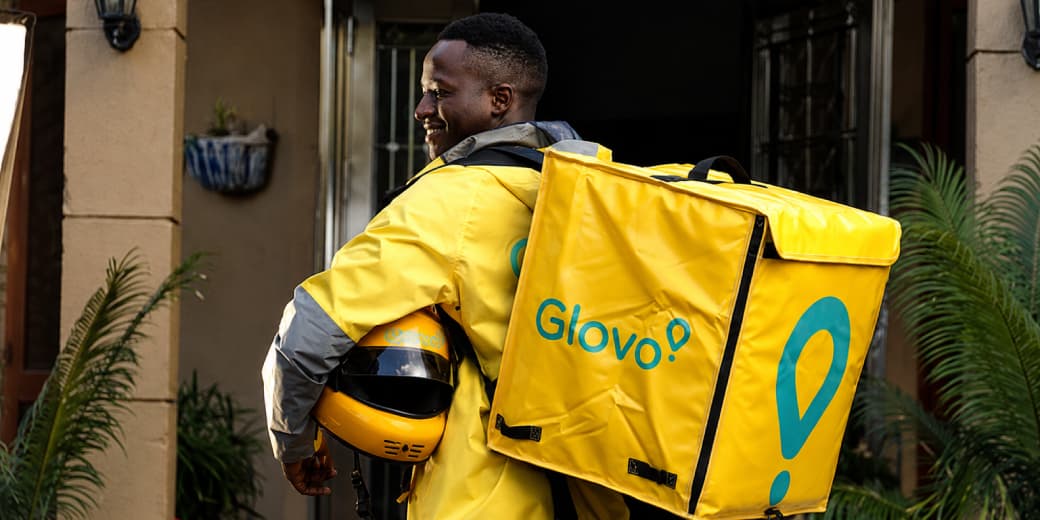
Glovo is bringing shopping into ChatGPT and Claude. That changes quick commerce
Glovo's AI Shopping Assistant lets users discover products through natural-language chat before moving into purchase. It is not magic, but it points to the next interface for quick commerce.
 MAMBO Explains
WhatsApp Plus is official: what KSh 119 gets Kenyan users and what stays free
WhatsApp Plus is Meta's optional paid tier for personal WhatsApp Messenger. Kenyan users have seen pricing around KSh 119 a month, with extra chat pins, themes, icons, ringtones and stickers while core messaging remains free.