
Inside Kenya's controversial internet metering bill
The Kenya Information and Communications Amendment Bill would meter internet use more like a utility. Supporters call it fair billing. Digital-rights advocates see a permanent identifier with too few safeguards.
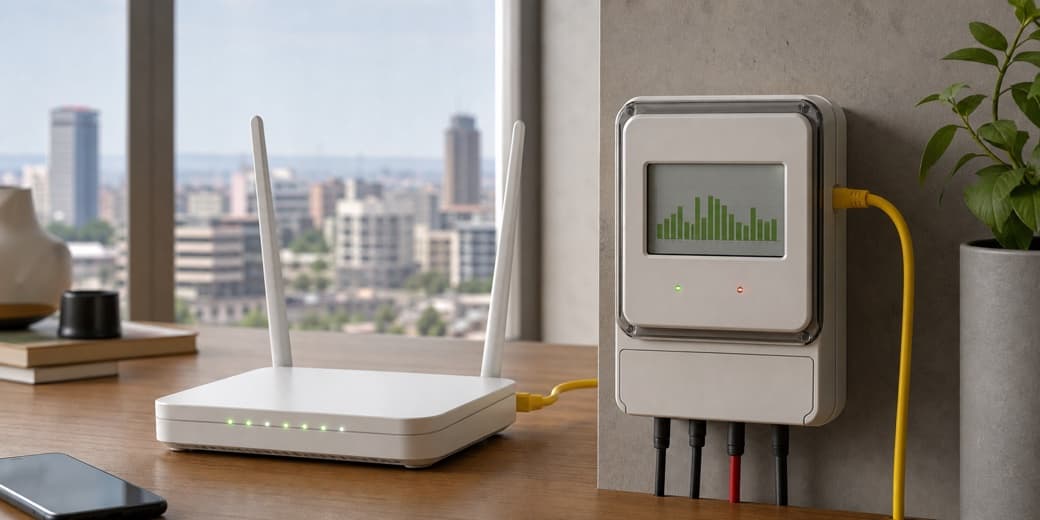
Kenya's Information and Communications Amendment Bill, 2025 would require every internet provider to assign each customer a unique and identifiable meter number, monitor usage, convert it into readable details, create invoices based on consumption and let customers verify those invoices. The bill is not law.
Parliament's Hansard confirms that the bill received its First Reading on July 1, 2026 and was referred to the relevant committee. The published bill also requires providers to submit information about their billing systems, including meter numbers issued to subscribers, to the Communications Authority at least once every financial year.
The consumer-protection case is easy to understand. A customer who buys a capped plan should be able to see where the allowance went and challenge an inaccurate bill. Clear, verifiable statements could reduce the familiar argument between subscribers and providers over unexplained data use.
The privacy concern begins with the word identifiable. A fixed account number is not the same thing as a public record of every website someone visits, and the bill does not explicitly require providers to send browsing histories to the regulator. But it does create a durable identifier around usage and requires regular reporting without spelling out detailed retention, security and access safeguards.
Those omissions matter in a country governed by the Data Protection Act and with a recent history of internet disruptions during political tension. Any law that expands the collection or exchange of communications data should say exactly what is collected, why it is needed, how long it is kept and who may access it.
The billing argument also needs care. The text requires consumption-based invoices, but it does not explicitly abolish unlimited home fibre packages. Providers could still meter usage for transparency while selling an unlimited plan. The real commercial effect will depend on regulations, provider pricing and any amendments Parliament adopts.
For remote workers, streaming households and gamers, that distinction is crucial. Transparent usage data can be useful. A forced move from unlimited service to pay-per-gigabyte pricing would be a much larger economic change.
The best version of this proposal would separate billing transparency from unnecessary personal tracking, minimise the information sent to the regulator and preserve commercial choice in how plans are sold. Parliament now has the job of making those safeguards explicit.
FAQ
What does Kenya's internet metering bill propose?
It would require a unique meter number for every customer, provider monitoring of usage, readable consumption details, usage-based invoices and annual billing-system reporting to the Communications Authority.
Why are privacy advocates concerned?
The proposal creates a durable identifier and reporting duties without setting out detailed rules for data minimisation, retention, security or access.
Is the internet metering bill law yet?
No. It received its First Reading on July 1, 2026 and was referred to a parliamentary committee.
Sources
This is still a bill, not a finished system. The questions being asked now are exactly the questions that should be answered before it becomes law.
Ask MAMBO
Have a plain-English question about this topic? Send it in and we may answer it in a future guide.
Ask a questionRelated reading
 MAMBO Explains
Kenya's emerging technology sandbox deadline is here. What happens next?
The CA sandbox gives selected innovators a supervised route to test AI, 5G, 6G, IoT, cybersecurity and digital-content products before full market deployment.
 Should you care?
Africa's telecom ministers met in Abuja to write one digital rulebook
African ICT ministers gathered in Abuja for the ATU's 7th Conference of Plenipotentiaries, aiming for a unified continental strategy on spectrum, AI, and digital infrastructure.
 Should you care?
Samsung Messages is shutting down in the US. Google has won the Android texting war
Samsung is directing supported US Galaxy phones to Google Messages. The move simplifies Android texting, but it also gives Google more control over a basic phone function.