

Valve's Steam Frame is here, and it costs more than anyone expected for the same reason your next phone will too
Valve's standalone Steam Frame VR headset launched at $1,059, above pre-launch estimates, driven by the same global memory shortage pushing up phone and PC prices.
Quick answer
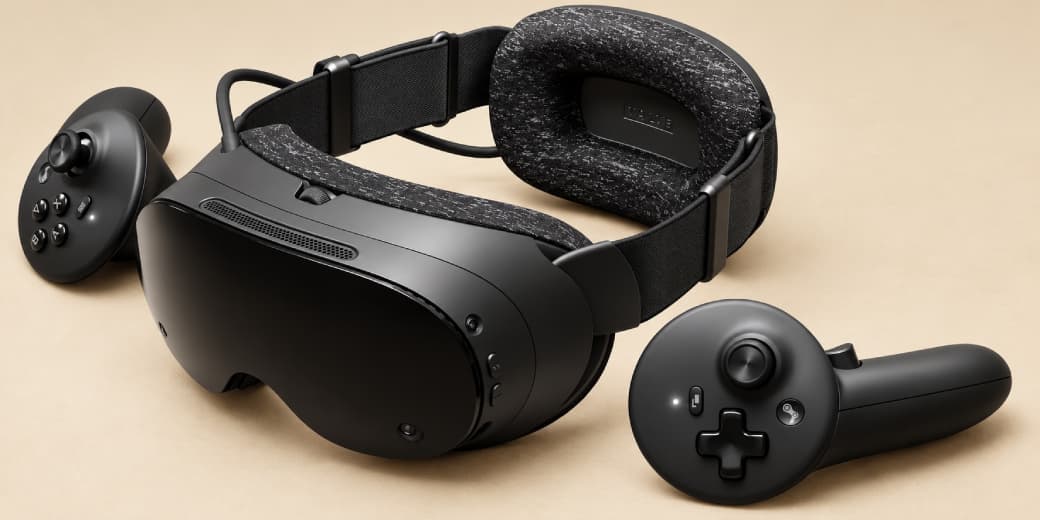
Valve launched the Steam Frame, its standalone wireless VR headset, on September 14, 2026, without advance notice, at $1,059 for a 256GB model and $1,299 for 1TB. It runs a Snapdragon 8 Gen 3 chip with 16GB of RAM on SteamOS 3, with 2160x2160 LCD panels per eye at up to 144Hz, Wi-Fi 7, and a copy of Half-Life: Alyx included. Reservations, not direct purchases, are open through September 17, after which Valve randomizes the order buyers get invited to actually purchase. The price landed above the $899 to $1,199 analysts had projected, driven by the same global memory and storage shortage pushing up prices across PCs, phones, and other hardware in 2026.
Valve confirmed the Steam Frame on September 14 with no advance warning, nearly a year after first revealing the headset and three months after launching its Steam Machine console. Anyone who wants one can't simply buy it; Valve is running the same randomized reservation system it used for the Steam Machine, open through September 17 at 10am Pacific, after which Valve notifies people by email whether they got a purchase slot or landed on a waitlist.
What's actually inside it
The Steam Frame runs on a 4- Snapdragon 8 Gen 3 processor with 16GB of LPDDR5X and either 256GB or 1TB of , with a microSD slot for overflow. Each eye gets a 2160x2160 panel behind pancake lenses, with refresh rates from 72Hz up to an experimental 144Hz. It's worth being precise about the display technology here, since some early coverage of the specs described it as micro-: Valve's own product listing confirms LCD panels, not OLED.
The headset runs SteamOS 3, Valve's Linux-based operating system, not a newer "4.0" version some early coverage referenced. It can function entirely standalone, running games installed directly to its internal storage, or connect wirelessly to a more powerful PC over a dedicated 6GHz Wi-Fi 6E adapter included in the box, letting SteamVR handle demanding titles on the PC side and stream the result to the headset. Inside-out tracking uses four monochrome cameras with infrared illuminators for tracking in dark rooms, though that also means the headset lacks color passthrough; Valve's store lists a third-party accessory, the Arcturus Vision Camera, as a compatible add-on for buyers who want it. is rated at 21.6 Wh, and connectivity includes and Bluetooth 5.4.
What's in the box, and what isn't
Both storage tiers include the Steam Frame Controllers, the Wi-Fi 6E wireless streaming adapter, and a redeemable copy of Half-Life: Alyx, optimized specifically to run on the standalone hardware without needing a connected PC. What's notably absent: a power supply. Valve says any charger rated 45W or higher, including a Steam Deck charger, will work, and sells its own 45W charger separately for $29. An optional Ergonomic Accessories Kit runs $59, and an Accessory Replacement Kit costs $49.
Why the price landed above expectations
Pre-launch estimates from outlets tracking the Steam Frame ranged from $899 to $1,199, with the higher end of that range already factoring in a global RAM and storage shortage driving up component costs across the industry. The actual $1,059 starting price sits inside that range but toward its upper half, and Valve isn't alone in facing this pressure: the company cited the same memory shortage when its Steam Machine launched in June at $1,049, roughly $250 above pre-launch expectations at the time.
That's directly comparable to what's happening elsewhere in consumer hardware this year. Apple raised iPhone prices $100 across multiple models this month for the same underlying reason, memory component costs driven significantly by AI infrastructure demand competing with consumer electronics for the same production capacity. The Steam Frame's 16GB of LPDDR5X memory puts it squarely inside that same cost environment, and Valve software developers Pierre-Loup Griffais and Jeff Leinbaugh acknowledged as much directly, telling Tom's Hardware that Valve isn't operating in a vacuum and that broader hardware pricing realities are reflected in the Frame's cost.
A different philosophy than Valve's last headset
Leinbaugh described a deliberate shift in approach compared to Valve's earlier Index headset, where the company optimized aggressively for the best possible VR experience regardless of setup complexity. With Steam Frame, Valve prioritized comfort and accessibility instead, building the streaming capability specifically so someone can put the headset on, browse their Steam library, and start playing without a complicated setup process, whether that means running locally on the headset or streaming from a PC.
The tecMAMBO take
The Steam Frame's price tag is a genuinely useful data point beyond VR specifically: it's another confirmation that the 2026 memory shortage is a real, industry-wide cost pressure rather than a company-specific pricing decision. When a niche VR headset from a company as insulated from typical retail pricing pressure as Valve lands $150 to $250 above where analysts expected it, twice in three months, that's a more reliable signal about component market conditions than any single company's public statements about the shortage.
FAQ
How much does the Valve Steam Frame cost?
$1,059 for the 256GB model and $1,299 for 1TB, both including controllers, a wireless streaming adapter, and a copy of Half-Life: Alyx.
Does the Steam Frame use OLED displays?
No. It uses 2160x2160 LCD panels per eye, not micro-OLED, behind pancake lenses.
Can I buy the Steam Frame right now?
Not directly. Valve is running a randomized reservation system open through September 17, after which buyers are notified whether they received a purchase slot.
Why is the price higher than expected?
Valve has attributed the pricing to the same global memory and storage shortage affecting hardware pricing broadly across the industry in 2026.
Sources
Ask MAMBO
Have a plain-English question about this topic? Send it in and we may answer it in a future guide.
Ask a questionRelated reading
The iPhone 18 Pro Max sold in the US is quietly different from every other one in the world
Every iPhone 18 Pro, in every country including the US, uses Apple's own C2 modem.

Anker is using Kenya as its East Africa launchpad, and the bigger play is the ecosystem around the charger
Anker has expanded its Kenya presence with a reported $1 million push, wider retail coverage, service centres and a broader ecosystem spanning power, audio and smart-home products.
Windows on Arm has reached the enterprise. Compatibility now matters more than battery claims
Snapdragon X2 business PCs from Microsoft, HP and other vendors push Windows on Arm deeper into enterprise fleets, where compatibility and management decide success.