
Rentoza's business rescue exposes the risky economics of gadget subscriptions
Subscription access can make expensive technology feel affordable, but the model needs capital, inventory control, collections and customer trust to survive.
South African technology-subscription company Rentoza entered voluntary business rescue on 1 July 2026.
The company's business rescue practitioner identified three formal causes of financial distress: failure to secure supporting funding, failure to complete audits for the 2024 and 2025 financial years, and liquidity pressure from reduced cash flow that could leave the company unable to pay creditors.
Rentoza says it will continue trading while a rescue plan is prepared.
Business rescue is not liquidation. It is also not business as usual with a legal sticker placed on the website.
What you need to know
- Rentoza entered voluntary business rescue on 1 July 2026.
- The company continues operating under supervision.
- Formal reasons include failed funding, unfinished audits and liquidity pressure.
- A rescue plan was scheduled for publication by 4 September 2026 under the proposed timetable.
- Rentoza had reported more than 36,000 subscriptions, including about 14,000 active ones.
- Customers had previously complained about delivery and refund delays.
- Customers, suppliers, investors and staff have different claims and risks during the process.
What does Rentoza do?
Rentoza offers products through subscriptions rather than ordinary purchase.
Customers can rent electronics, gaming equipment, appliances and other goods over fixed periods. The model lowers the upfront cost of accessing an expensive product.
Rentoza also allowed applications without conventional credit checks, relying on identity verification and its own risk approach.
The proposition is attractive in a market where good technology is expensive.
It creates a difficult financial machine behind the scenes.
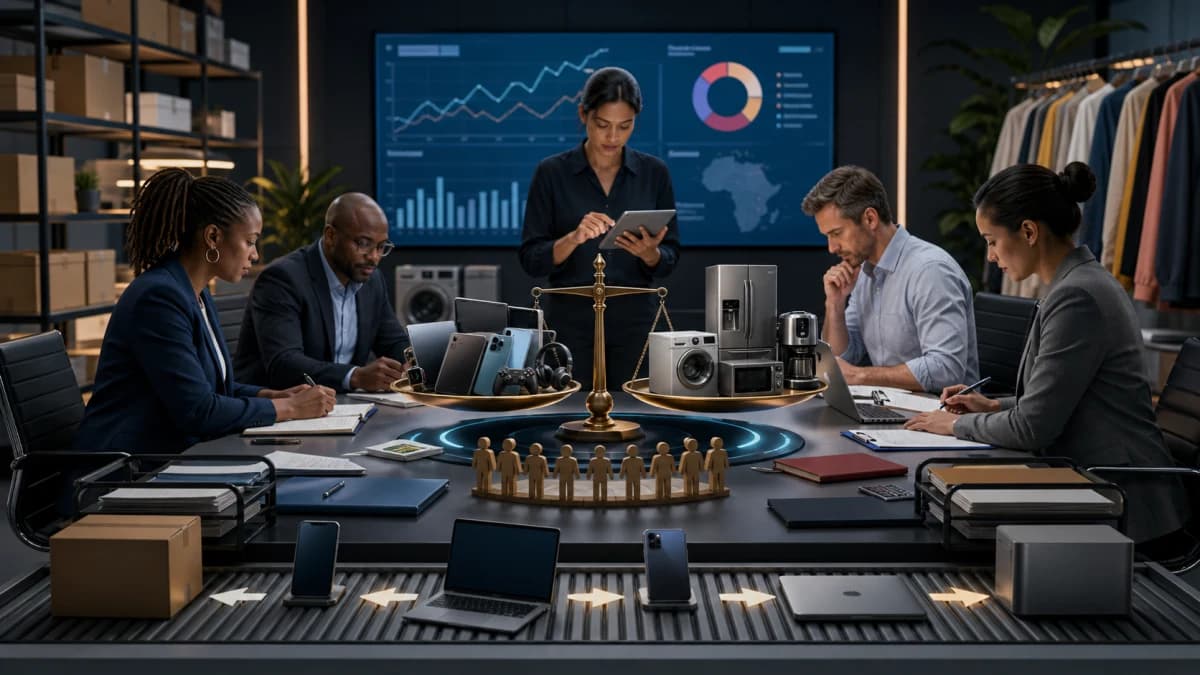
The company may need to buy or finance the product before recovering its cost through monthly payments. It must deliver the item, maintain records, manage damage, collect payments, process cancellations, recover assets and resell or redeploy returned goods.
A laptop can be simple.
A fleet of laptops moving through thousands of households is a balance sheet with chargers.
Why subscriptions need capital
A subscription business receives money over time.
Suppliers and logistics partners often need payment earlier.
That creates a funding gap.
Growth can make the gap larger because every new customer requires more inventory, delivery and support before the full subscription income arrives.
The company can fund that gap through:
- Equity
- Debt
- Asset finance
- Supplier credit
- Customer deposits
- Securitisation
- Internal cash
When external funding disappears and cash collection weakens, a fast-growing subscription business can face distress even while demand remains visible.
Revenue is not cash flow.
A customer promising twelve monthly payments cannot pay today's supplier with eleven future months.
What the official documents say
The first creditors' meeting presentation listed:
- Failure to obtain funding
- Failure to complete the 2024 and 2025 audits
- Reduced cash flow
- Liquidity pressure
- Possible inability to pay creditors in the following six months
The proposed rescue approach includes short-term liquidity support, lean operations, cost reduction and stakeholder engagement.
The longer-term plan involves new funding or a strategic equity partner, balance-sheet restructuring and settlement of creditors.
Those are plans, not guarantees.
The practitioner must still investigate the company and present a rescue plan that creditors can consider.
Why unfinished audits matter
An audit does not create cash, but missing audits damage trust.
Investors and lenders need reliable financial statements to understand:
- Revenue
- Assets
- Liabilities
- Customer payment performance
- Inventory
- Depreciation
- Refund obligations
- Tax
- Related-party transactions
- Cash position
Without current audited accounts, potential funders may not know how much rescue capital is required or whether the business model is viable.
A company asking for money while its financial history remains unfinished is asking investors to bring both cash and faith.
Faith does not appear under current assets.
What customer complaints reveal
MyBroadband reported earlier complaints about delayed product delivery and refunds.
Rentoza said in 2025 that the problems affected a small portion of its customer base and that it was improving operations.
By July 2026, public review scores remained very poor, with many complaints continuing to concern refunds.
Online reviews are not audited financial evidence. They are operational signals.
Repeated delays can damage a subscription company in three ways:
- Customers cancel.
- Refund obligations increase.
- New customers become more expensive to acquire because trust falls.
That can worsen the same cash pressure already affecting the business.
What business rescue means for customers
Rentoza says it continues trading.
Customers should:
- Keep payment records
- Save contracts and order confirmations
- Document product condition
- Keep delivery and cancellation messages
- Contact the business rescue practitioner about creditor claims where applicable
- Avoid relying on social-media promises
- Read new communications carefully
- Seek legal or consumer advice for significant disputes
Customers should not automatically stop valid payments without understanding their contract and legal position.
A subscription device may still belong to Rentoza or a financing party.
Anger is understandable. Accidental theft remains administratively awkward.
What business rescue means for suppliers and staff
Suppliers need to determine whether amounts owed arose before or after the business rescue date and follow the practitioner's claim process.
Employees should rely on formal notices about pay, benefits and continued operations rather than rumours.
A company in rescue often needs suppliers and employees to keep operating while it restructures. Those same stakeholders may already be owed money.
That creates a difficult negotiation.
Continuing to support the company may improve eventual recovery. Extending more credit can increase exposure if the rescue fails.
Is gadget subscription a bad model?
Not necessarily.
Subscription can serve people who need temporary access, prefer predictable maintenance or cannot justify ownership.
It works best when:
- Pricing is transparent
- The total cost is clear
- Inventory is reliable
- Payment risk is understood
- Returned products retain value
- Repairs are efficient
- Cancellation is fair
- Funding matches asset life
- Customer support is strong
The model becomes dangerous when growth hides weak unit economics.
A company can celebrate subscription numbers while losing money on each relationship.
Scale does not repair a leak. It provides more water.
How customers should compare subscription with buying
A low monthly price can hide a high total cost.
Before subscribing, calculate:
- Total payments over the contract
- Upfront fees
- Delivery costs
- Insurance or damage charges
- Early-cancellation cost
- Repair liability
- Whether ownership transfers at the end
- Replacement terms
- What happens if the company fails
Then compare the result with buying new, buying , financing through a bank or saving for the product.
Subscription can be sensible for temporary use or rapidly changing technology.
It can be poor value when the customer pays close to the purchase price and returns the asset with nothing owned.
Lessons for African startups
Audit early
Clean accounts become essential before the next funding round, not after it fails.
Match funding to the asset
Long-lived rental assets need patient capital.
Track each unit
The company should know where every device is, its condition, expected income and recovery value.
Treat refunds as cash obligations
A refund promise is not solved by a support ticket.
Grow after operations work
Acquisition should not outrun delivery and service capacity.
Publish honest terms
Customers need to understand ownership, damage, cancellation, return and total cost.
Separate demand from viable demand
Many people may want an expensive device at a low monthly payment. The business still needs enough margin, collection reliability and residual asset value to survive.
The tecMAMBO take
Rentoza's business rescue is not proof that technology subscriptions cannot work in Africa.
It is evidence that access-based hardware businesses carry financial and operational risk that glossy monthly prices can hide.
The rescue plan may preserve the company.
Its wider warning is already clear: recurring revenue is comforting only when the cash recurs.
FAQ
Is Rentoza closing down?
Rentoza entered business rescue and says it continues trading while a rescue plan is developed. Business rescue does not automatically mean closure.
Why did Rentoza enter business rescue?
Official documents cite failed fundraising, unfinished audits and liquidity pressure caused by reduced cash flows.
What is business rescue in South Africa?
It is a legal process that places a financially distressed company under temporary supervision and creates a plan to rescue it or improve creditor recovery.
What should Rentoza customers do?
Keep all records, follow official business-rescue notices and contact the practitioner regarding valid claims or unresolved obligations.
When will the rescue plan be published?
The practitioner proposed extending the publication date to no later than 4 September 2026. The timetable can change through the legal process.
Sources
Ask MAMBO
Have a plain-English question about this topic? Send it in and we may answer it in a future guide.
Ask a questionRelated reading

iPhone Duo vs Xiaomi 18 Fold: Why the Timeline, Not the Design, Is the Real Story
Xiaomi launched the 18 Fold in China on September 7, 2026, two days before Apple officially unveiled the iPhone Duo on September 9.

Africa's Laptop LLM Challenge asks AI to fit the computers people already own
Instead of asking developers to find bigger GPUs, the competition asks them to compress, optimise and localise AI for common African hardware.

A R150 million solar bet on the grid South Africa cannot rely on
Nesa Power secured about 150 million rand, roughly 9 million dollars, in mezzanine debt from Maia Capital to expand commercial and industrial solar under long-term PPAs.