

KOKO's empire goes on sale, and carbon is the lesson
PwC administrators are marketing KOKO's core ethanol technology, intellectual property and manufacturing platform, with expressions of interest due July 17.
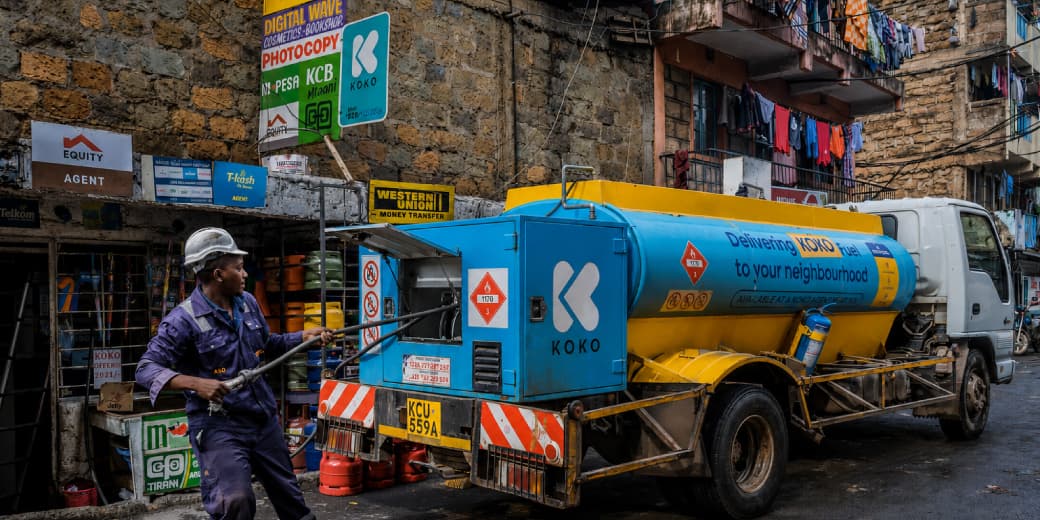
Administrators are selling KOKO Networks' integrated ethanol cooking technology, intellectual property and manufacturing platform after the Kenyan clean-cooking company collapsed in January. PwC is seeking expressions of interest by July 17 from buyers able to complete transactions worth more than 15 million US dollars.
The sequence matters. KOKO did not collapse because the stoves stopped working or customers stopped using the network. It shut Kenyan operations on January 31, laid off more than 700 employees and entered administration after the government declined to issue the Letter of Authorisation required for international carbon-credit sales.
Those credits funded the model. KOKO sold bioethanol below its full cost through more than 3,000 automated fuel stations, making cleaner cooking affordable to more than one million households. Revenue from verified emissions reductions was meant to cover the subsidy.
Without export authorisation, that revenue line disappeared. A business with working hardware, customers and distribution could not survive the loss of the approval on which its unit economics depended.
The assets now being marketed include patents, hardware designs, software, the fuel distribution and retail platform, and a stove and canister manufacturing plant in Sanand, India. PwC is administering the UK company while related Indian entities are being wound up separately.
The Kenyan government's position was that KOKO's requested carbon-credit volume could consume too much of the country's available share and crowd out other projects. Government advisers also questioned aspects of cookstove-credit verification. Those claims remain attributed positions, not a finding that KOKO's credits were invalid.
The company was backed by a 179.6 million US dollar political-risk from the World Bank's Multilateral Investment Guarantee Agency. Reporting has said a claim is expected, but tecMAMBO has not seen confirmation that a final claim has been filed or accepted.
The lesson for African climate tech is structural. If one sovereign approval determines whether revenue exists, political risk is not a footnote. It is part of the product, the financing plan and the survival model. Revenue, markets and regulatory dependencies need diversification before the system reaches scale.
The quietest cost sits with households. Families who had moved from charcoal and kerosene lost access to subsidised ethanol. A climate-finance dispute ended as a daily cooking problem.
FAQ
Why did KOKO Networks collapse?
The Kenyan government did not issue the authorisation KOKO needed to sell carbon credits internationally, cutting off revenue that subsidised its ethanol fuel.
What KOKO Networks assets are being sold?
The sale covers ethanol cooking technology, intellectual property, software, distribution systems and a manufacturing plant in India.
When are expressions of interest due?
The administrator's sale notice set July 17, 2026 as the expression-of-interest deadline.
Sources
KOKO's technology may find a buyer. Rebuilding the trust, fuel network and financing model around it will be the harder transaction.
Ask MAMBO
Have a plain-English question about this topic? Send it in and we may answer it in a future guide.
Ask a questionRelated reading
 MAMBO Explains
Rentoza's business rescue exposes the risky economics of gadget subscriptions
Subscription access can make expensive technology feel affordable, but the model needs capital, inventory control, collections and customer trust to survive.
 MAMBO Explains
Africa's Laptop LLM Challenge asks AI to fit the computers people already own
Instead of asking developers to find bigger GPUs, the competition asks them to compress, optimise and localise AI for common African hardware.
 Business
A R150 million solar bet on the grid South Africa cannot rely on
Nesa Power secured about 150 million rand, roughly 9 million dollars, in mezzanine debt from Maia Capital to expand commercial and industrial solar under long-term PPAs.